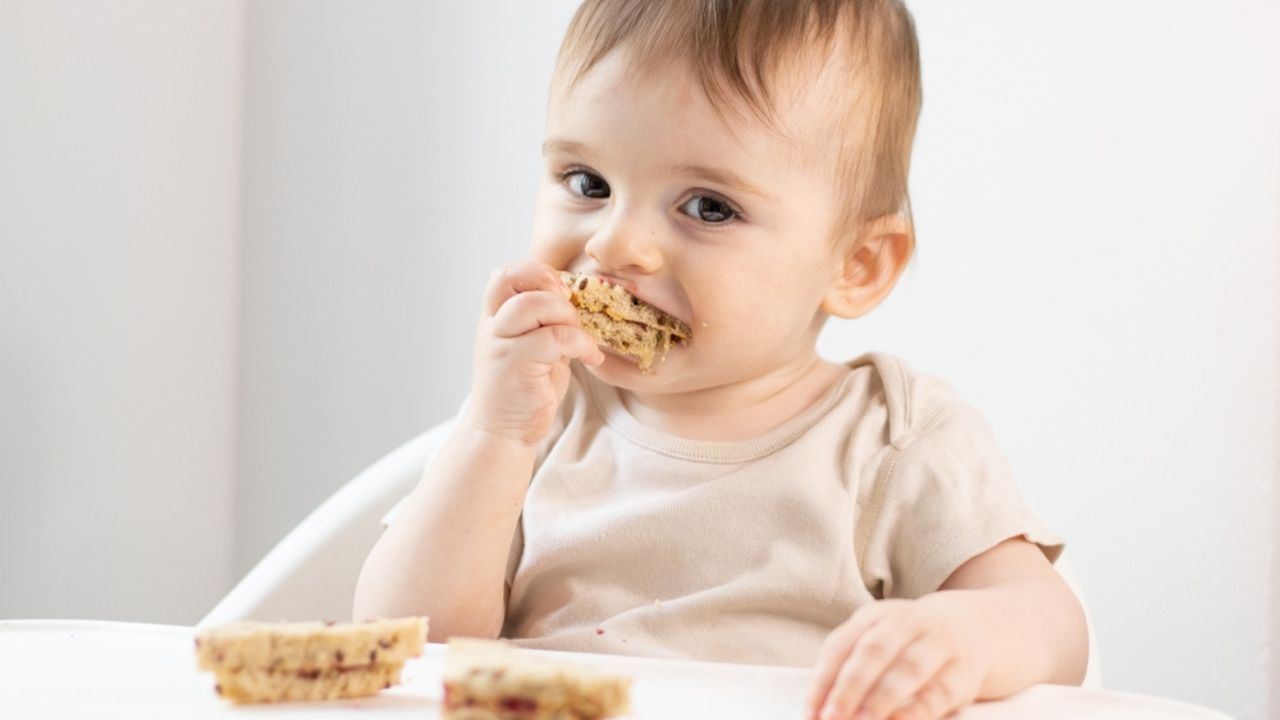
A landmark Australian study has found one in three babies previously suspected of having a peanut allergy can safely eat the food without an allergic reaction.
Researchers found 35 per cent of 778 infants showed no reaction during an oral food challenge, allowing their suspected peanut allergy diagnosis to be removed.
The findings come from the national ADAPT Peanut Oral Immunotherapy Program, launched in 2024 by the National Allergy Centre of Excellence and hosted by the Murdoch Children’s Research Institute.
Among the babies who no longer needed an allergy diagnosis was one-year-old Arthur Cameron, who had developed hives and redness after eating peanut butter at about five months old.
Following skin and blood tests, his parents Leah and Jake were told he was at high risk of reacting to peanuts. However, Arthur later tolerated an oral food challenge without any reaction.
His mother Leah said the result was a huge relief for the family.
“Being a first-time new mum there’s enough kind of stress and anxiety around having a child,” she told AAP.
“And then finding out he had this peanut allergy, it certainly made us worry a bit how we’ll manage this through his life.
“We really had to think and change our behaviour, checking food labelling and stuff like that, which was quite an adjustment.”
She said the family was “very surprised, but very ecstatic” when Arthur passed the food challenge.
Senior clinician Tim Brettig said researchers had expected some babies to tolerate peanuts, but the proportion was higher than anticipated.
“We expected some to tolerate peanut at a food challenge, but the rate’s much higher than we would have thought,” Dr Brettig told AAP.
“To get such a large number of infants not react and therefore not even need treatment because of an allergy was really exciting.”
The findings suggest oral food challenges could be considered more widely when assessing suspected peanut allergies.
However, researchers stressed the tests must be carried out in a controlled medical setting. While 35 per cent of infants had no reaction, 12 per cent experienced anaphylaxis and required treatment from medical staff.
“It needs to be done in a controlled and safe way,” Dr Brettig said.
Image: Shutterstock