Imagine losing your sight to something a short, routine operation could fix. Or going without glasses for so long that you can no longer read, sew or recognise a grandchild’s face across the room. For about a billion people around the world, that is not a thought experiment. And some of the same story plays out much closer to home.
Avoidable blindness is one of the few big global health problems where the fix is already known and well tested. Here is what the numbers say, abroad and in Australia.
A billion people, two main causes
The World Health Organization (WHO) estimates that at least 2.2 billion people have a near or distance vision impairment. For at least one billion of them, it could have been prevented or has yet to be addressed.
Two causes dominate. Cataract accounts for about 94 million of those cases of distance impairment or blindness, and uncorrected refractive error, which means simply not having the right glasses, accounts for about 88.4 million. Neither needs a medical breakthrough. Cataracts are removed in a routine operation and refractive error is fixed with spectacles.
The gap is access. The WHO says one in two people around the world who need cataract surgery do not get it. It puts the global productivity loss from vision impairment at about US$411 billion a year, a reminder that losing your sight often means losing your work, your independence and the ability to care for others.
The picture in Australia
Australia has some of the best eye care in the world, but it is not evenly shared. The National Eye Health Survey, published in the journal Ophthalmology in 2017, found that 11.2 per cent of Aboriginal and Torres Strait Islander people aged 40 and over had vision loss, compared with 6.5 per cent of other Australians aged 50 and over. After allowing for age and gender, vision loss was 2.8 times more common among First Nations people.
The leading causes were the same two the WHO highlights: uncorrected refractive error and cataract. The survey’s authors described both as readily treatable.
Waiting times show part of the problem. In 2023-24, First Nations people waited a median 138 days for elective cataract surgery in public hospitals, compared with 114 days for non-Indigenous Australians, according to the Australian Institute of Health and Welfare.
A disease the rest of the rich world has left behind
Trachoma is an infectious eye disease that, after repeated infections over years, can turn the eyelashes inward to scrape the eye. It is spread in conditions where clean water and facial hygiene are hard to come by. The 2024 Australian Trachoma Surveillance Report, prepared by the Kirby Institute at UNSW, states plainly that Australia remains the only high-income country with endemic trachoma.
It is found mainly in remote Aboriginal communities in the Northern Territory and Western Australia. In 2024, 97 communities were classed as at risk. Of the 86 screened, 18 had trachoma at endemic levels, defined as at least 5 per cent of children aged five to nine affected.
The trend is encouraging. Overall prevalence among children aged five to nine fell to 1.5 per cent in 2024, from 1.8 per cent the year before. The share of screened communities with endemic-level trachoma dropped from 59 per cent in 2020 to 21 per cent in 2024. South Australia has been reclassified as free of endemic trachoma.
Where the modern effort began
Many older Australians will remember the name of Fred Hollows, the New Zealand-born ophthalmologist who died in 1993. From 1976 he led the National Trachoma and Eye Health Program, which visited more than 500 rural Aboriginal communities. According to his entry in Obituaries Australia, it examined some 110,000 people at least once. He later championed factories to make low-cost artificial lenses for cataract surgery, with projects in Eritrea, Nepal and Vietnam.
The idea behind that work still drives eye health policy: most blindness is not inevitable, and treating it at scale is a matter of getting trained people, equipment and spectacles to where they are needed.
What it means for you
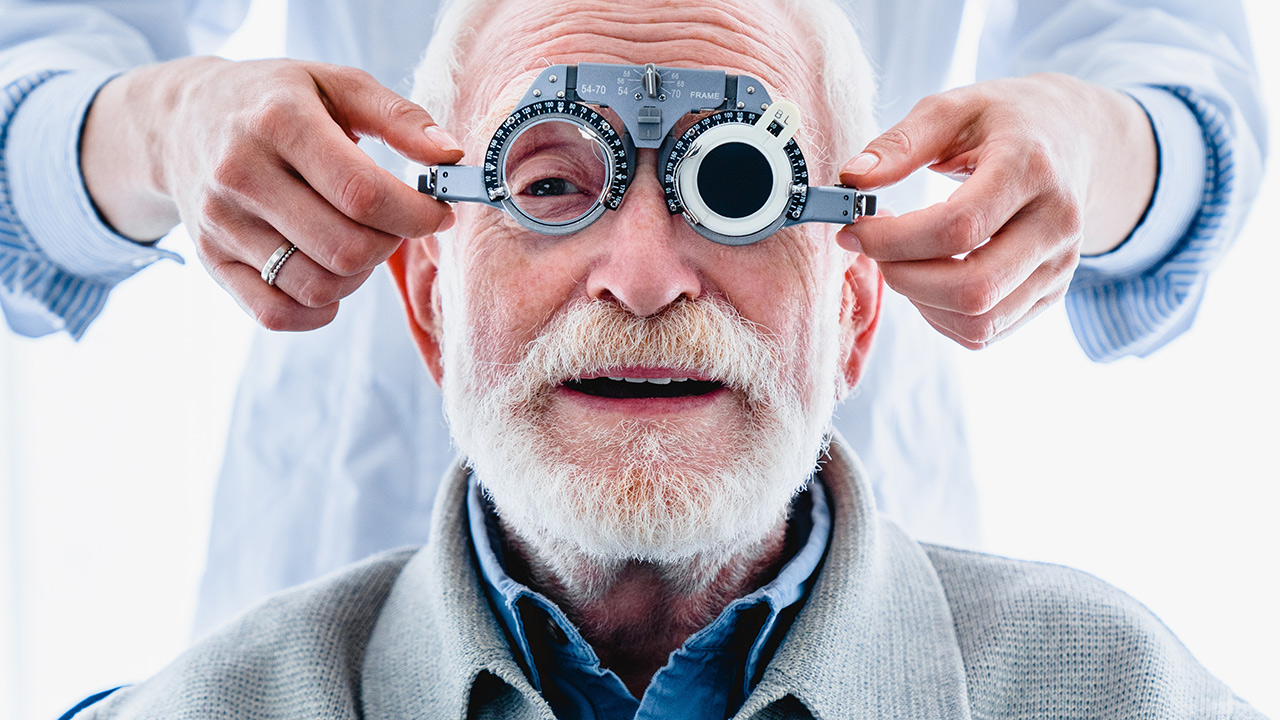
The same two causes top the list for older Australians generally. That makes the most useful personal step an ordinary one. Have your eyes checked regularly, keep your glasses prescription up to date and have cataracts assessed rather than putting up with fading vision. From 65, Medicare covers a comprehensive optometrist examination every 12 months.
If the issue moves you to give, the usual rules apply. Check that an organisation is registered on the ACNC Charity Register, and donate through the website listed there rather than through an unsolicited call, text or link.
This article is general information only and does not replace personalised medical advice. Talk to your optometrist or GP about your own eyes.