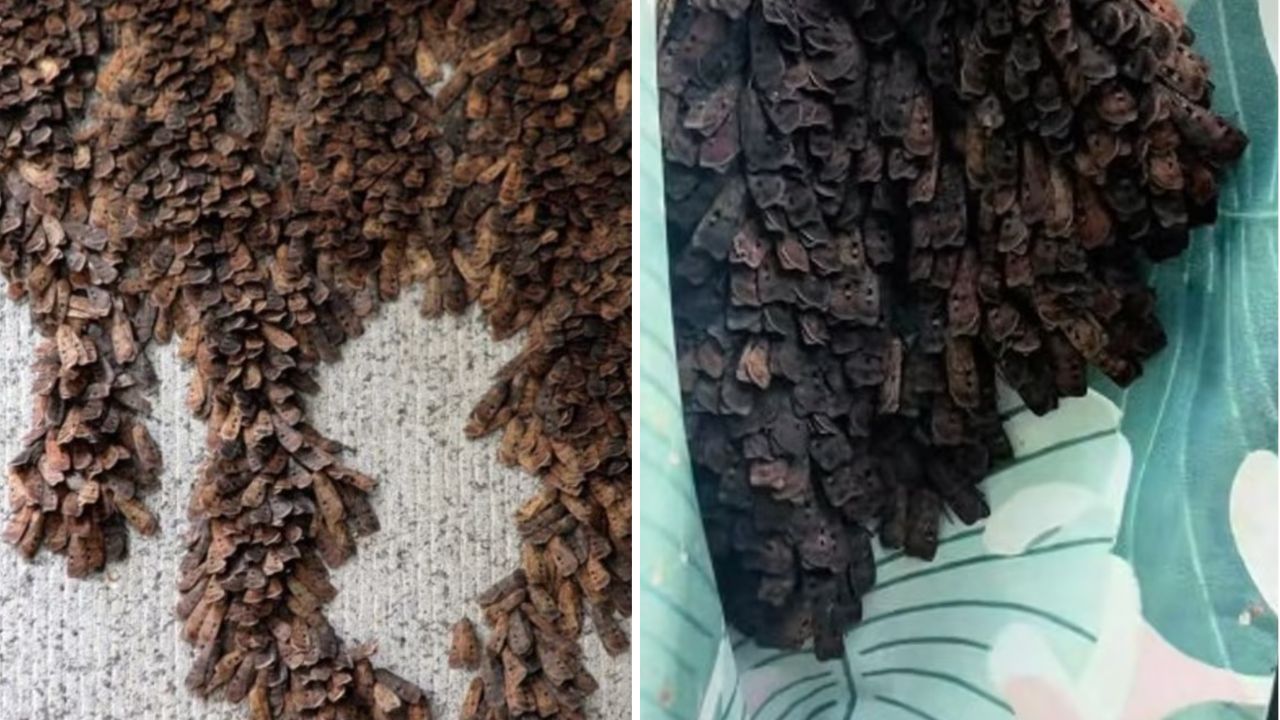
Millions of moths have been spotted on parts of New South Wales in recent weeks, with unusually strong winds pushing the insects off their usual migration route and into suburban areas.
Residents have reported moths gathering inside homes, in gardens and along beaches.
Videos of large numbers of moths covering floors and washing up on shorelines have circulated online, and while some say it’s driving them mad, others are more concerned for the moths, which are an important part of the ecosystem.
University of Sydney insect expert Professor Dieter Hochuli says the phenomenon is a natural migration made worse by strong weather conditions.
“This is one of the great animal migrations of the world,” Professor Hochuli said.
Every spring, an estimated four billion Bogong moths breed in central NSW before travelling south to spend summer in the Australian Alps.
“When spring hits, they navigate using the stars and magnetic fields to migrate down south to the Australian Alps,” he explained.
This year, strong westerly winds have blown many moths off course. Once they reach urban areas, artificial lighting further disrupts their navigation.
“Because they navigate using light from the moon and stars, city lights are essentially like someone hacking into your Google Maps and spinning it around,” Professor Hochuli said.
“It sends them confusing messages, and they get stranded.”
Winds have also pushed exhausted moths out to sea, where they cannot land and thousands have washed up along the coast.
Despite the nuisance, the moths are a vital food source for critically endangered mountain pygmy-possums in the alpine region, while birds and lizards in urban areas also feed on them.
“And down here in the city, birds and lizards are having a field day, and they’re keeping plenty of domestic cats entertained,” he added.
He has urged people not to kill the moths, saying most will die before reproducing and that finding dead insects around the home is normal.
For those worried about damage to clothing or gardens, there is also good news.
“They are not going to eat your clothes or ruin your gardens, the moths that destroy your laundry are a completely different species,” he confirmed.
The moths are instead seeking dark, narrow spaces to shelter during daylight and avoid predators.
Professor Hochuli recommends waiting for the influx to pass, which he says could take days or weeks. If you find the insects indoors, you can gently sweep them into a dustpan or slide a piece of paper underneath and release them outside.
Other methods include turning off all lights and opening your windows so they find their own way outside.
“There are plenty of things to worry about in the modern world, but Bogong moths aren’t one of them,” he said.
“We’re actually getting a first-hand look at some amazing animals trying to complete an incredible journey.”
Image: Instagram/ TikTok