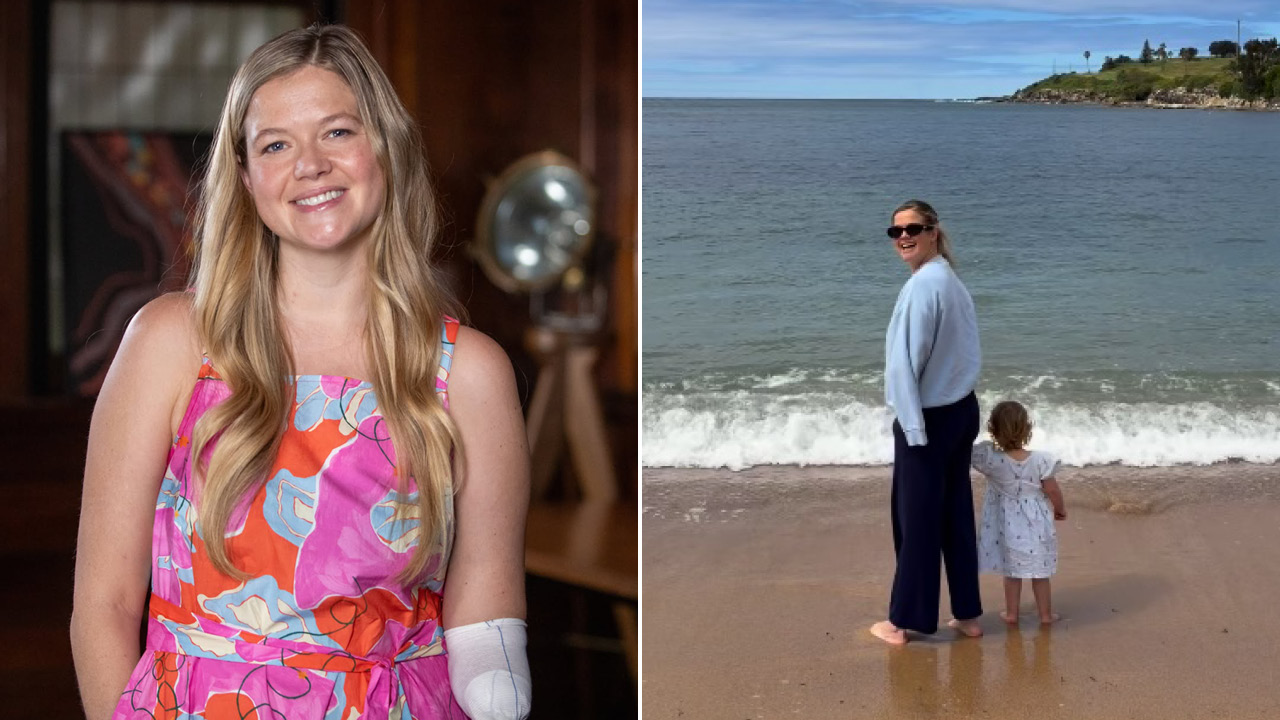
Leah Stewart, the shark attack survivor who was critically injured at Coogee Beach, has returned to the beach and put her feet in the water for the first time since the attack.
The 34-year-old primary school teacher visited the beach on Tuesday, walking hand-in-hand with her daughter in a significant milestone in her recovery. A day later, Stewart reflected on the moment in an Instagram post.
“It took a lot of work to get to this point,” Stewart wrote on Wednesday.
“Not too long ago the thought of the beach would trigger a flashback but after lots of work it felt so good to feel the water again.”
She said the moment was unplanned and came when she realised the fear that had once taken over was no longer as overwhelming.
“I hadn’t planned to touch the water or sand for the first time yesterday, I was standing on the grass and realised I didn’t feel fear in my chest,” she said.
“As I got closer, I focused on the cold on my toes and the little hand holding mine.
“As I heal I’m starting to live without the fear that absolutely controlled me and come back to what I love with a deeper appreciation of the little and big things.”
Stewart was swimming between the flags and close to shore at Coogee Beach when the shark attacked, biting her legs and arms. As she was dragged underwater, she punched the shark on the snout before surf lifesaver Charlie Verco came to help.
Verco, a 24-year-old world champion paddleboarder, paddled through blood-filled water, aware the shark could still be nearby, and helped bring Stewart back to shore.
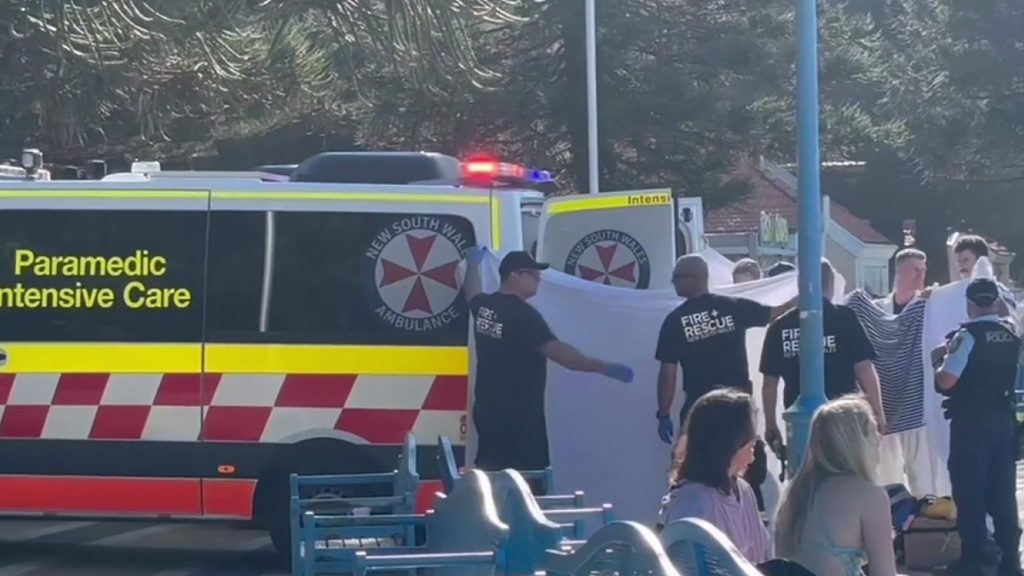
There, lifeguards, an off-duty critical care doctor, paramedics and beachgoers worked to save her life. Stewart was taken to hospital, where she spent 10 days in a coma and underwent surgery to amputate one of her arms. Since then, she has defied the odds to get back on her feet as her recovery continues.
During Tuesday’s beach visit, Stewart also stopped at a Shark Bite Kit, the same kind of emergency kit that was used to help save her life. In a video, she urged beachgoers to be aware of where the kits are kept and expressed her gratitude for the one used in her case.
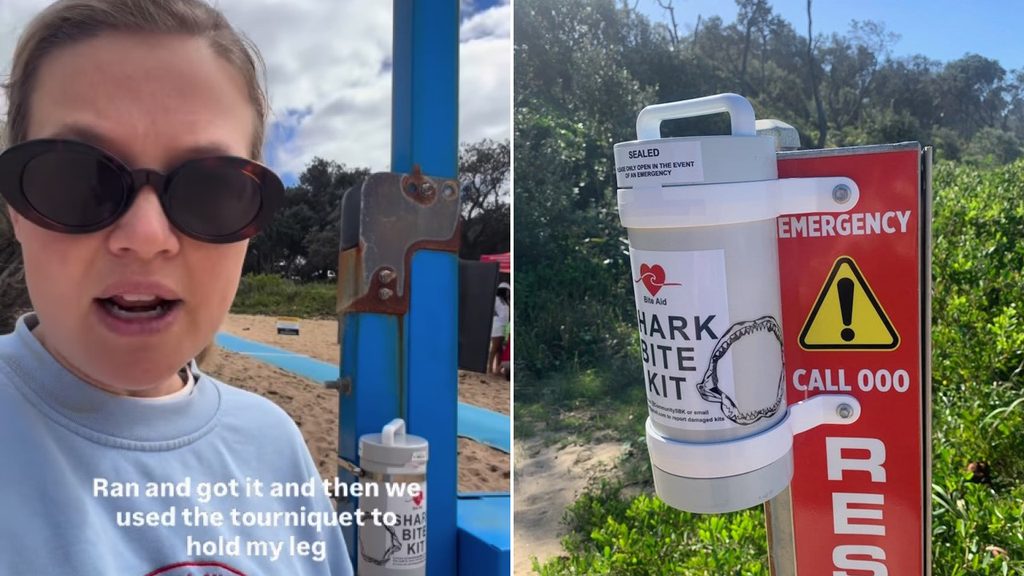
“So the shark bite kit was actually used on me,” Stewart said in the video.
“Dr Ian Ferguson had already spotted it before my incident, so he knew exactly where to go, ran and got it, and then we used the tourniquet to hold my leg, we used the blanket to keep me warm, and the gloves and all of the different things in there.
“I’m very thankful that I had this here with me on the day I needed it most.
“Hopefully you never have to use it, but if you do, it’s great if you can know where they are.”
The Shark Bite Kits were developed as a grassroots initiative by high school teacher Danny Schouten after several close friends of his were attacked by sharks. They have since been installed across NSW, Queensland, South Australia and Western Australia.
The rollout received a major boost from the NSW Government in December last year, with funding provided for another 150 kits at beaches outside metropolitan areas.
Each kit includes tourniquets, compression bandages, dressings, a thermal blanket, amputated-part bags, gloves, a whistle and simple first-aid instructions for treating a severe bite.