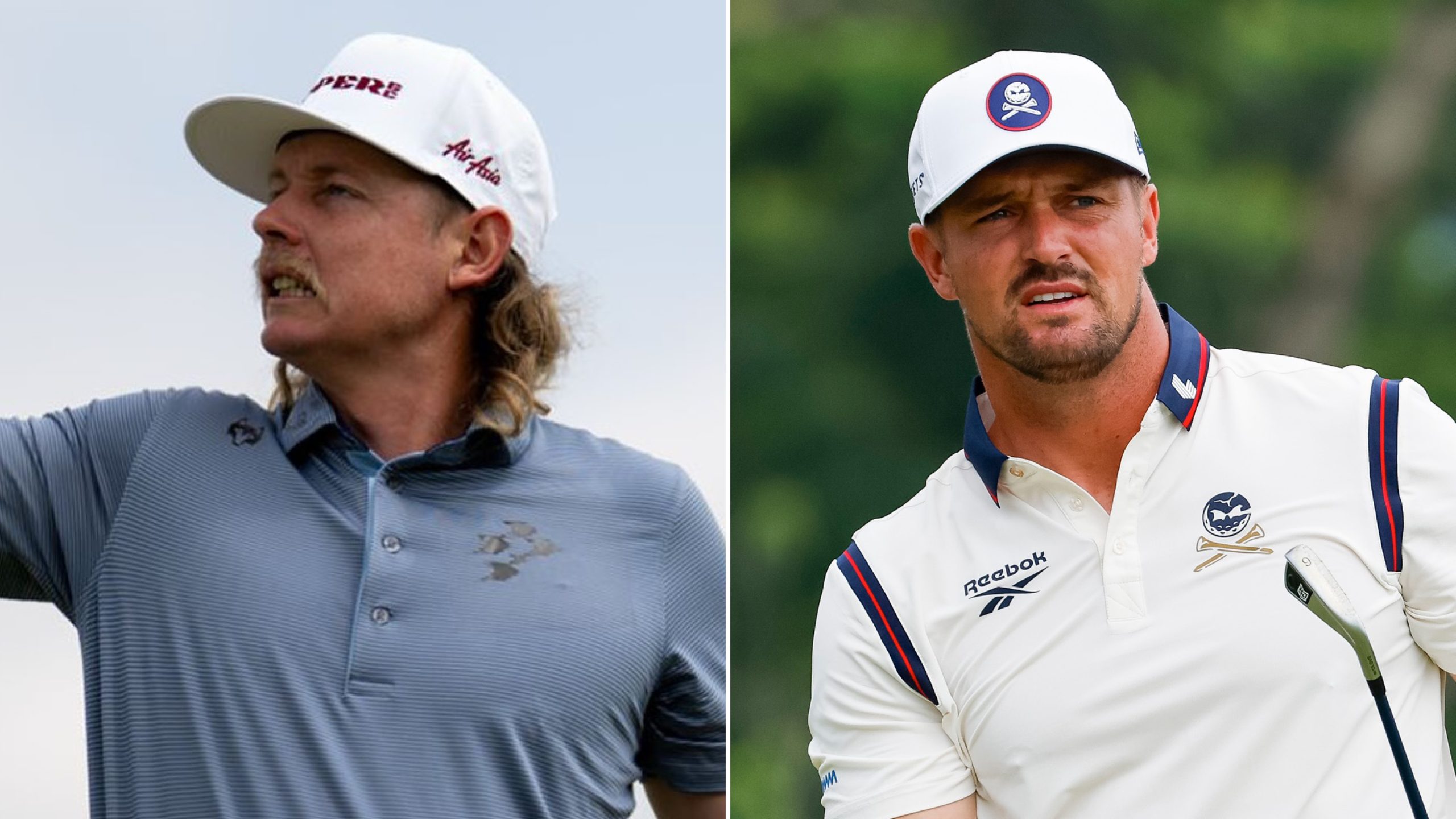
LIV Golf has entered bankruptcy protection in a stunning setback for the Saudi-backed competition that once set out to challenge the PGA Tour’s dominance. The league filed for Chapter 11 on Wednesday (AEST), with Australia’s Cameron Smith among 30 players still owed significant sums.
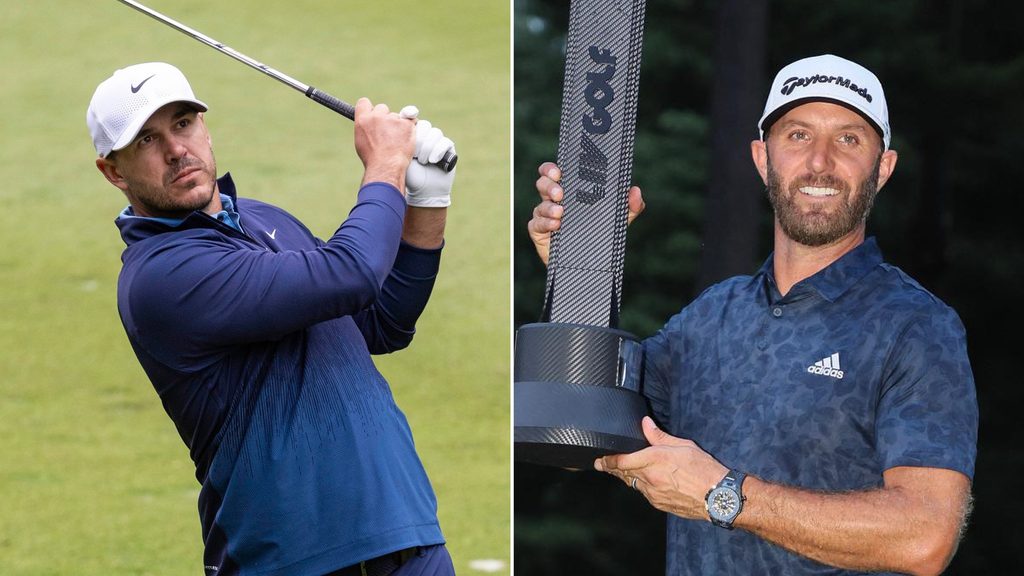
According to the bankruptcy filing, LIV owes more than $US7.4 million ($10.2 million) to Jon Rahm, roughly $US5.7 million ($7.8 million) to Bryson DeChambeau, $US5.4 million ($7.4 million) to Dustin Johnson and $US4.8 million ($6.6 million) to Cameron Smith. Australian Lucas Herbert is also owed about $US1 million ($1.3 million). Of the top 30 creditors listed by LIV, 14 were players. The filing listed only the “unsecured claim” and not the full amount owed.
The league said its assets were worth between $US100 million and $US500 million ($138 million-$690 million), while liabilities sat between $500 million and $1 billion ($690 million-$1.3 billion). Four vendors have already launched lawsuits over unpaid bills. Chapter 11 is commonly known as reorganisation bankruptcy and generally allows the debtor to continue to operate the business, even borrowing new money under court approval.
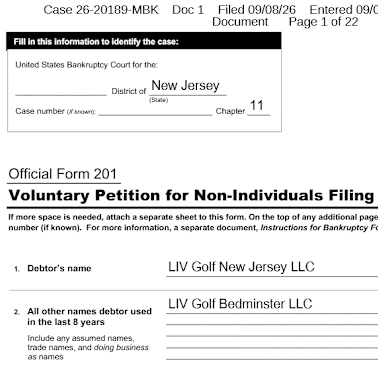
Saudi Arabia’s Public Investment Fund, LIV’s chief financial backer, had earlier this year withdrawn its support after investing an estimated $US5 billion ($6.9 billion) across four years. Even so, PIF has agreed to provide $US49.6 million ($68.7 million) in debtor-in-possession financing. LIV said in a press release that it remains in “advanced discussions” with players about taking control of the business, while BC Partners Credit and other investors are expected to provide exit financing once the reorganised company leaves Chapter 11.
The league exploded onto the golf scene in 2022, disrupting the sport with huge contracts for elite players, shorter events and a more theatrical presentation. That push was bankrolled by the Saudis as part of a broader sports investment drive that also includes soccer and tennis. But the strategy changed this year, with the Saudis deciding to stop funding LIV as they shifted toward investments promising stronger returns. That pull-back was reported in April, and LIV failed in the months that followed to find another source of funding strong enough to avoid bankruptcy.
Keeping players now looms as the central challenge. Some of the marquee names who left for LIV have since gone back to the PGA Tour and accepted financial penalties in order to do it. Others have stayed away, and LIV is trying to convince them to remain by settling what they were owed under old contracts and then offering them ownership stakes in the league.
The PGA Tour has banned players for one year from their most recent LIV Golf appearance. Brooks Koepka was the first LIV player to return under penalty — a $US5 million payment to charity, no equity grants for five years, no access to bonus money the year he returned. PGA Tour CEO Brian Rolapp offered the same deal to Rahm, DeChambeau and Smith with a tight deadline to accept. None did, and three months later as the US-Iran war took hold, PIF pulled its funding and sent LIV Golf into a spiral. Rolapp has not been inclined to discuss any paths back while players are under contract.
Before news of the Chapter 11 petition became public, Rahm was asked during the build-up to the Irish Open whether he knew what lay ahead. “Yes and no, it hasn’t really changed from my last interview in Indianapolis a few weeks ago,” the two-time major winner said. “And there’s just a lot of things in place, right? There’s a lot of things that could happen, and it’s one of those things where time’s gonna tell. To be fair for us people that joined LIV, I’m pretty good at dealing with turbulence.”
The 2026 LIV season finished earlier than expected after the team championship in Detroit was cancelled. LIV later confirmed it was “scaling back operations”, and some staff were laid off at the start of this month. Other prominent Australians to have played with LIV Golf include Marc Leishman, Elvis Smylie and Matt Jones.
Chief executive Scott O’Neil, who succeeded the league’s original CEO Greg Norman, said the bankruptcy process was intended to buy time and structure for a major reset. “This process gives us the structure and time to pursue a landmark transaction and begin the next chapter of LIV Golf,” O’Neil said in a statement.
O’Neil has previously said “LIV Golf 2.0” would give players majority ownership while trimming the schedule. In a letter to LIV Golf fans, he said the revamped model would increase the field from 57 players to 75 and introduce a 54-hole cut for the first time. Monday qualifiers would also be added. He said the team model would be organised around nationalities and that LIV would continue focusing on some of its more successful markets in Australia, South Africa and Asia.
“Now it is time to enter the next phase of LIV Golf,” O’Neil said in his letter. “Today, we took an important step forward to get there. LIV Golf has entered a court-supervised restructuring process that provides us with the time and framework to address previous financial obligations and complete a transaction that will make the league’s next phase a reality.
“Put simply, this process is designed to build a stronger and more sustainable future for LIV Golf.”