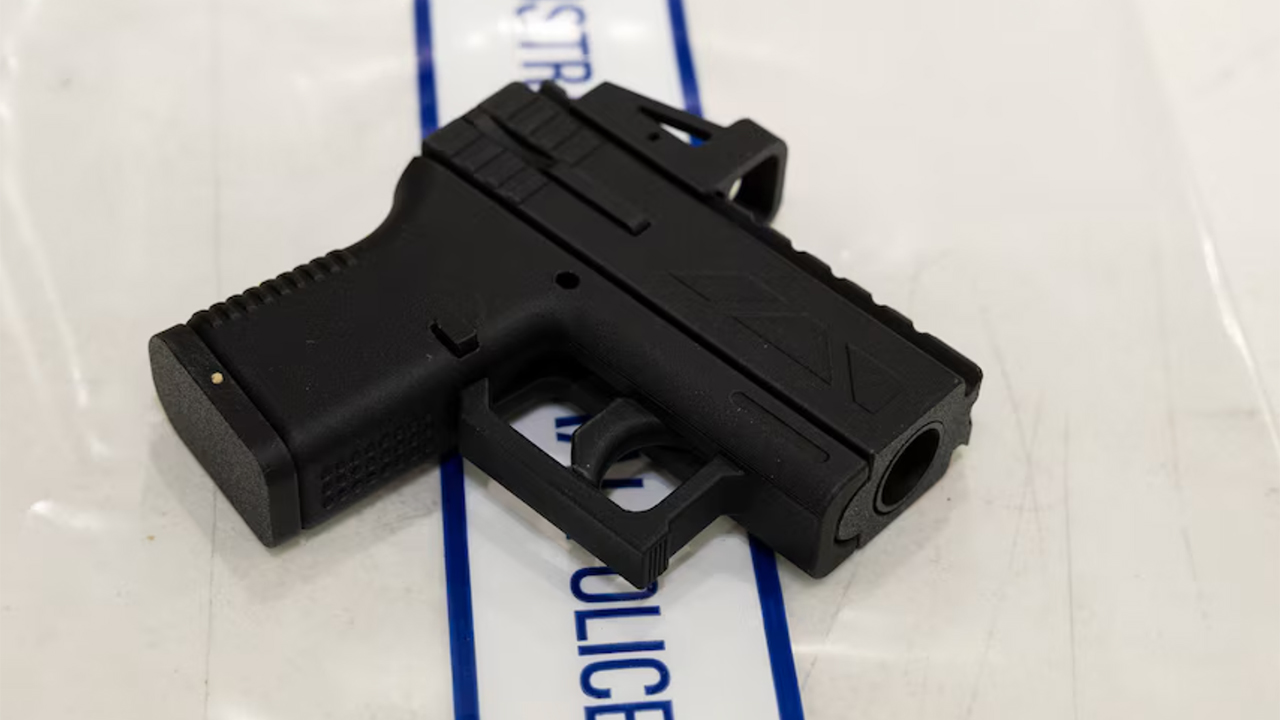
A Canberra teacher who decided a 3D-printed handgun would make an interesting classroom demonstration has lost her unfair dismissal case, with the Fair Work Commission describing her actions as showing an “astonishing lack of judgement”.
The digital technology and maths teacher, who was in her mid-50s and had worked in education for almost 22 years, was sacked after bringing the realistic-looking replica firearm to school in April last year.
According to the Fair Work Commission decision, the teacher had been discussing ways to encourage students to take up technology electives, including demonstrating the possibilities of 3D printing.
Over the following weekend, she took that idea considerably further, using a 3D printer to produce a replica handgun from plans believed to have been downloaded from the internet.
When she arrived at school, she “proudly showed” the creation to an executive teacher, according to Commissioner McKinnon.
She also demonstrated pulling back the top of the replica as though preparing it to fire.
Her colleague’s reaction was immediate: “you can’t show that to students”.
The teacher was instructed to put the replica back in her bag, while another staff member who saw it reportedly remarked that it “looked quite realistic”.
The incident quickly became far more serious than an ill-advised classroom experiment.
ACT Policing attended the school and subsequently executed a search warrant at the teacher’s home, where officers seized the replica firearm and 3D-printing equipment.
The teacher was formally cautioned by police, who have previously warned that manufacturing firearms using 3D-printing technology is illegal in the ACT. She was also suspended while the incident was investigated by authorities including ACT Policing and the ACT Public Sector Standards Commissioner.
Her employment was eventually terminated in January this year.
The teacher subsequently took her case to the Fair Work Commission, arguing that dismissal was an excessively harsh response to an isolated incident during a career spanning almost 22 years.
She had sought to remain employed with alternatives including a written warning, additional training or a transfer to another school.
But Commissioner McKinnon rejected the unfair dismissal claim, finding the school’s response was proportionate to the seriousness of the misconduct.
“The actions of printing a replica firearm and bringing it to school to show teenage students without realising this was a bad idea were not simply misguided,” Commissioner McKinnon wrote. “They showed an astonishing lack of judgement for such an experienced teacher.”
The commissioner noted that other teachers who saw the replica immediately recognised the potential risks involved.
While the commission accepted there had been no malicious intent, it found that did not make the teacher’s decision acceptable.
Commissioner McKinnon also acknowledged the significant emotional and financial consequences the dismissal had caused the teacher and her family, as well as her subsequent remorse and reflection on the incident.
The teacher told the commission that, looking back, she should have sought permission before bringing the replica firearm onto school grounds.
But that explanation prompted a pointed response from Commissioner McKinnon, who questioned under what circumstances the teacher could reasonably have expected permission to be granted to show teenage students a replica firearm as an example of something they could potentially make using technology.
The Fair Work Commission ultimately found that despite the teacher’s lengthy career, lack of malicious intent and the fact the incident was isolated, her dismissal was neither harsh nor disproportionate.
The ruling comes amid increasing concern about 3D-printed firearms in the ACT. Police have reported an increase in seizures of the weapons, while proposed changes to territory firearms laws would also make possession of digital blueprints used to manufacture guns or gun parts an offence.
Image: ACT Policing