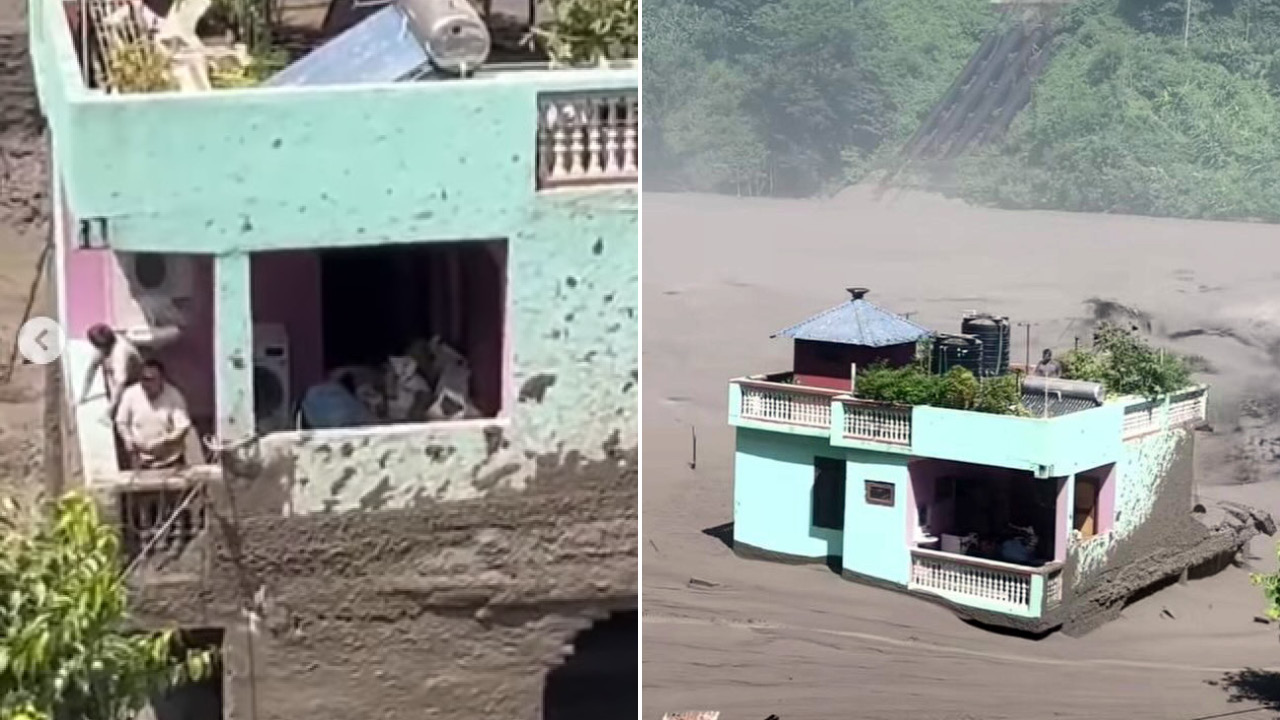
A family of five in Nepal has survived a catastrophic flash flood and mudslide after sheltering on the second floor of a turquoise house as much of their town was destroyed around them.
When floodwaters tore through Trishuli in the Nuwakot district, much of the valley was wiped out within minutes. Homes crumpled, bridges gave way and the Trishuli river surged by up to nine metres in just 30 minutes. From the upper floor of their turquoise home, the family watched the destruction consume the town.
The disaster is believed to have begun when part of a Himalayan glacier broke off, crashed into the river below and set off flash flooding and a mudslide. A surge from upstream then sent ice, rock, mud and debris roaring through valley towns and villages across the country.
On the morning the flood struck, residents had little time to respond as the river rose rapidly. Lakshmi Pandey said she was at the family shop, about five minutes from home, when she realised the flood was coming. “We ran back as fast as we could because my mother-in-law and my daughter were at home,” she said in an interview with The Economic Times.
She told her mother-in-law, “The flood is coming, we need to run”.
But escape quickly became impossible. “The old bridge broke and a huge amount of water suddenly came rushing down from above, and at that point, I realised that we could no longer escape by running outside,” she said.
Inside the house near the riverbank, Pandey, her husband, daughter, in-laws and a neighbour became trapped. Her son was at school. From the balcony, beside their washing machine, they watched floodwater tear through the lower level of the house.
Video of the ordeal spread widely online, with the turquoise building dubbed the “miracle house” and “greenhouse” on social media. The family could be seen crowded around the balcony rails while the flood raged below.
“Water was hitting the house from both sides, and the whole house started shaking; it felt just like the huge shaking we experienced during the 2015 Nepal earthquake,” she said.
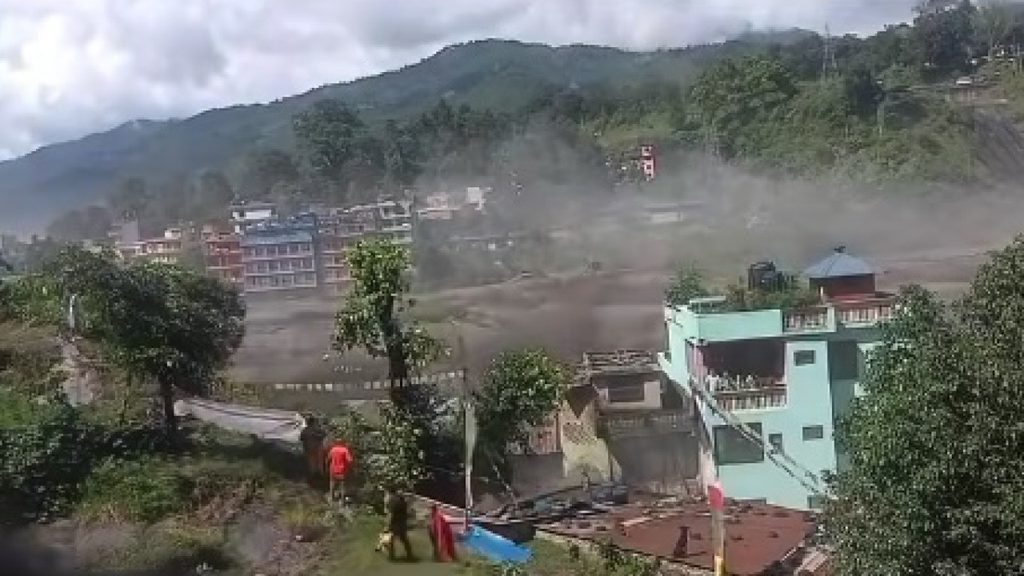
As nearby homes collapsed under the force of the water, the family believed they might not survive. “I thought my son would be all alone now, an orphan,” the mother said in a Reuters interview. “We thought if we survive we will all survive, if we die we will all die.”
Her husband, Prakash Pyakurel, said he thought “this is the end,” and decided the family should remain together in what felt like their final moments while “chanting the God’s name.”
While waiting for help, Pandey said she kept telling herself “we are five people, we should be patient”.
Footage circulating on Saturday showed rescue workers using a makeshift bridge to reach the family. Mud could be seen caked on the walls just below the balcony. Pandey said four neighbours put their own lives at risk to save them. “Somehow, they managed to get all of us out safely,” she said.
Questions have since been raised about why the turquoise house remained standing when so much around it was destroyed. Adrian McCallum, head of engineering at the University of the Sunshine Coast, said it was likely the water had been able to flow underneath the building, in a way similar to a traditional Queenslander, reducing the load on the structure.
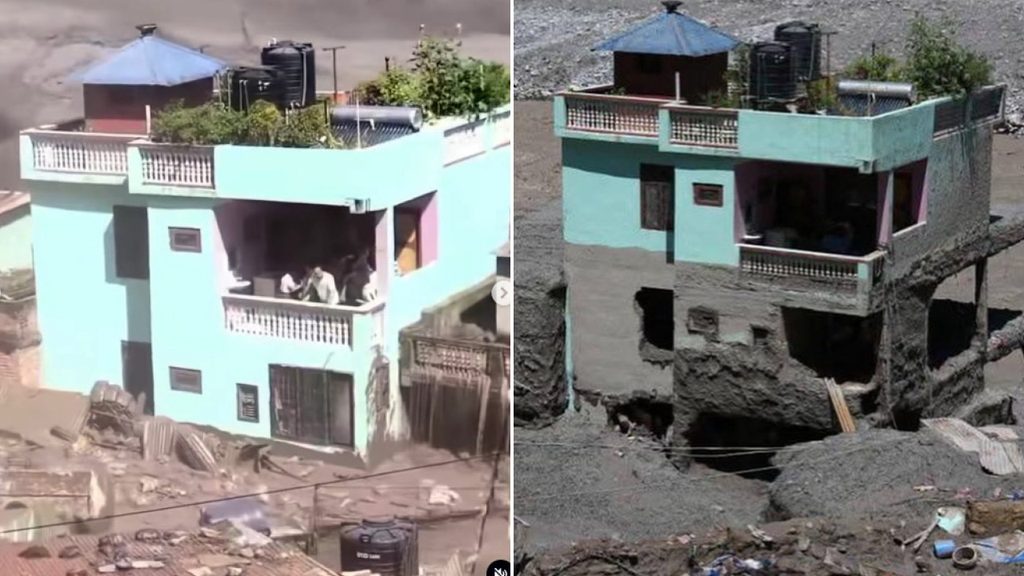
“Crucially, the turquoise house appears to be built on rock and constructed of concrete with reinforcing steel,” he told the ABC.
He also said the building appeared to be shielded from the main current by a small headland jutting out immediately upstream, which may have spared it from the worst of the flood.
As the death toll passed 1,000, rescuers used heavy machinery, helicopters and excavators in the search for thousands still missing. Hundreds remained stranded at devastated hydropower stations, which had become a major focus of rescue operations.
Specialised rescue teams from China, India and Nepal built temporary bridges to access remote areas and dig through the wreckage of hydropower projects. Excavators were being used in efforts to rescue nearly 300 workers trapped inside tunnels.
On Monday, the family returned to the house that had survived and walked through it to inspect the damage. The town that had existed only days earlier had become a vast expanse of mud. The mother said her family, including her son, had been “reborn”.