Independent testing commissioned for Four Corners found some tomato products sold in Australia under Australian or Italian origin claims were made from Chinese tomatoes. The products included tomato paste and passata sold by a major brand and two major supermarket chains.
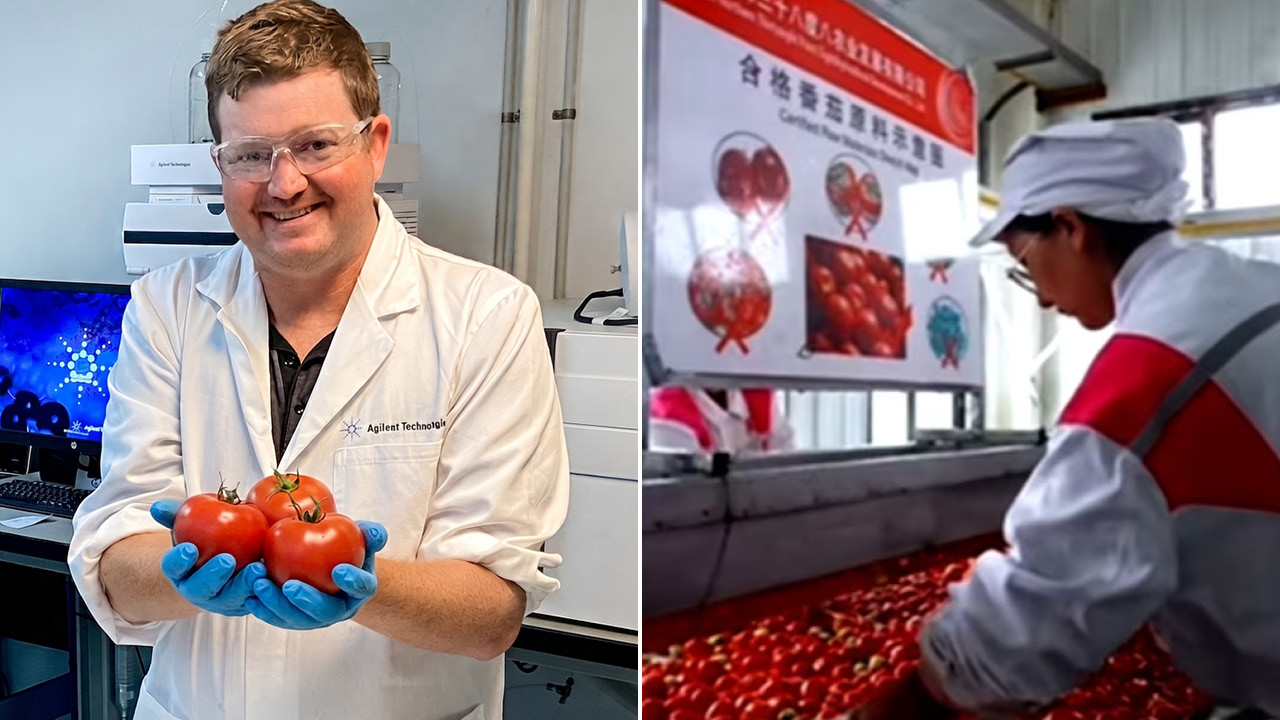
Source Certain, a forensic laboratory that has worked with the FBI, Scotland Yard, Interpol and the Australian Federal Police, analysed 221 processed tomato products from 39 brands, including paste, passata and diced tomato. It tested more than 900 samples and found 22 per cent failed country-of-origin testing, while another 6 per cent were flagged for further examination. All failed products were linked to China, and 53 per cent of those were traced to Xinjiang.
Leggo’s tomato paste products recorded the biggest problems. Source Certain tested 33 Leggo’s paste products bought from supermarkets in multiple states and found 27, about 80 per cent, failed. All of the failed Leggo’s products were found to contain tomatoes from China despite labels stating “Australian grown”. Two-thirds of those failed products were linked to Xinjiang.
Coles Italian tomato paste also failed, along with Aldi’s home brand Remano paste. Rosso Gargano passata sold at Coles was another failed product. Although labelled Italian, its forensic profile matched tomatoes grown in China. Six of the seven failed Coles products were traced to Xinjiang.
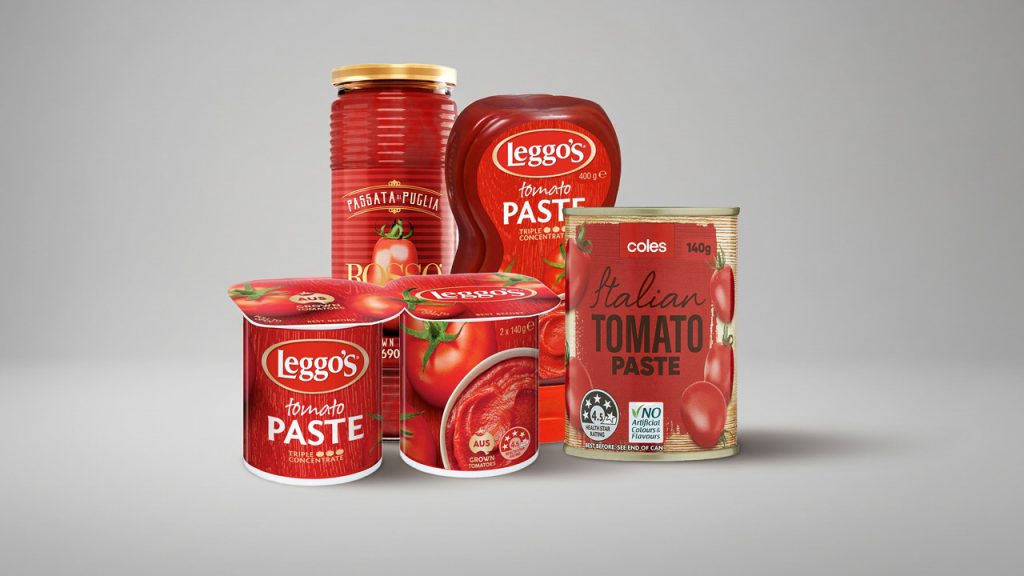
Some brands passed the testing, including Mutti, SPC, Woolworths, Providore D’Italia and Annalisa. Diced tomato cans and passata sold under the Leggo’s and Coles brands also passed.
Xinjiang is a major global tomato-growing region and has faced longstanding scrutiny over allegations of forced Uyghur labour. In 2021, the United States banned imports of tomato products from Xinjiang over forced labour concerns, which China denies.
The findings come at a sensitive time for Australia, which does not ban products made with forced labour. Last week the Trump administration imposed a 12.5 per cent tariff on Australian goods, citing Australia’s failure to effectively ban forced-labour imports. The Albanese government rejected the claim and called the tariff “completely unjustified”.
Source Certain said it had more than 98 per cent certainty that the failed tomatoes came from China. The lab compares a food’s chemical fingerprint, shaped by the soil, water and climate where it was grown, against verified reference samples. The testing was conducted blind, meaning scientists interpreting the data did not know which sample came from which product.
Simplot, which owns Leggo’s, rejected the findings and said it had a trusted supplier and regular due diligence.
“Simplot maintains comprehensive traceability, supplier verification and internal and external independent audits … across our supply chain,” Simplot said.
Coles and Aldi also rejected the results. Coles said it had no evidence its home brand tomato paste came from China and would commission independent testing.
The findings raise concerns not only about misleading labels, but also about consumers paying a premium for products they believe are locally grown and local farmers competing against cheaper imports presented as domestic.
Nyrola Elima, a member of the Uyghur community who left Xinjiang in 2011 and now lives in Sweden, said she was shocked Australia had not followed the US in removing Xinjiang tomato products from supply chains. She pointed to a promotional video from the Minfeng County government featuring the Hetian Latitude 38.8 Agricultural Development Company tomato processing plant in southern Xinjiang, where more than 95 per cent of the population is Uyghur. The company says its tomato paste is exported to 60 countries, including Australia.
“This company openly advertises the tomatoes they have been exporting to 60 countries including Australia … what they don’t tell you is how the Uyghur people are being recruited in these factories and are these Uyghur people being fairly paid? Are these Uyghur people allowed to leave?”
Former Australian Competition and Consumer Commission chairman Allan Fels said the findings were deeply troubling.
“I’m not totally surprised, but I’m very disturbed by it,” Professor Fels said.
Four Corners’ full investigation airs tonight from 8:30 on ABC TV and ABC iview.