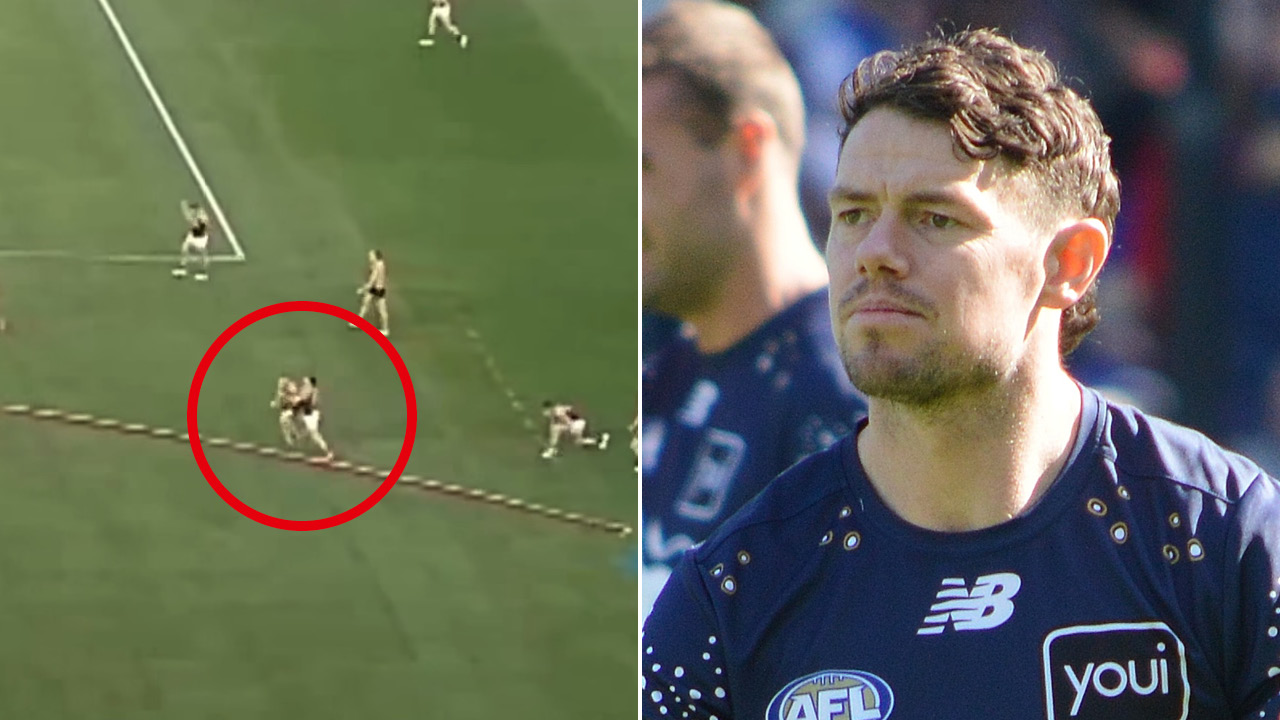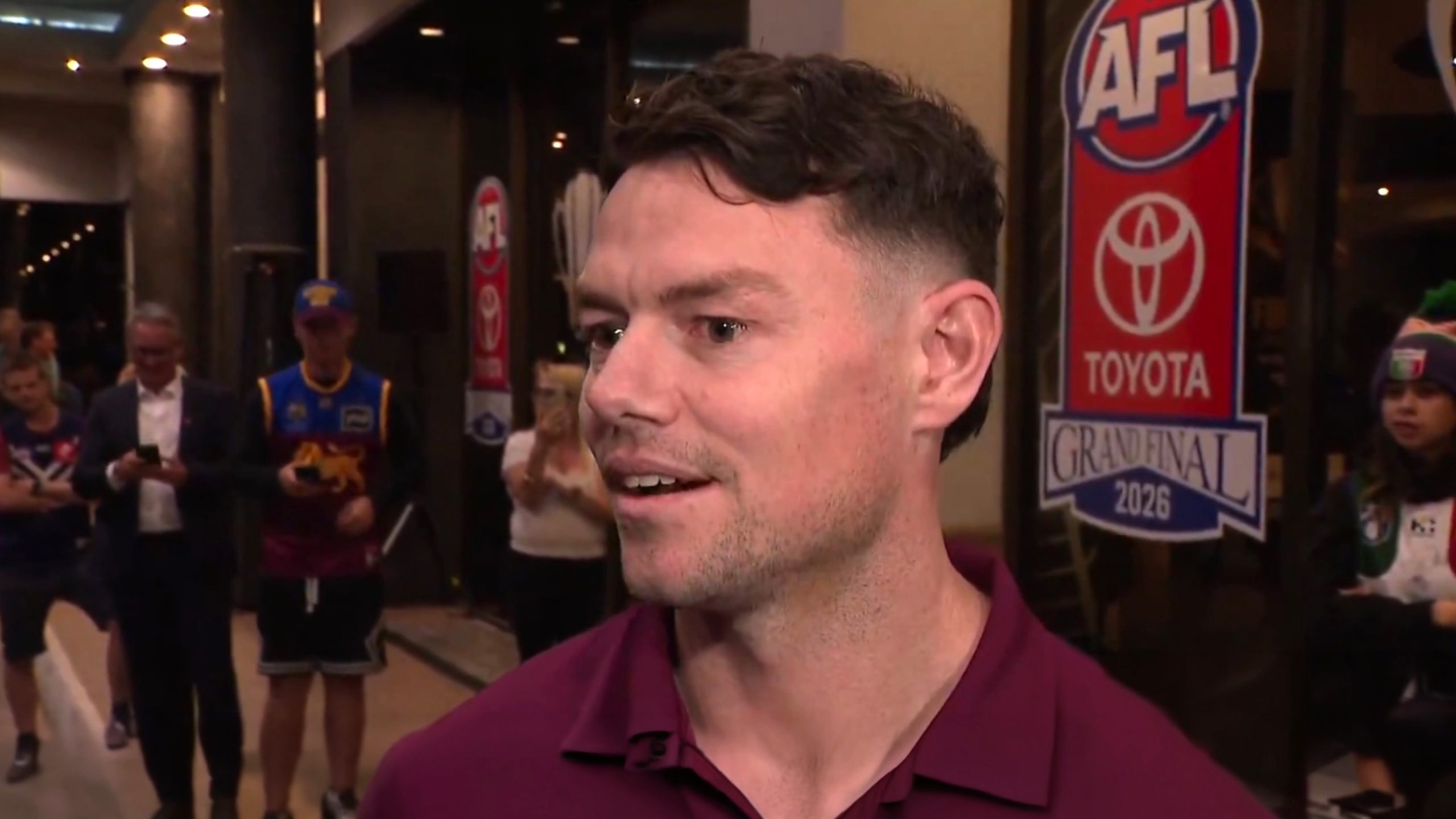
Lachie Neale will have the chance to sign off at Brisbane as a three-time premiership player after winning a dramatic last-minute appeal and being cleared to face Fremantle in Saturday’s AFL grand final.
The dual Brownlow medallist had originally been ruled out of the decider when the tribunal upheld a one-match suspension for striking Hawthorn’s Jack Ginnivan in last weekend’s preliminary final. But on Thursday night Brisbane took the matter to the AFL appeals board, where Richard Loveridge, Stephen Jurica and Wayne Henwood accepted the club’s argument that Neale’s case warranted exceptional and compelling treatment.
Instead of missing the grand final, Neale was fined $10,000 and can now line up against his former club.
Brisbane did not contest the tribunal’s finding that the incident was an intentional strike. The club’s argument focused on whether the Tuesday night panel made an error of law by failing to treat the grand final as “an important factor”, and whether the distinction between intentional and careless conduct was relevant when considering exceptional and compelling circumstances.
The appeals board did not accept that the tribunal had made an error of law in relation to the significance of the grand final. However, it found the tribunal members “did err in having regard to whether the conduct was intentional”.
🗣️ "I just want to thank the club…"
— 7AFL (@7AFL) September 24, 2026
– Lachie Neale speaks after his successful appeal pic.twitter.com/c8rOkypfHG
“We accept the position of Neale in his written submissions that the intentional aspect was an element of the charge which had already been established,” Loveridge said.
“The relevant inquiry was whether despite the charge having been established there was exceptional and compelling circumstances. In this case that was Neale’s record.
“We find that Neale’s record is exemplary and that he should be afforded the benefit of the provision. In conclusion we allow the appeal. We order that Neale instead be fined $10,000.”
Adrian Anderson, representing Brisbane, had submitted that Neale should receive a $10,000 fine, or an amount set by the appeals board, or alternatively serve the one-match ban in Round 1, 2027. He did so without mentioning that Neale is set to leave the club and join Collingwood.
After the ruling, Neale thanked the appeals board as he left the conference and again when speaking to reporters outside Brisbane’s Pullman team hotel.
“Obviously very happy with the appeals board’s decision. Looking forward to playing in the grand final,” he said.
“After this and after a couple of questions all the attention is off me and we get ready to play.”
Neale said he “wasn’t really hopeful or very doubtful either way”.
“I didn’t know, I’ve never been in this situation so I wasn’t sure how it would play out,” he said.
“Pretty nerve-wracking. Pretty foreign territory so wasn’t really sure what to do with myself, been trying to keep busy so coming down here and training has been nice.”
He rejected the idea that he now had “a bigger point to prove”.
“I just want to play my part and win on Saturday. Difficult challenge against Freo,” he said.
Asked what it meant to get “one more game” for Brisbane in the grand final, Neale smiled and replied: “Who says it’s my last?”
When pressed on whether he was staying with the Lions, he said: “I didn’t say that. We will wait and see what happens at the end of the year.”
Neale also said the uncertainty around his availability had not disrupted the side, though he hoped the outcome might lift the mood.
“To be honest it hasn’t been brought up too much within the group. We’ve been business as usual, even training today felt really normal,” he said.
“It hasn’t really changed our preparations in terms of the team and the club. Everyone’s worked hard behind the scenes. Maybe a pep in their step but it’s certainly gave me a pep in my step.”
The hearing itself featured arguments over both process and interpretation. AFL counsel Andrew Woods KC tried to introduce “much sharper vision of the incident”, even though new evidence is not usually allowed at appeal. He also acknowledged that the tribunal had found Neale guilty using lower-quality footage.
Anderson said the club could “not understand” why that vision had not been available in time for Tuesday night’s tribunal hearing. He said “it would have been immensely preferable” for Brisbane to have had the “opportunity to view and address this vision at the tribunal hearing”.
The AFL’s attempt to submit the footage was rejected. Anderson then argued against “the failure by the tribunal” to set aside the possibility of applying the exceptional and compelling circumstances provision. He also said “undue emphasis” had been placed on the AFL’s position that the rule had previously only been used in cases involving careless acts. Anderson said it was also significant that the “language of the provision makes no reference” to intentional versus careless offences.
He then turned to the tribunal’s reasoning.
“There is consciousness of the relevance of the grand final and reference to it in the deliberation about whether or not it was an intentional strike with medium impact,” Anderson said, noting the tribunal “carefully set out 14 factors it considered” and accepted “there are matters trending both ways”.
He said the tribunal had described Neale’s record as “extraordinary and I think the fair interpretations of the reasons is the tribunal does find there are exceptional and compelling circumstances”.
“The tribunal rightfully took into account Neale’s exceptional record of something close to a unicorn but did not, was not influenced to use that factor to render it inappropriate, unreasonable to apply the one-match suspension,” Anderson said.
“The significance of this consequence of missing a grand final and why it needed to be weighed into the mix will not be lost on any of the three members of the appeal board tonight. You will all be abundantly aware of the opportunity playing in a grand final means for an AFL footballer. I don’t need to harp on the point.
“We all know the famous Bobby Skilton (story) that he’d give his three Brownlows in a heartbeat to win a grand final. More recently Nat Fyfe said he would trade his Brownlow for the opportunity to play in another grand final.
“It’s a historic opportunity for Neale to play in this match.”
Loveridge asked Anderson whether he was arguing that it was “not for us to consider any negative points”.
“The fact that he had some prior fines, just like Scott Pendlebury did, just like Charlie Cameron did, that was fine to take that into account. To take into account that it was some distance from the ball, that was fine,” Anderson replied.
“But we say what they should have taken into account — just dealing with the grand final now — was something else in favour. They failed to take into account a crucial matter.
“What we’re saying is when you weigh the matters against Neale … when you weigh his incredible record and that Ginnivan’s not injured and you have regard to the fact the consequence of applying this suspension is that Neale misses this grand final, that ought to have been considered in the mix. It was a very finely balanced decision.
“If they had have included in the factors in favour of Neale that in this case he would miss a grand final, that’s something that is part of the exceptional and compelling circumstances. It doesn’t often arise that you’re talking the ability to participate in a grand final. It’s unusual and demands attention as a matter alongside his record.”
Loveridge responded that the reasons “would appear to make it clear that the tribunal were aware of the significance of the grand final and clearly it was the consequence of the decision.
“It’d nearly be unreal to say that they would not have it in their contemplation, notwithstanding that it’s not in the list (of reasons),” the appeals chair said.
Anderson pointed to the tribunal’s statement that it still had to apply the rules, arguing that the exceptional and compelling circumstances provision is itself part of those rules.
“Perhaps I’m partly at fault here. I could have more squarely raised this question of a grand final more explicitly,” he said.
“But what I would say to you is it was there and it was open for the tribunal to find it, and perhaps that I didn’t make it as clear as I should have, it should not disadvantage Neale.
“At the end of the day it is unreasonable … regardless that (the strike) was intentional. There’s no such mention (of intentional versus careless in the exceptional and compelling circumstances rule) because that’s not the way it’s ever intended to operate and not the way it should operate.
“The whole purpose of this provision is to say, OK, you can make a mistake because Neale as one of the greatest and fairest players ever, you deserve a little bit of leniency here.
“This rule exists precisely for someone like Neale, who deserves the right to play in this grand final.
“It needs to be a proportional sentence.”
Late in Anderson’s submissions, Loveridge urged him to “promptly deal with the point” he was making.
Woods also interrupted at one stage, saying it was unusual to speak during the club’s submissions but that he felt compelled to note he was “lost” by Anderson’s case.
“It’s not making a lot of sense to me, I must say,” he said.
When Woods began his response, he said he would try to stay within the suggested 45-minute limit, in what was a pointed jab at Anderson. He also rejected Anderson’s suggestion that AFL counsel may have similarly failed to stress the importance of the grand final before the tribunal, and said it was “pretty brave” to argue the tribunal had not considered it.
Woods repeated the position he had put at Tuesday night’s tribunal hearing, saying Neale knew Brisbane would be in the grand final if it beat Hawthorn and therefore understood the consequences of committing an intentional strike.
The appeals board adjourned to deliberate at 5.56pm and returned at 6.20pm.
Neale can now join Sydney’s Barry Hall in 2005 and Richmond’s Trent Cotchin in 2017 as players who escaped bans for preliminary final incidents and went on to play in eventual premiership victories.