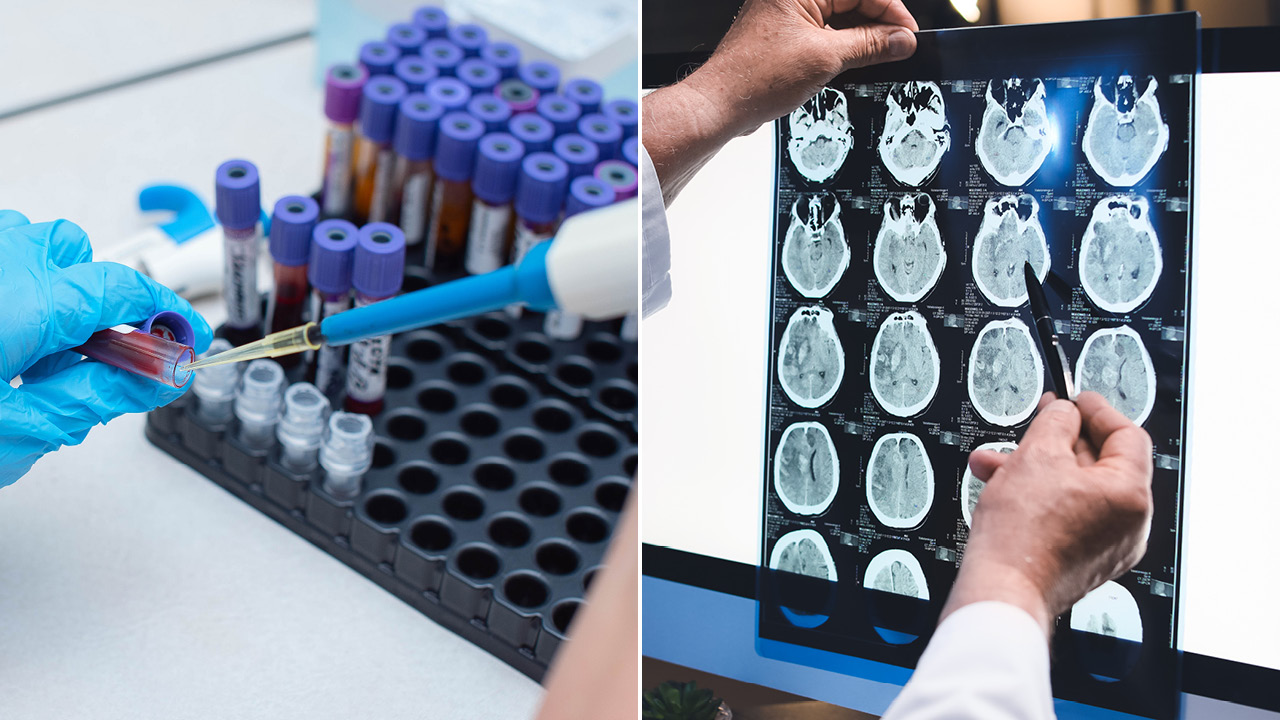
A new blood test that detects changes linked to Alzheimer’s disease could soon make diagnosis far simpler, potentially reducing the process to a routine test rather than invasive or costly procedures.
The method works by identifying amyloid and tau, the two proteins associated with Alzheimer’s, which can begin collecting in the brain decades before any symptoms appear. Until now, the main ways of confirming a diagnosis have been a lumbar puncture or a type of brain scan that is expensive and not widely available.
If rollout proceeds as planned, Australians could access the test through specialist referral by the end of the year, with the eventual aim of making it available through Medicare. The Therapeutic Goods Administration-approved test will now undergo further clinical trials at the newly opened Asia-Pacific Centre of Excellence for Alzheimer’s Disease Diagnosis in Sydney, officially launched on Thursday by Health Minister Mark Butler.

The new centre brings together not-for-profit medical research institute Neuroscience Research Australia, known as NeuRA, and Swiss healthcare giant Roche. It will be overseen by Associate Professor Emma Devenney, a NeuRA neurologist, who says the breakthrough could make a major difference for people already in the early stages of Alzheimer’s. Because the test is simple and non-invasive, it could help patients prepare for the future and, if they choose, begin preventative therapies.
“Earlier is definitely better for people who have symptoms,” Associate Professor Emma Devenney, a NeuRA neurologist, said.
“It’s really important for people to plan while they still can, to give them time to do the things that they want to do,” Devenney said.
Despite the promise of the test, Devenney said it will initially be limited to people already showing symptoms. That is because while it can reveal the presence of the abnormal proteins tied to Alzheimer’s, it still cannot determine when symptoms might start, or whether they will develop at all.
“It doesn’t tell you that you have the disease, it tells you that you have the changes in your brain – the abnormal proteins – that are associated with the disease,” Devenney said.
A person who returns a positive result at 60 may not experience symptoms until many years later, and may never develop them. That uncertainty is one reason experts are wary about expanding access too quickly, with concerns also raised over who should be able to use the test and whether irresponsible rollout could create more confusion for patients.
“So I think we have to be really responsible in how these tests are rolled out into the community at the moment,” she said.
Even with those concerns, Devenney and her colleagues believe the science will improve to a point where doctors can more accurately predict when symptoms are likely to emerge.
“At some point I anticipate that it will be like going to get your cholesterol checked,” she said.
“And hopefully by that stage we will have preventive treatments.”