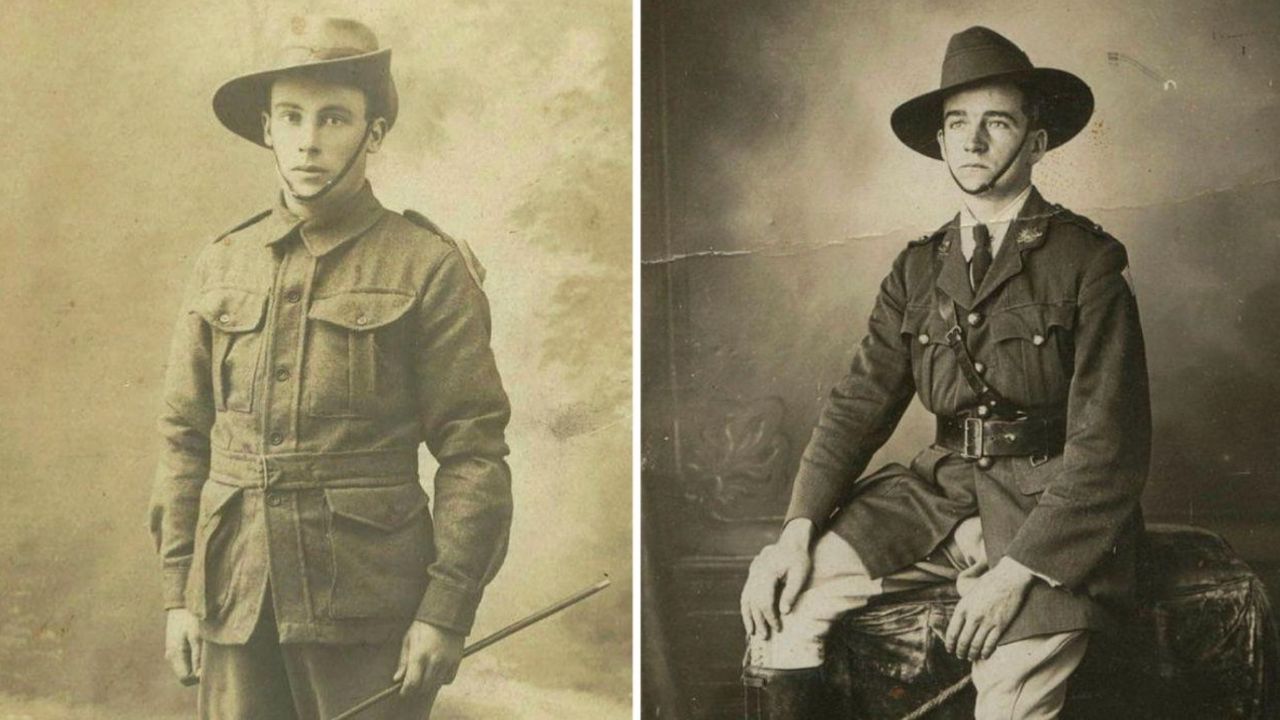
Eleven Australian soldiers killed during the First World War have been formally identified more than 100 years after their deaths, giving their families long-awaited answers about their final resting places.
The soldiers died in battles across France and Belgium between 1916 and 1918. Their identities were confirmed through DNA testing and historical records by the Australian Army’s Unrecovered War Casualties – Army team, with help from archaeologists, forensic specialists, researchers and descendants.
Four of the men served with the 2nd Australian Field Ambulance and were killed on May 5, 1917, during the Second Battle of Bullecourt. They died when an artillery shell struck a medical aid post in a railway cutting. Their remains were recovered during an archaeological excavation in Riencourt-lès-Cagnicourt, France, in April 2025.
The other seven soldiers were killed in battles including Fromelles, the Somme, Menin Road and the advance to the Hindenburg Line. Their remains were buried in cemeteries across France and Belgium.
Acting Prime Minister Richard Marles said the identifications were a reminder of the sacrifices made by Australians during the war.
“As we pause on Remembrance Day to honour all Australians who have served, we also remember these eleven soldiers who gave their lives during the First World War and whose identities have remained unresolved for more than a century,” he said.
“These men died at Fromelles, the Somme, Bullecourt, Menin Road, Passchendaele, Amiens and during the Advance to the Hindenburg Line.
“They served in infantry battalions, machine-gun units and field ambulance formations, and each made the ultimate sacrifice in service to Australia.”
Minister for Veterans’ Affairs Matt Keogh said the discoveries would allow the men to be commemorated by name for the first time in more than a century.
“Today, on Remembrance Day, we honour the service and sacrifice of eleven Australian soldiers of the First World War who, for more than a century, were known only as unknown Australian soldiers,” he said.
“Through the dedication of military historians, archaeologists, researchers, forensic specialists and family members, these soldiers have now been identified and will be commemorated by name for the first time in more than a century.
“The identification of these soldiers who were killed in action across France and Belgium will provide long awaited answers for families who have experienced generations of uncertainty. Our commitment to this ongoing work is the ultimate expression of the timeless adage – ‘Lest we forget’.”
The soldiers identified were:
- Corporal Harry Maitland Whiteoak – 2nd Australian Field Ambulance
- Private George Laban Lupson – 2nd Australian Field Ambulance
- Private James Campbell – 2nd Australian Field Ambulance
- Lance Corporal Alexander Joseph Jack – 2nd Australian Field Ambulance
- Private Roy Hawkins – 3rd Battalion
- Sergeant Charles Henry Nicholls – 46th Battalion
- Lieutenant Howard Victor Morey – 58th Battalion
- Lieutenant John Maher Lyons – 17th Battalion
- Lieutenant Andrew Anderson – 7th Australian Machine Gun Company
- Second Lieutenant James Albert McMichael – 37th Battalion
- Private Thomas Easton – 30th Battalion
The soldiers were laid to rest in military cemeteries in France and Belgium, where they can now be remembered by name.
Image: Department of Defence