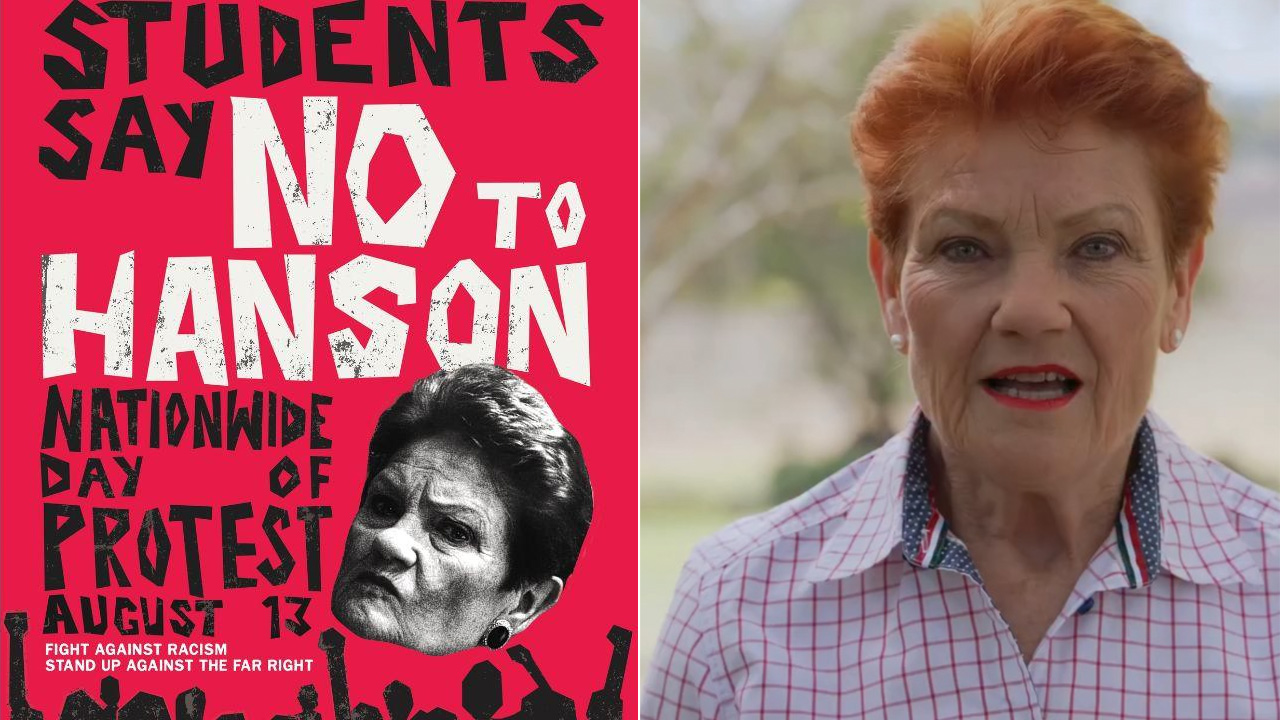
Hundreds of high school and university students have taken to the streets as part of a nationwide protest against Pauline Hanson and One Nation, with young Australians walking out of classrooms to voice their opposition to the party’s policies.
The “Students Say No to Hanson” demonstrations were organised by the National Union of Students, with protests held in capital cities across the country on Thursday.
In Sydney, hundreds gathered outside Town Hall, carrying signs and chanting slogans including “Migrants are welcome, racists are not” as speakers accused One Nation of promoting division and scapegoating migrants.
The protests come amid renewed attention on One Nation as the party enjoys growing political support and Hanson takes an increasingly prominent role in the national debate.
National Union of Students representative Felix Hughes said students were particularly concerned about One Nation’s positions on education, housing and workers’ rights.
“She has opposed university funding, she has voted for increasing debt levels of students, she has voted for increasing housing unaffordability for students, she has opposed workers rights,” Hughes said ahead of the protests.
While acknowledging students would ordinarily prefer to remain in class, Hughes argued the issue was important enough to justify the walkout.
“We don’t want to be leaving class, we would much rather being in class right now, but the threat of Pauline Hanson is just too high,” he said.
The demonstrations have also sparked a heated debate over whether school students should be leaving class to participate in political protests.
Federal Education Minister Jason Clare defended young Australians’ right to express their views but said demonstrations should take place outside school hours.
“I want kids at school learning,” Clare said. “If people want to protest on the weekend, then fill your boots, but I want you at school when school is on, learning.”
Hanson also hit back strongly at the protesters, arguing students were being influenced by teachers and political activists rather than independently deciding to demonstrate. “Schools should teach young Australians how to think, not what to think,” Hanson said.
She also urged students concerned about their futures to focus instead on issues such as wages and the cost of living, telling them: “Whether you know it or not, One Nation and I are fighting for you.”
One Nation MP Barnaby Joyce went further, accusing “socialist” and “left-wing” teachers of encouraging students to join the demonstrations.
Joyce questioned whether schoolchildren had spontaneously decided to protest, arguing they were being “used” to advance a political cause. Student organisers rejected the suggestion, insisting young Australians were capable of forming their own views about politics and the direction of the country.
The Sydney protest was also addressed by Greens MP Jenny Leong, who backed the students and accused Hanson and One Nation of using migrants and minority communities as political targets.
The demonstrations echo student protests against Hanson almost three decades ago, when high school students staged walkouts during One Nation’s first rise to national prominence in the late 1990s.
This time, however, the protests arrive as Hanson and her party once again become a significant force in Australian politics – and as a new generation of young Australians makes it clear it intends to have a vocal say in the debate.