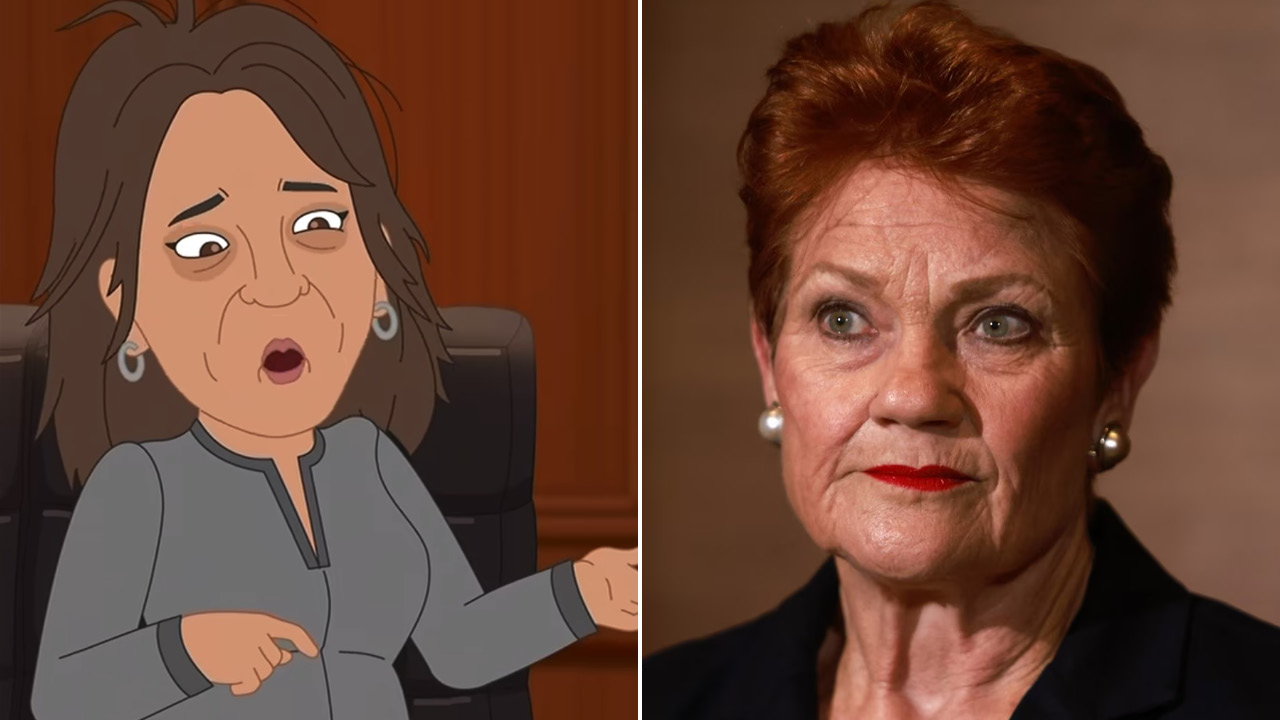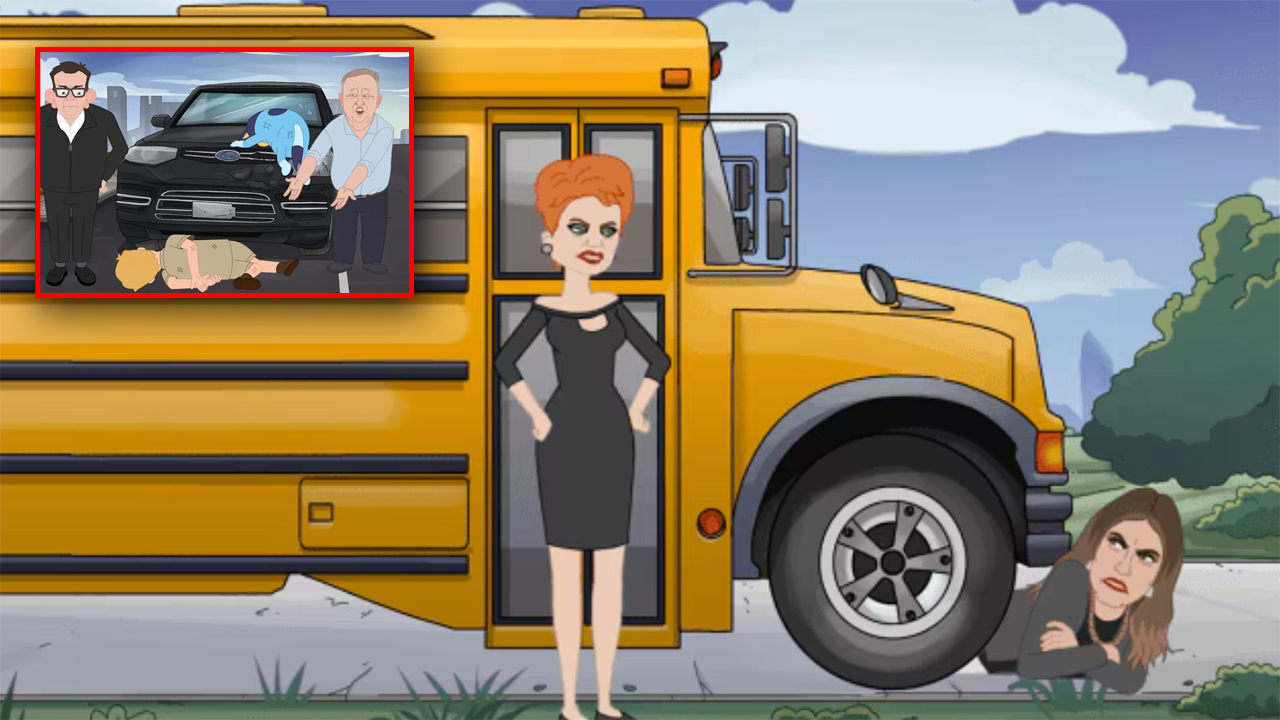
Pauline Hanson has hit back at criticism of One Nation’s controversial political cartoons, insisting they have nothing to do with the shocking attack on independent MP Helen Haines.
The One Nation leader has rejected suggestions that her party’s animated Please Explain videos contribute to political violence, accusing Labor and Liberal politicians of attempting to silence criticism.
The controversy erupted after Australian Federal Police Commissioner Krissy Barrett warned that increasingly heated political debate was contributing to a rise in threats and abuse directed at politicians.
Speaking on ABC’s Insiders on Sunday, Commissioner Barrett said police had observed a direct connection between inflammatory political discourse and threats against elected representatives.
“We do see where there is particular political conflict or discourse occurring … it does have a direct correlation to what we see in terms of threats and abuse, and sometimes it’s very immediate,” she said.
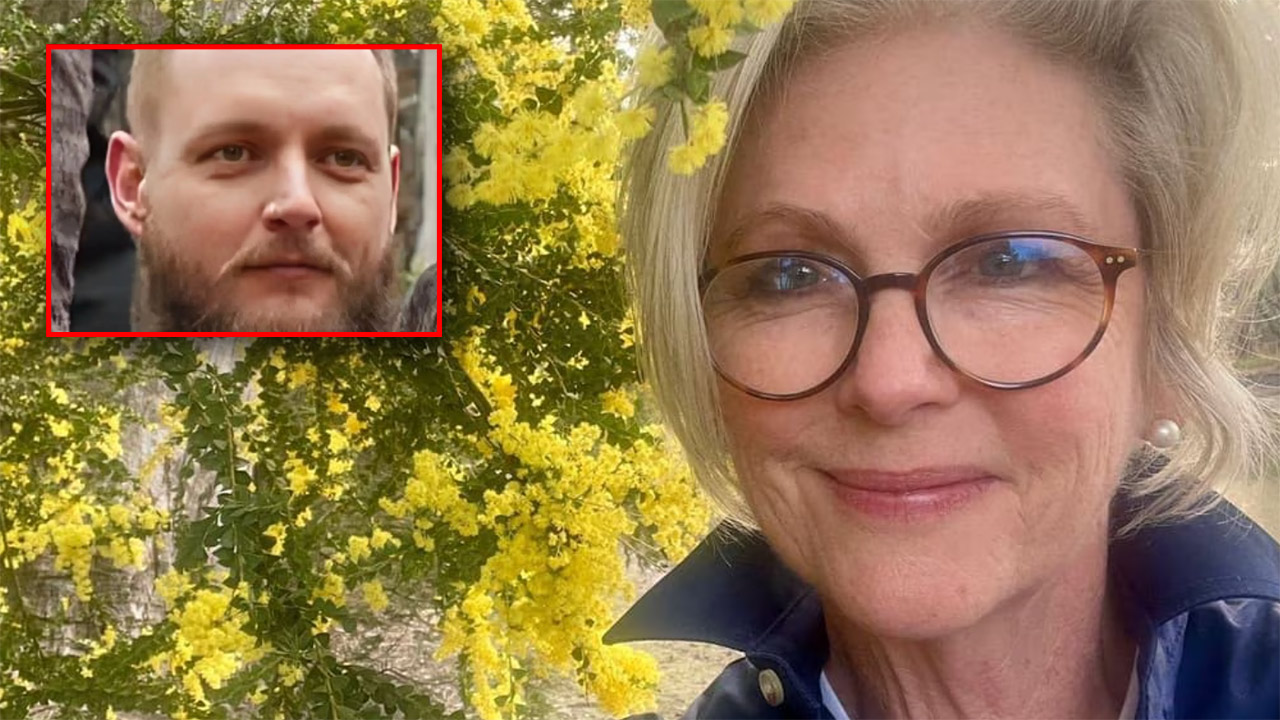
Her comments came as several of One Nation’s past cartoons resurfaced online following the alleged attack on Dr Haines outside her electoral office in Wangaratta, Victoria, on October 19.
Among the animations attracting renewed attention are scenes depicting Prime Minister Anthony Albanese and other political figures being struck by vehicles.
Another cartoon features former Victorian premier Daniel Andrews being run over by the popular children’s television character Bluey.
Asked specifically about that animation, Commissioner Barrett said police had observed reactions within the community following provocative political material.
“We do see examples where there are particular announcements or things like you’ve just described, [where] there is a reaction,” she said.
But Hanson was having none of it.
“The Please Explain cartoons have nothing to do with the tragic attack on Helen Haines,” she declared.
“Liberal and Labor politicians want our cartoons censored because they don’t like the scrutiny.”
Hanson vowed the animated videos, which regularly parody Australian politicians and political issues, would continue.
She also questioned why the safety of elected representatives appeared to receive greater attention than violence affecting the wider community.
“When violence touches politicians, the response is immediate: more security, more protection and demands for action. Where is that same urgency when ordinary Australians are attacked?” she asked.
The AFP Commissioner, however, stressed that police were not seeking to restrict legitimate political debate or freedom of speech.
“We are not here to police free speech; we are not here to intervene in political discourse,” Barrett said.
But she argued there was an important distinction between robust political disagreement and the disturbing threats increasingly being directed at public figures.
Commissioner Barrett revealed that one of her first tasks each morning was reviewing a report detailing threats made against federal politicians over the previous 24 hours.
On some days, she said, that report ran to several pages.
She also warned that although male and female politicians experienced threats and abuse, women were more frequently singled out for personal attacks, including threats of sexual violence.
The debate has intensified following the attack on Dr Haines, which left the respected independent MP critically injured and prompted an outpouring of concern across the political spectrum.
A Victorian man, Brendan Nugent, has been charged in connection with the attack. Police are continuing to investigate his alleged motives, and have not established that One Nation’s cartoons played any role.
The incident has also prompted urgent discussions about security arrangements for federal politicians, with the AFP conducting briefings and additional security measures introduced at Parliament House.
Labor minister Catherine King revealed she had abandoned the mobile caravan she once used to meet constituents because it lacked a second exit.
“If someone did kick off and I’m trapped in the van, it’s very hard to deal with that,” she said.
Meanwhile, Liberal frontbencher Ted O’Brien warned against allowing increased security concerns to separate politicians from the people they represent.
“That open access is a cornerstone of democracy,” he said. “We’re particularly good at it in Australia. We can’t take away grassroots politics.”
Prime Minister Anthony Albanese has called for Australians to lower the temperature of political debate, arguing that disagreements should never descend into personal hostility or violence.
Hanson has also condemned the attack on Dr Haines, but maintains that political satire and criticism must remain part of Australia’s democratic conversation.
For Commissioner Barrett, the events of the past week should serve as a wake-up call about the increasingly hostile environment facing those in public life.
“My hope is that this really causes people to pause and have a think about what’s happening in this country,” she said.
“And if this is not the incident, then what is?”