A majority of Australians would happily trade the annual January 26 culture war for something far more unifying: a guaranteed summer long weekend.
That’s the takeaway from new national YouGov polling, which suggests most Aussies would prefer Australia Day to fall on a fixed long weekend rather than a fixed date each year – just as the country gears up to mark the public holiday once again this weekend.
The survey, commissioned by Future Super on behalf of Clothing The Gaps and the Australian Long Weekend campaign, found strong support for moving Australia Day to the second-last Monday of January (between January 18 and 24), effectively locking in a three-day break while sidestepping January 26 altogether.
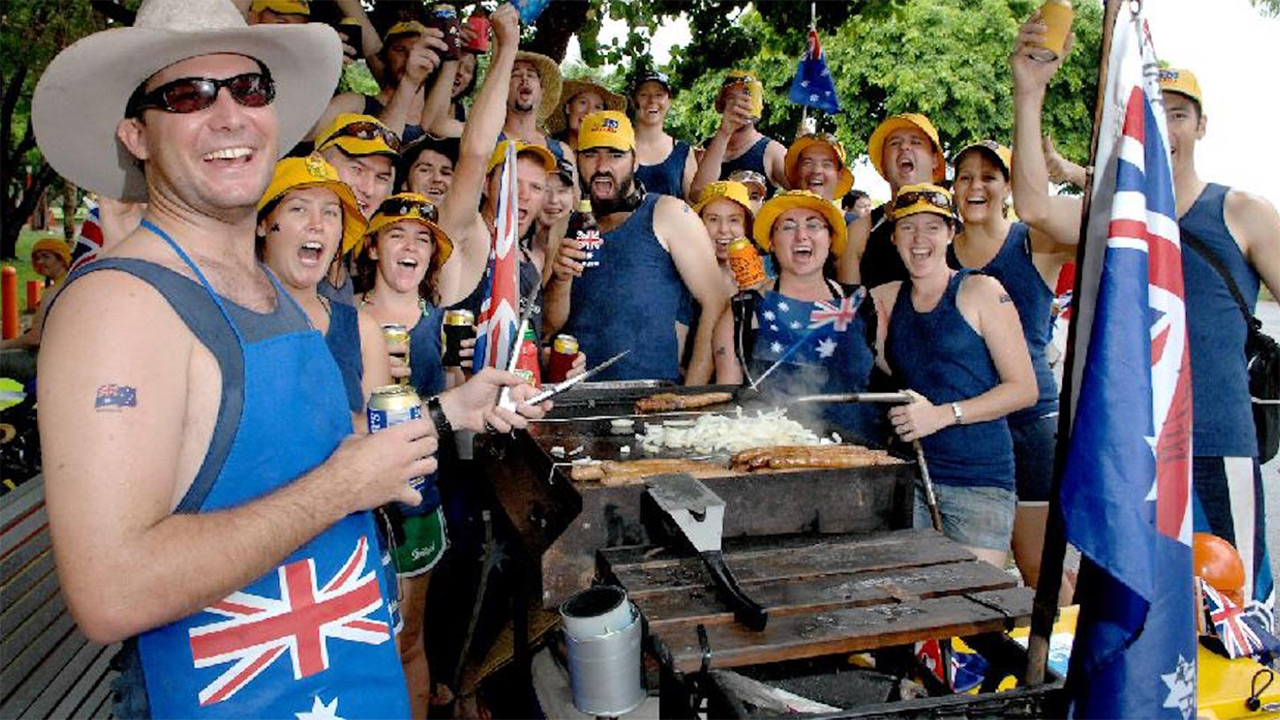
And while the politics of the date have long been fraught, the polling suggests many Australians are less interested in re-fighting the same argument every year, and more interested in moving forward – ideally with a barbecue.
Each January, debate reignites over January 26, which First Nations people observe as a Day of Mourning, marking invasion and dispossession. The proposed long weekend model aims to create some breathing space from that date, while still allowing for a national celebration.
“These poll results show that Australians are ready and support changing the date,” said Laura Thompson, chief executive and co-founder of Clothing The Gaps.
Ms Thompson, a Gunditjmara woman, said the long weekend offered a practical compromise – one that removes the celebration from a day of deep pain for First Nations people, while still preserving a shared national moment.
Support was strongest among younger Australians, with 70 per cent of 18- to 24-year-olds backing a fixed Australian long weekend over January 26.
Western Australia led the states, with 57 per cent in favour of the long weekend, while NSW, Victoria and Queensland all recorded majority support above 50 per cent.
In a rare moment of national unity, the polling also showed majority backing across every region – inner metro, outer metro, provincial and rural Australia – all landing around the mid-50s.
“Australians are tired of the division surrounding January 26,” Ms Thompson said. “When offered a practical, commonsense alternative like an Australian Long Weekend, the majority of Australians are ready to move forward.”
Phil Jenkyn, co-convener of the Australian Long Weekend campaign, said the idea wasn’t about winning an argument, but ending one.
“An Australian Long Weekend is a practical, commonsense way to move forward without continuing the harm caused by January 26,” he said.
“The results reflect the state of the nation, with a majority seeking a way to honour a national celebration without the division associated with January 26.”
In other words: fewer arguments, more long weekends – a proposal that, polling suggests, most Australians can get behind.
Image: Supplied