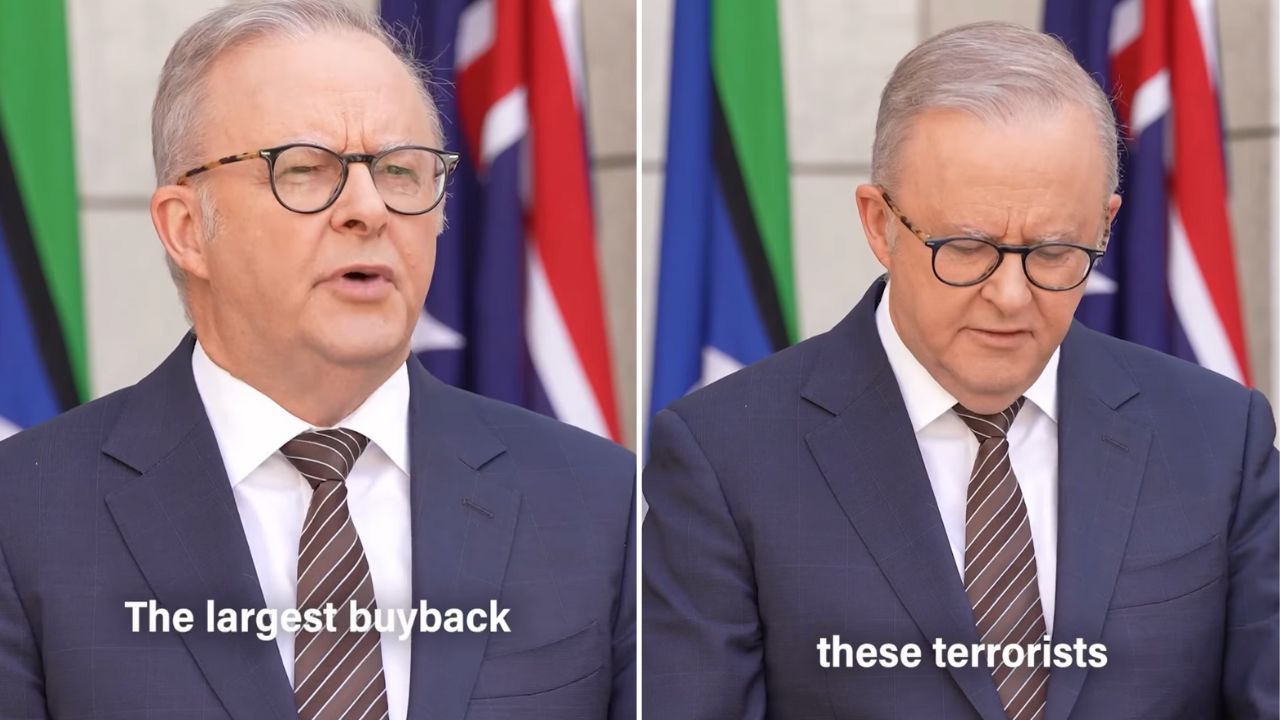
Prime Minister Anthony Albanese has announced a national gun buyback scheme, describing it as the biggest move on firearms reform since the changes introduced after the Port Arthur massacre.
The scheme would mirror the 1996 model and focus on removing surplus, newly banned and illegal guns from the community.
Albanese said legislation would be introduced to fund the buyback, with the cost shared equally between the Commonwealth and the states and territories.
Under the proposal, states and territories would handle the collection of firearms and compensation payments, while the Australian Federal Police would oversee the destruction of the weapons.
The announcement follows the deadly terror attack on Sydney’s Jewish community, in which 15 people, including a 10-year-old girl, were killed.
Strengthening gun laws was the government’s first major commitment after the attack.
Albanese said Australia now has more than four million firearms in circulation – more than at the time of Port Arthur.
“The terrible events at Bondi show we need to get more guns off our streets,” he said.
“We know that one of these terrorists held a firearm licence and had six guns, in spite of living in the middle of Sydney’s suburbs.
“There’s no reason why someone in that situation needed that many guns.”
National cabinet unanimously agreed earlier this week to explore tougher gun laws.
Options under consideration include speeding up a national firearms register, limiting how many guns one person can own, tightening the types of weapons that are legal, and making Australian citizenship a requirement for holding a gun licence.
Home Affairs Minister Tony Burke said the buyback was central to any broader reform, warning that if new ownership limits were introduced, people would be required to surrender excess firearms through the scheme.
“In 1996, the then-Howard government did the right thing — intervened to have a scheme which Australians have been rightly proud of. We need to go further,” the prime minister said.
The gun reforms were announced a day after the government unveiled changes to hate speech laws, which it says will lower the threshold for charges.
The opposition has called for parliament to be recalled next week to fast-track the legislation, but Albanese has rejected the move, saying “it’s not practical”.
This Sunday has been declared a national day of reflection to mark one week since the Bondi attack.
Australians have been asked to observe a minute’s silence, with flags on NSW and federal government buildings to fly at half-mast.
Albanese said the government would also work with the Jewish community to hold a national day of mourning next year.
Image: Instagram