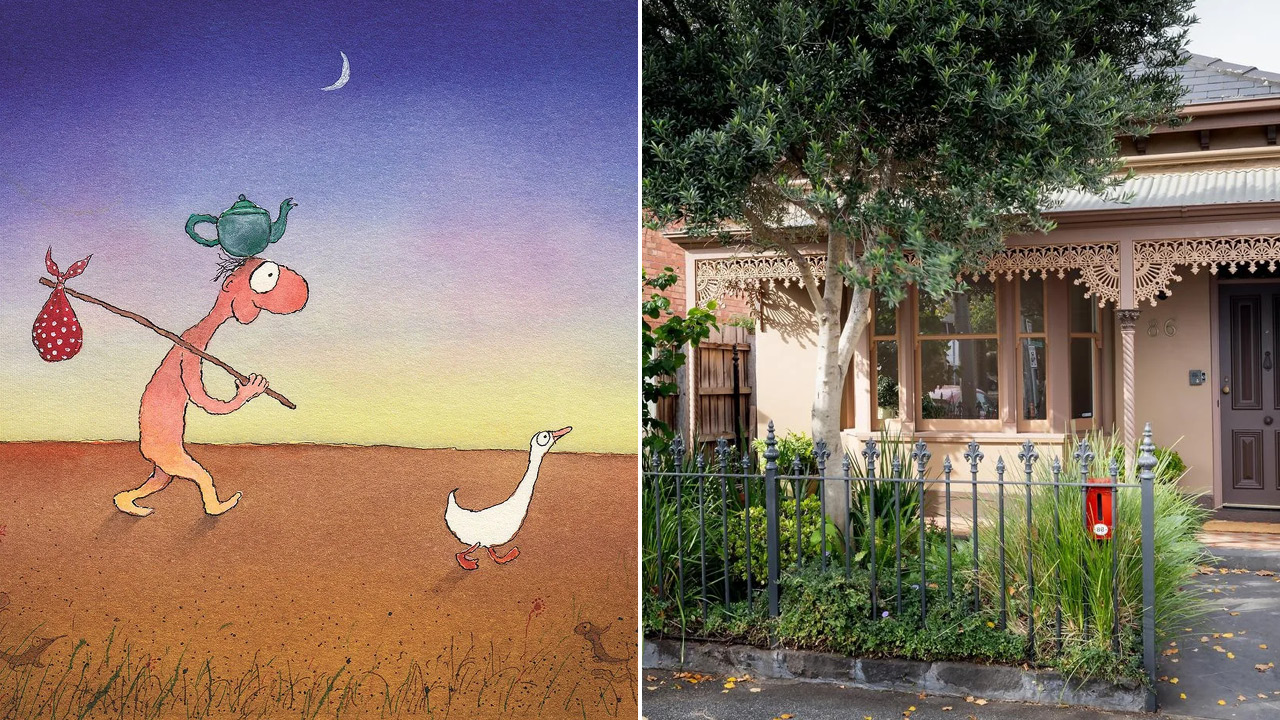
Michael Leunig and his partner, Helga Salwe, were not on a house hunt when a for-sale board outside 86 Falconer Street caught their attention in 2006. Even so, the famed cartoonist, whose illustrations and observations appeared in The Age and The Sydney Morning Herald for many years, immediately felt drawn to the property.
According to Leunig’s son, Sunny, the reaction was instant. “He was very excited because he just absolutely loved the street,” says Leunig’s son, Sunny.
It is not difficult to understand why. Falconer Street is regarded as one of Fitzroy North’s most attractive pockets, a quiet, leafy boulevard nestled between Edinburgh Gardens and Merri Creek Reserve. Leunig and Salwe bought the home and remained there until Leunig’s death in 2024. The property has now been placed on the market by Sunny and his three siblings, with a price guide of $2.3 million to $2.5 million.
Sunny was already based in Fitzroy North when his father moved into the home, and visits to Falconer Street soon became woven into everyday life. He recalls how often those visits would begin with seeing Leunig outside, immersed in the life of the neighbourhood.
“I would often pass by to find Michael out on the front bench, chatting with neighbours or with strangers simply moving through the neighbourhood,” he says.
For Sunny, those spontaneous interactions seemed to become part of his father’s creative world. “A community gathered around him, made up of people and stories he seemed genuinely fascinated by. It seemed as though those everyday encounters quietly fed his imagination.”
The residence, which had undergone a substantial renovation a few years before Leunig and Salwe moved in, quickly became a place of warmth and refuge for both father and son. Sunny says one of the home’s defining features was the sense of welcome as soon as you stepped through the door.
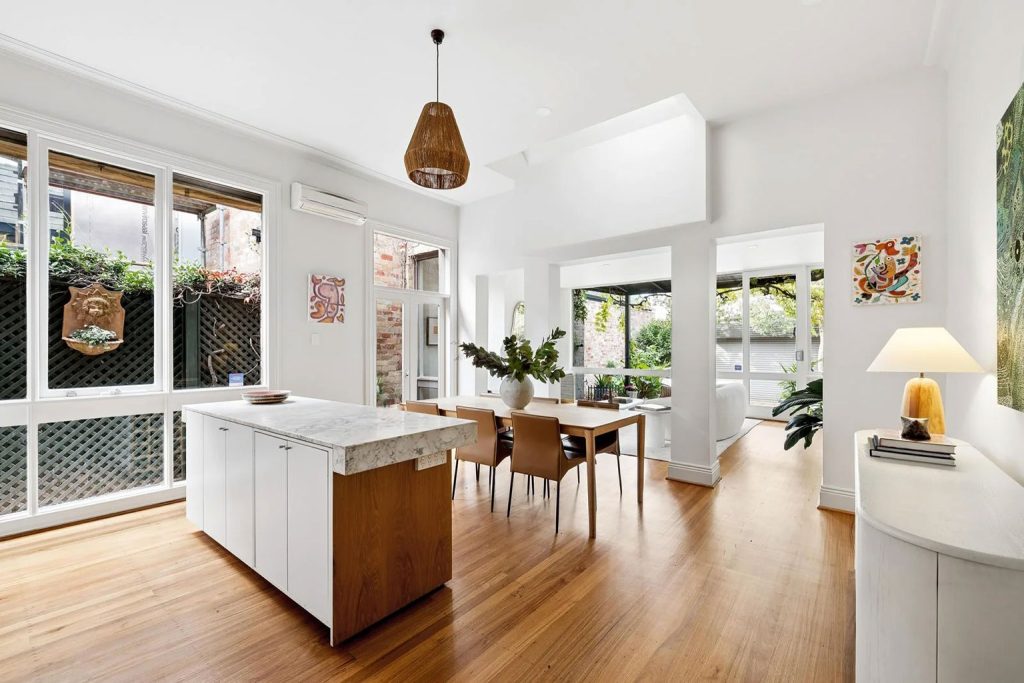
“I loved just walking into the place,” Sunny says. “There’s a long hallway that you can look right down, and that’s where Michael would hang a lot of his art.”
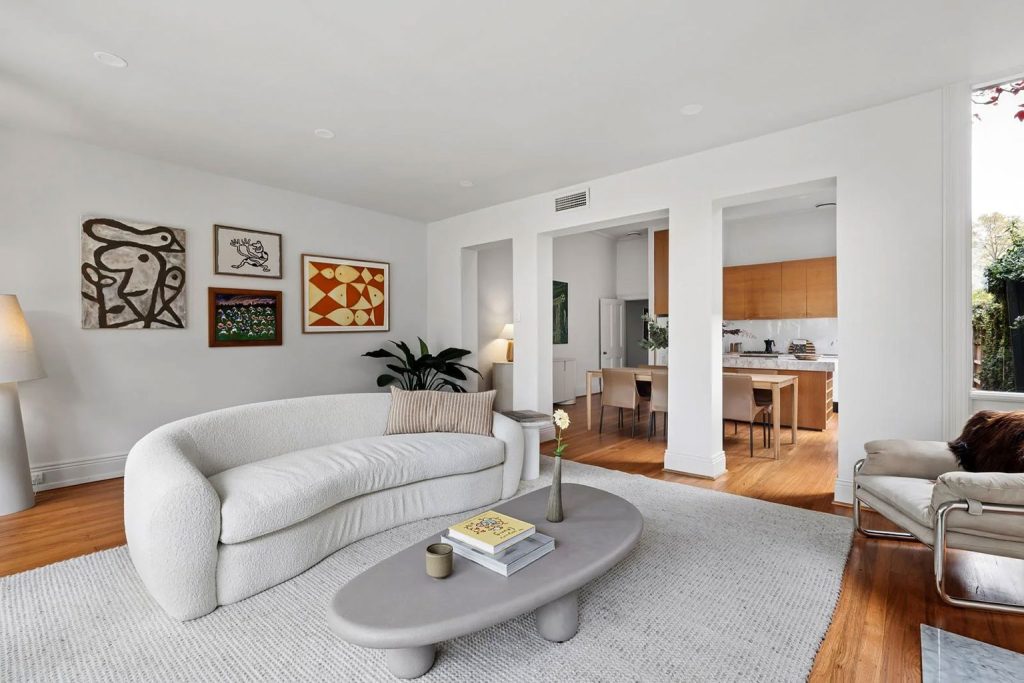
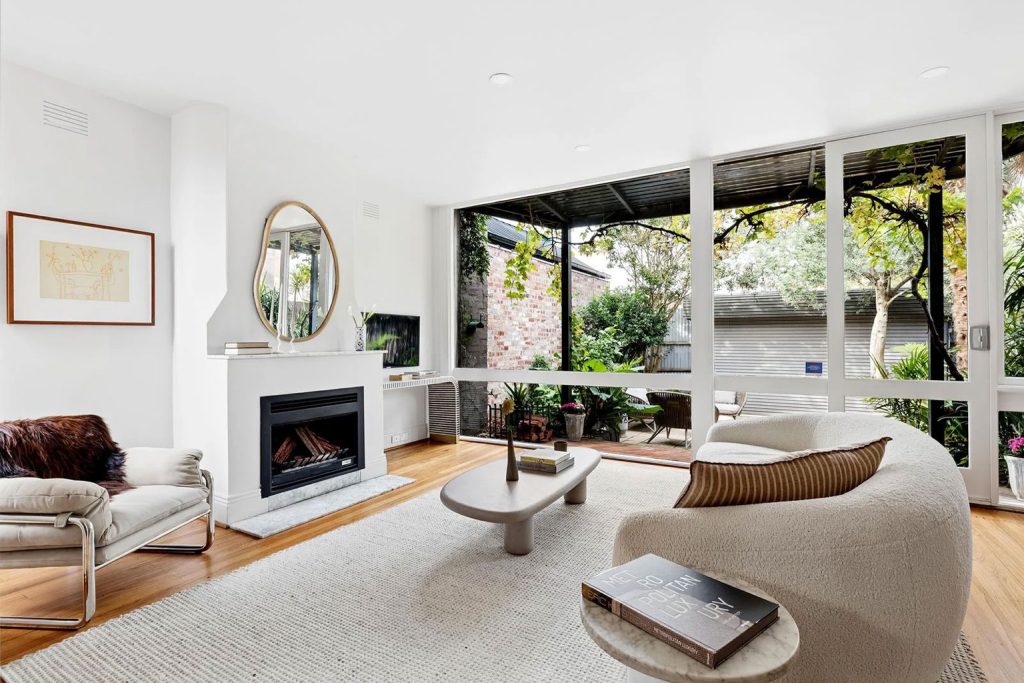
Some of his fondest memories are from winter evenings, arriving with takeaway and settling in beside the fire. “We’d pour a bottle of wine and disappear into long conversations about life, human nature and the condition of the world – very casual topics, of course.”
The living room, filled with natural light and looking out to the courtyard garden, also served as one of Leunig’s working spaces, even though he had a studio close by. The calmness of the home made it especially well suited to creative work.
“The house itself is incredibly peaceful, with almost no traffic noise, which made it an ideal environment for Michael to work in,” Sunny says.
His father’s ideas were never far away, and the evidence of that was often spread across the house. “I’d often arrive to find unfinished cartoons spread across the kitchen table. Michael was full of ideas, so the pen was always within reach.”
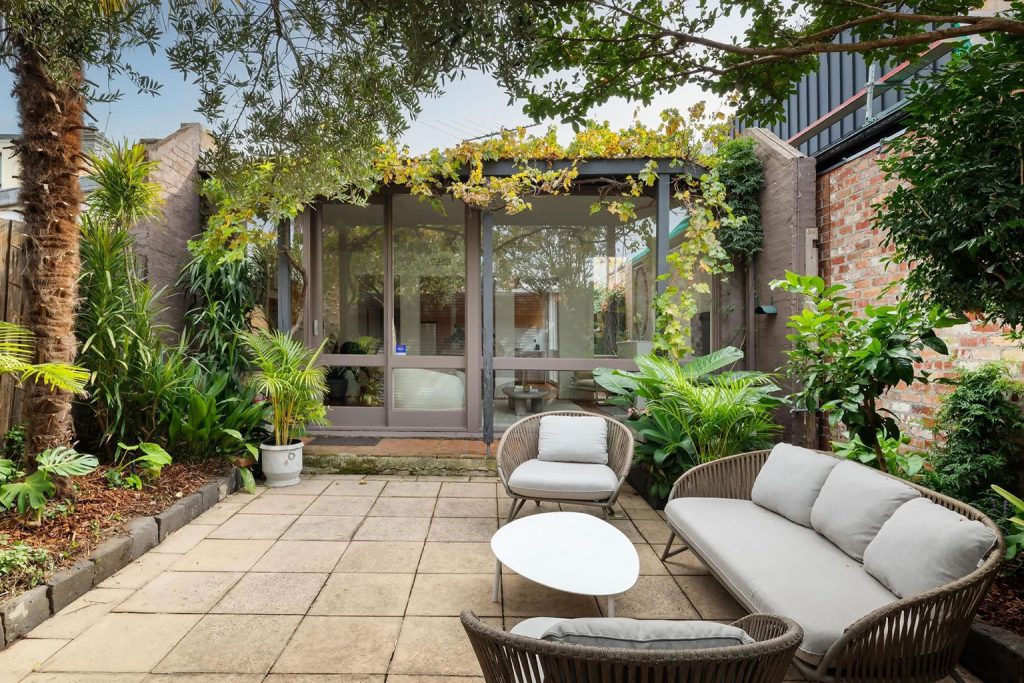
Outside, the courtyard was another cherished part of daily life. Sunny says Leunig often sat there with tea, embracing the stillness of the space. “It was part of a daily ritual centred on comfort, calmness and reflection,” says Sunny.
Leunig was deeply attached to the neighbourhood and had little reason to venture far. He regularly walked to local favourites Cavallini’s and Mitte for coffee with Sunny, and picked up groceries at the well-known Italian supermarket Piedmonte’s. Sunny says the appeal of the location went beyond convenience.
“He cherished the openness of the sky and the way his street connected so easily to both Edinburgh Gardens and the walking tracks along Merri Creek,” Sunny says.
He added, “People living in this part of Melbourne are truly fortunate in terms of what surrounds them,” Sunny says.
Leunig’s body of work remains among the most recognisable and individual in Australian art and commentary. Yet the house he left behind is understated rather than showy, thoughtfully looked after over two decades and only lightly adorned, offering its next owners room to shape it in their own way.
As Sunny puts it, “This beautiful place now waits for people who will bring their own stories into it.”