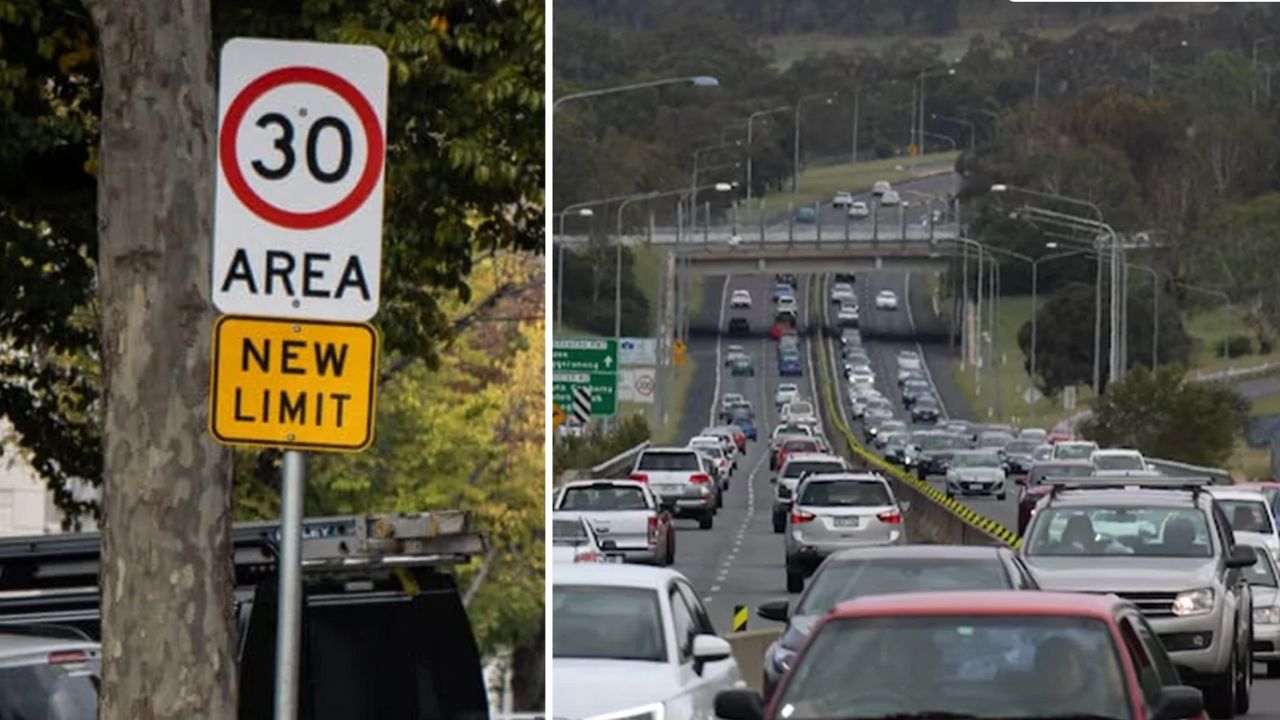
A new study has strengthened calls to lower speed limits across Australia, finding that reducing the limit from 50km/h to 30km/h could make roads significantly safer for cyclists.
The RMIT University Centre for Urban Research report found that cyclists’ exposure to high-traffic-stress roads drops by 30 per cent when limits are lowered to 30km/h.
Researchers assessed every road in Greater Melbourne for traffic stress, analysing speed limits, cycling infrastructure, and traffic volumes using government data and travel models.
They concluded that slower limits would allow cyclists to use quieter residential streets rather than busy roads – a change that could affect millions of drivers if rolled out nationally.
Lead author Dr Afshin Jafari said that while 30km/h may sound slow, the impact on driving times is minimal.
“Most trips should use residential streets only at the start and finish, so 30kph rather than 50kph on those short sections makes little difference,” he said.
Road safety advocates say slower speed limits not only protect cyclists and pedestrians but also make neighbourhoods safer and more liveable.
They argue that even small reductions can lower crash risks and encourage more people to walk or cycle instead of drive.
The call for change follows similar moves in parts of Melbourne and Sydney, where councils have already trialled or implemented 30km/h zones in residential areas.
In Victoria, Infrastructure Victoria previously recommended reducing limits in areas frequented by children, pointing to data showing seven children die and about 300 are seriously injured on local roads each year – most in 50km/h zones.
Dr Jafari said outer suburbs could particularly benefit, as many lack footpaths or barriers to protect pedestrians and cyclists from vehicles.“
“Slowing down vehicles is a cheap and effective way to improve safety while we wait for longer-term infrastructure upgrades,” he said.
“Slowing traffic makes bicycle riding less stressful, encouraging more people to choose bikes as a safe and viable mode of transport.”
Image: Facebook/ ABC