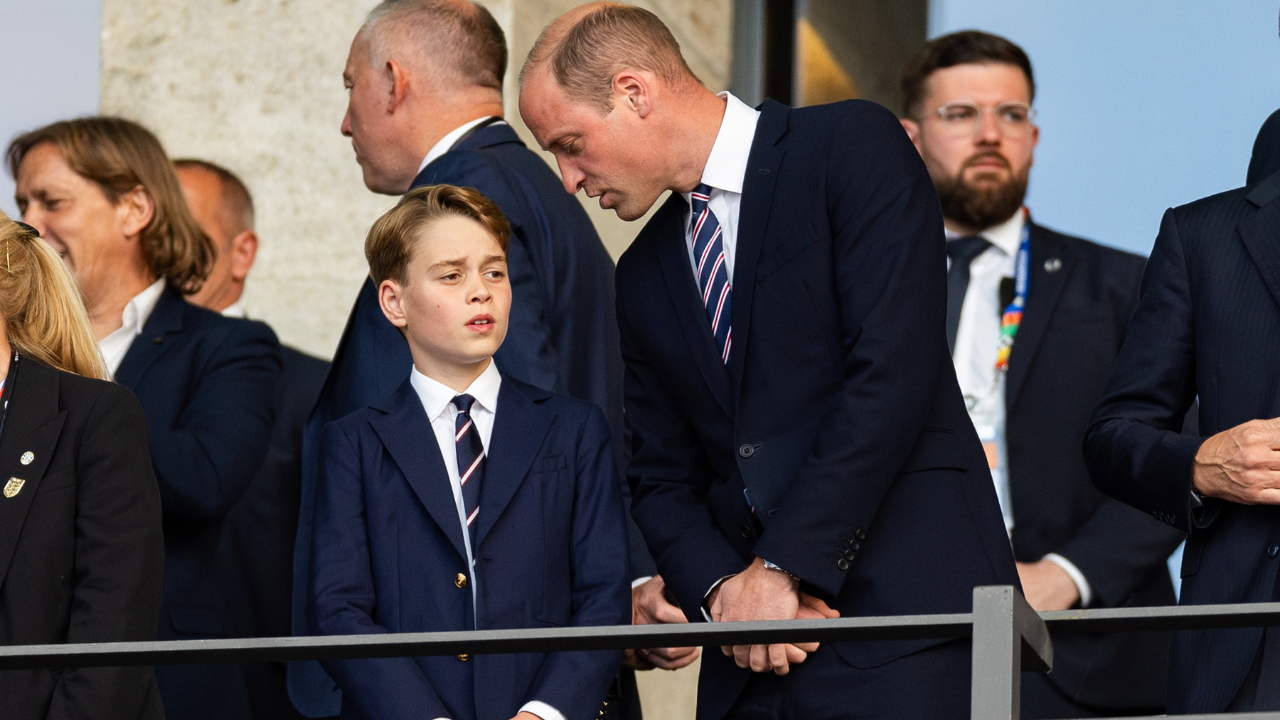
Prince William has opened up about the difficulties of raising children in today’s tech-driven world, admitting that not allowing his eldest son, Prince George, to have a mobile phone has “become a little bit of a tense issue.”
Speaking with Brazilian broadcaster Luciano Huck in Rio de Janeiro, where he travelled to stage his Earthshot Prize, the Prince of Wales reflected on his and the Princess of Wales’s approach to parenting in the digital era.
“It’s really hard,” he told Huck in a video shared to the presenter’s 23 million Instagram followers on Monday.
“Our children don’t have phones. I think when George moves on to secondary school, then maybe he might have a phone that has no internet access.”
William expressed concern about young people’s exposure to harmful material online, acknowledging the growing tension surrounding the issue.
“It’s getting to the point where it’s becoming a little bit of a like tense issue. But I think he understands why, we communicate why we don’t think it’s right. And again, I think it’s the internet access I have a problem with,” he said.
The prince also shared insight into his daily family life, revealing that he and Catherine take turns on the school run and that he attends sports days and matches whenever possible.
“I’m the taxi driver,” he joked.
“Taxi driver, sports days, matches, playing in the garden, where I can. School run, most days. I mean, Catherine and I share it. She probably does the bulk of it.”
When asked about the challenges of recent years – particularly as both King Charles and the Princess of Wales undergo cancer treatment – William acknowledged that parenthood often requires balancing openness with protection.
“Every family has its own difficulties and its own challenges … Sometimes you feel you’re oversharing with the children. You probably shouldn’t, but most of the time, hiding stuff from them doesn’t work,” he said.
“It’s always a balancing act to me that every parent knows that it’s kind of: ‘How much do I say? What do I say? When do I say?’ And you know, there’s no manual for being a parent. You’ve just got to go with a bit of instinct.”
Experts agree there’s no universal answer to when children should receive their first mobile phone. For some families, it’s a matter of safety and communication; for others, it’s about maintaining boundaries in a world where screens dominate daily life.
The Child Mind Institute advises parents to focus on a child’s readiness rather than their age.
“There’s no magic age for a first phone,” the institute notes. “What matters most is whether your child can handle the responsibility and follow family rules about technology use.”
The American Academy of Pediatrics echoes that view, encouraging parents to evaluate a child’s maturity.
“Children develop at different rates,” it says.
“Before giving a phone, make sure your child can manage screen time, privacy and online behaviour.”
A Stanford Medicine study found no clear link between the age children receive their first phone and their mental health, behaviour or school performance. Instead, emotional maturity and open family communication were the strongest indicators of healthy tech use.
Still, many experts recommend waiting until the early teen years.
Data from Research.com shows that children between 12 and 14 are typically better equipped to understand online safety, while the Children’s Bureau reports the average age for a first phone is now 12 to 13.
Ultimately, specialists say parents should consider why their child needs a phone and set clear rules around its use. Parental controls, shared family plans and regular conversations can help ensure technology remains a tool for connection – not a source of conflict.
As smartphones become ever more integrated into daily life, psychologists warn that the way parents introduce them can shape lifelong digital habits. The goal, they say, is balance: allowing children to connect with the world without being consumed by it.
Images: Shutterstock