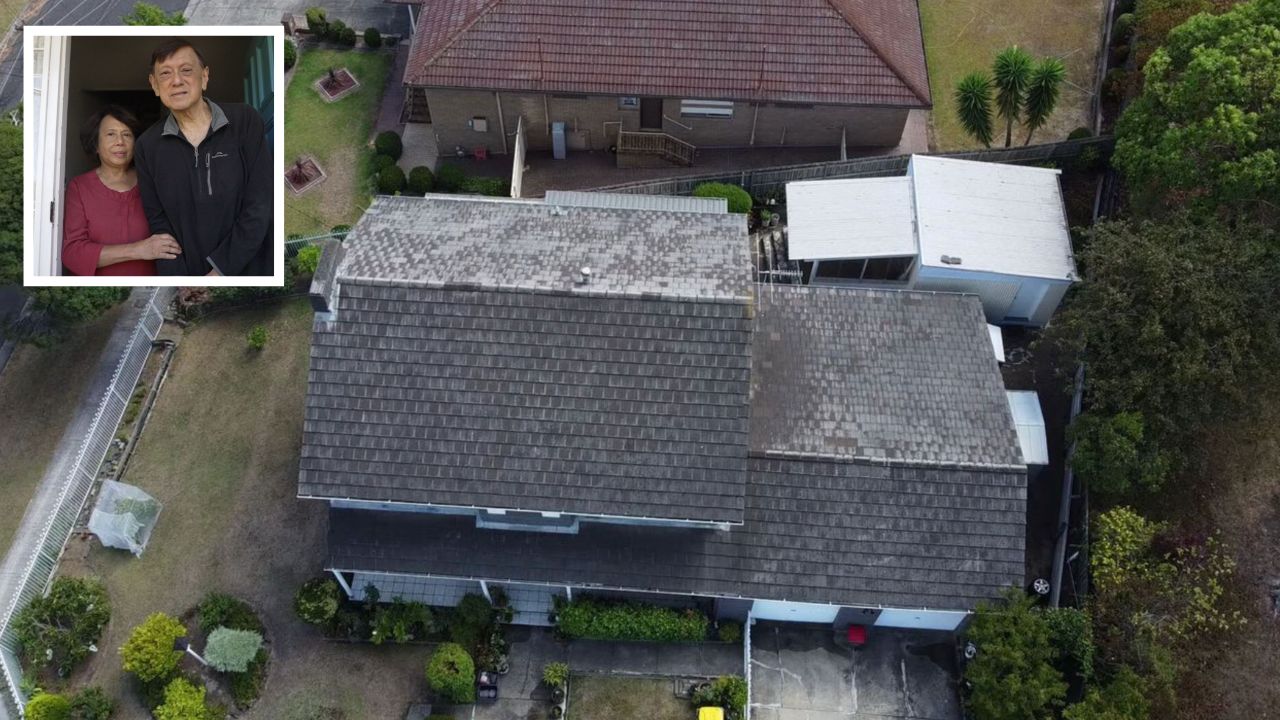
Blocks are getting smaller while house sizes are getting bigger, so we’re living closer to our neighbours than ever. At the same time, we aren’t willing to give up our outdoor areas or our privacy.
omes are not just moving out but up to capitalise on living space and views, so being overlooked from above is now a problem for many residents.
Charlie Albone, a landscape designer and presenter on the LifeStyle Channel’s Selling Houses Australia, says privacy is a common concern.
‘While people don’t mind looking on to rooftops so much, when other people’s windows are looking into your space it becomes an issue,’ says Charlie.
Luckily, there are many effective ways to solve the problem.
Define the borders
Planting is a simple solution, as well as being easy on the hip pocket.
Property-line plantings can provide year-round screening and a neat hedge can be an easy way to define adjoining yards or block sightlines. But success largely depends upon available space.
‘Hedges can be lovely but they need at least 800mm width of garden bed to thrive. For people in urban environments, there often isn’t the space to spare,’ says Charlie.
‘Bamboo is the best solution here as it takes up very little space and grows vertically.
‘Nandina, also known as sacred bamboo, has a nice upright habit and gives a similar effect, though it’s not technically bamboo.’
The problem with trees
Planting trees around the house or along a boundary line can lead to major problems if you don’t do the research first, cautions Charlie.
‘If people have it in mind to create privacy with trees, they often go for the biggest and most dense varieties they can find. But a big tree only gets bigger and the root system can cause damage to the foundations of the house and fence lines,’ he says.
Trees can also be a source of dispute if their size blocks light or views, or if branches encroach across the boundary line.
Certain types of trees that are heavy shedders such as jacarandas and liquidambars can be particularly annoying for neighbours. Council may step in if complaints are made.
The law changed in August 2010 to include height restrictions for trees and hedges that block views or light.
Make sure you research the likely growth of the tree you are considering and check guidelines with local council before buying.
Plant in layers
If space isn’t an issue, layered planting will actually make the garden look bigger. Planting a mix of deciduous or evergreen trees, shrubs and perennials creates a cottage garden look.
Landscapers recommend grouping varieties in odd numbers. Stagger evergreens in the background and in the foreground, layer deciduous material for texture and colour.
‘For screening, aim for a height over 1800mm, which is the standard fence line height,’ says Charlie.
Deciduous shade trees, which grow from five to more than 15 metres high, depending on the species, are a good way to obscure a neighbour’s view from a second-storey window or balcony.
‘Chinese tallowwood is one of my favourites. It gets great colour in the warm months and will reach a height of about six metres,’ says Charlie.
Positioned over a patio, the canopy provides privacy and shade in the summer. In winter, the bare branches allow the sun to shine in, but this does also bring some loss of privacy.
Add a water feature
Even if your neighbours are not looking into your space, you may still hear them. Planting can help with noise reduction but one of the most effective buffers against the buzz of conversation or the hum of traffic is a water fountain.
Whether it’s an off-the-shelf unit that sits on a table or a custom-built permanent feature, running water is an excellent way to screen out sounds.
Moving water becomes louder the further it falls and the more tiers it travels over. To avoid having to raise your voice over the roar, choose a fountain with an adjustable recirculating pump to find a sound level that’s soothing for you.
Put up a screen
After many years of total seclusion on a large block, a new house built nearby prompted Handyman’s Lee Dashiell to seek out a privacy solution.
‘It was quite a shock to find the house would look directly onto our outdoor living area,’ says Lee.
‘We knew we needed some kind of screening but we had enjoyed the open feel of trees and bushes and didn’t want to be boxed in.’
The family decided on Eden Deluxe Euro bamboo panels. ‘This type of screen is not solid but creates an effective visual barrier and the organic look blends into the area.’
It took about an hour of shifting the panels around then viewing them from different positions to ensure they blocked out what they wanted.
‘Eventually we decided the horizontal position was the most effective,’ says Lee.
Install a fence
Major new landscaping additions such as a pool or patio may require a visual buffer in a hurry.
A solid board fence is the quickest way to add year-round screening but be sure to discuss materials with your neighbour and check guidelines with local council before installing.
As fences have a minimal footprint, they can be used in long or narrow side yards or other places where available space is tight.
They come in many styles but the cheapest, easiest option is treated pine.
‘What you often find, especially in new builds, is that people have a kitchen window that looks out over a narrow patch of grass right on to a flat fence, which is not the most pleasing view,’ says Charlie.
Break up the mass with a screen, an open lattice or baluster top, or plant flowering or evergreen shrubs in front to soften its solidity.
‘If you have a fence and want, to improve the look of it quick smart, paint can be a good option.
‘A dark fence looks great in a tropical style garden, while a formal, mostly green garden looks good with a cream tone,’ says Charlie.
There’s no doubt a wall provides privacy, but a solid wall can feel oppressive to both sides.
It can also be a big and expensive effort to build solid walls, and involve getting council approval or engineering work, so it’s best to reserve them for retaining rather than screening purposes.
Written by Sita Simons. Republished with permission of Handyman.net.au