As deadly as COVID-19 is, one woman is sure it saved her life.
48-year-old Jacqui Matthew was struggling to catch her breath after testing positive for COVID-19 in March last year.
After contracting the disease from her son, who had caught it from a university classmate who had attended the “superspreader” Stanwell Tops wedding, Ms Matthew found that her symptoms were like a “really heavy cold” and worse than those of her infected son and daughter.
“All my bones were really heavy, like I just felt really, really, off,” Ms Matthew said.
“The worst was the breathing – even after I’d recovered from everything I just couldn’t catch my breath.
“There were days [my husband] had to feed me and wash me. I was just so sick.”
As Ms Matthew couldn’t go three days without experiencing COVID-19 symptoms, she and her family spent 29 days in hard lockdown.
“I kept having COVID tests and I definitely didn’t have it anymore, but I hadn’t quite recovered,” she said.
“I just couldn’t get my lungs to work properly.”
When her GP ordered an MRI of her lungs to check for damage, the local radiology centre wouldn’t take her because she had been infected with COVID-19.
It wasn’t until Ms Matthew’s GP got her a scan at Gosford Hospital on New South Wales’ Central Coast that she would find out what was really causing her symptoms.
“Thank goodness they did because their technician said, ‘There’s nothing wrong with the lungs COVID-wise but there’s something here that needs investigating.’”
Instead, the scan showed Ms Matthew had an aggressive form of breast cancer.
Two days after diagnosis, she was spending her 49th birthday on the operating table.
“My doctor said if we had left it another couple of years it would have been a very different story,” she said.
“COVID almost literally saved my life. I’ve no doubt in my mind at all.
“There’s no way I would have had a mammogram. I wouldn’t have picked it up.
“It would have been another couple years before I would have even thought about it – if I thought about it.”
Though BreastScreenAustralia, the national breast cancer screening program, offers free mammograms to women over the age of 40, invitations are only sent to those aged between 50 and 75, as 75 percent of breast cancers occur within this age group.
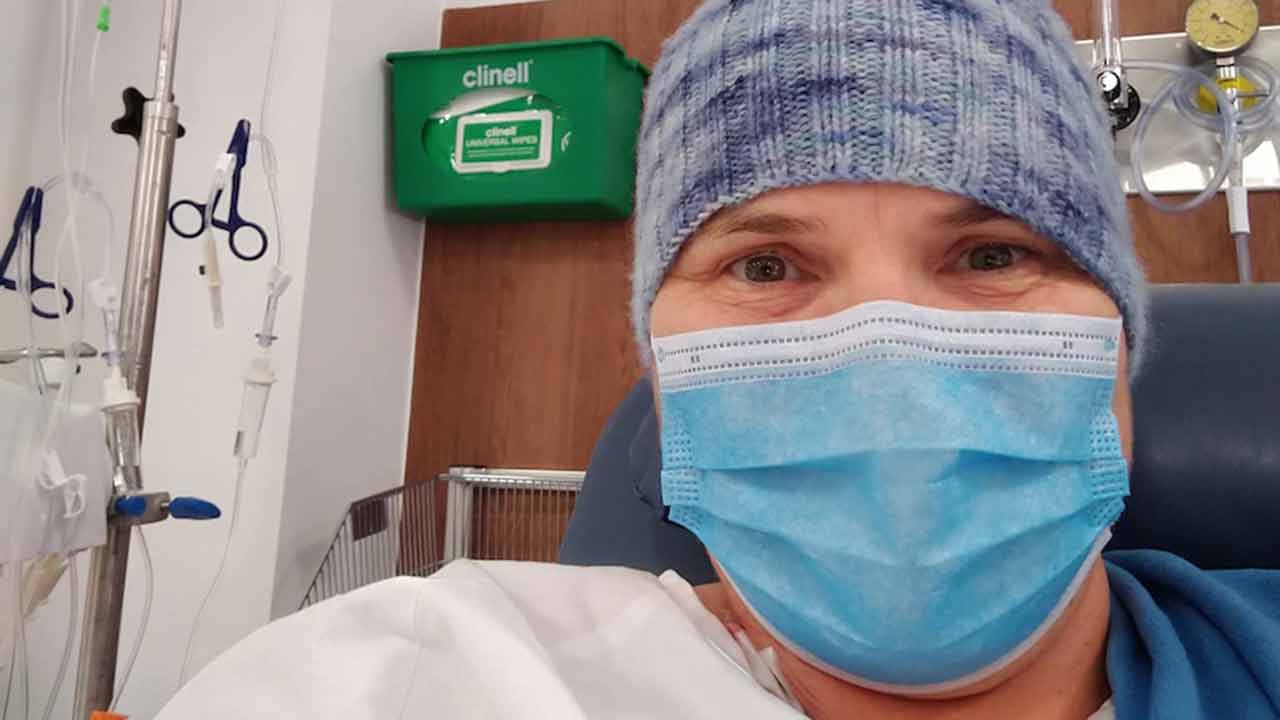
Ms Matthew had a second operation to remove more cancer, followed by four rounds of chemotherapy and radiation.
Twelve months later, Ms Matthew is now in remission and aware of how lucky she has been to make it to the other end.
Her sister-in-law, 64, tragically passed away from breast cancer on Ms Matthew’s second day of treatment, after her cancer had been detected by a bone scan.
“It really hit home how lucky I was,” Ms Matthew said.
“Her cancer wasn’t caught until stage four, whereas I was stage one.”
Ms Matthew said she was also able to get the after-effects of COVID-19 under control with breathing exercises she was required to do to have radiation treatment.
“Sort of like COVID detected cancer, but then the cancer treatment helped COVID,” she said.
“They sort of went hand in hand.”
Image: ABC