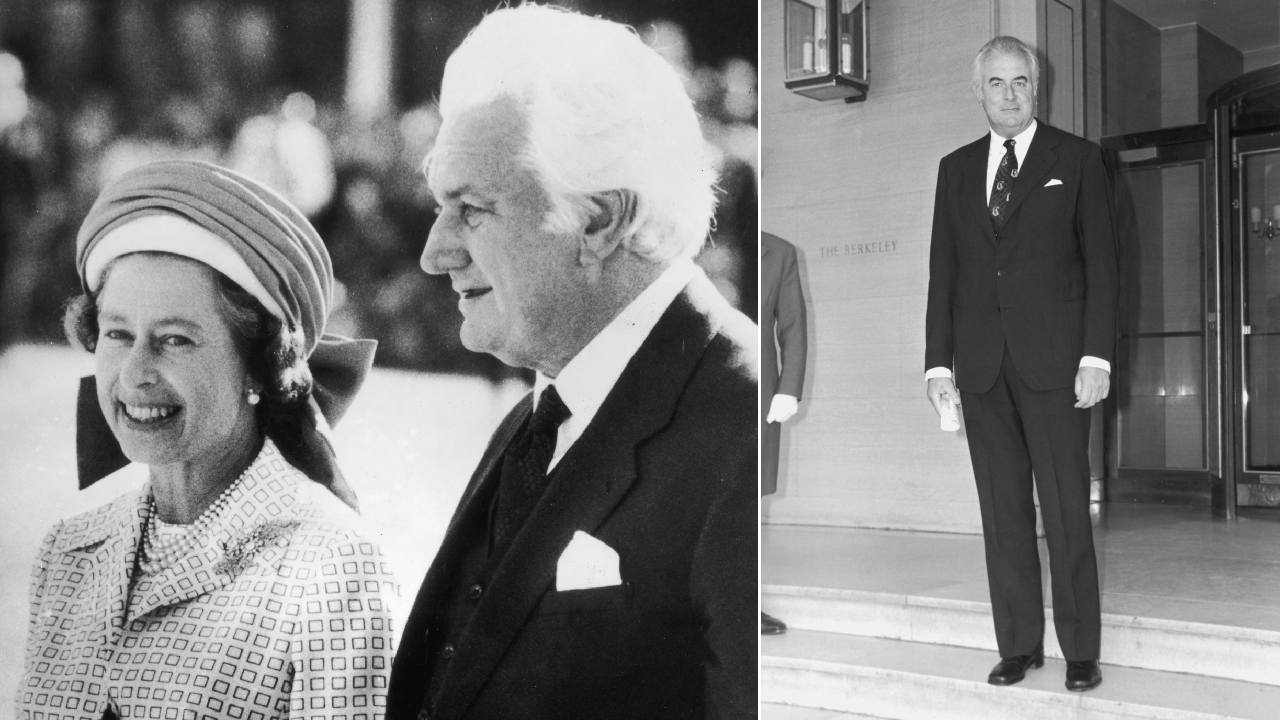
Palace letters released by the National Archives of Australia reveal Sir John Kerr did not tell the Queen of his intention to dismiss then-prime minister Gough Whitlam before the historic decision came to fruition on 11 November, 1975.
Around 200 letters were released between the former governor-general and the Queen about the dismissal of the Whitlam government.
Sir John wrote to the Queen after he sacked Mr Whitlam that “I should say I decided to take the step I took without informing the palace in advance because, under the constitution, the responsibility is mine”.
“I was of the opinion it was better for Her Majesty not to know in advance, though it is of course my duty to tell her immediately.”
The letter included three key attachments: the dismissal letter to Mr Whitlam, a legal opinion from the then chief justice Sir Garfield Barwick, and a letter from the opposition leader at the time, Malcolm Fraser.
However, there were other letters that showed Sir John discussed the possibility of dismissing Mr Whitlam months before the event occurred.
Archives director-general David Fricker shared the details surrounding a letter from Sir John to the Queen dated 12 September, 1975.
“I’m also keeping my mind open as to the constitutional issues. If the prime minister and the leader of the opposition get into a battle in which the Senate has defeated the budget, the prime minister refuses to recommend a dissolution, my role will need some careful thought,” Sir John wrote.
“So on the 12th of September 1975, Sir John is laying this out,” Mr Fricker said.
Sir Martin Charteris, who was the Queen’s secretary wrote back to Sir John, a week before the dismissal, saying he had “reserve powers”.
“With great respect, I think you are playing the vice-regal hand with skill and wisdom. Your interest in the situation has been demonstrated, and so has your impartiality.
“The fact you have powers is recognised. But it’s also clear you will only use them in the last resort, and then only for constitutional – and not for political – reasons.”
On November 20, Sir John sent a much longer explanation.
“For my layperson’s eyes, it reads very much like quite a deliberately formulated judgment … a full exposition of what went through his mind leading up to that point,” Archives director-general David Fricker told reporters on Tuesday in a Canberra briefing.
He encouraged people to read the letters and attachments to get the full context of the historical period.