A flight attendant has stunned social media users after revealing how things are handled when a passenger dies while a plane is in the air.
Although in-flight deaths are uncommon, the International Air Travel Association (IATA) reported 244 on-board fatalities worldwide in 2024, with an estimated fatality risk of 0.06.
Cabin crew are trained to respond to these incidents, but protocol has come has a shock to some people.
“I was a flight attendant for 12 years. Here are the shocking truths airlines hide from you,” an unnamed former cabin crew member wrote on TikTok.
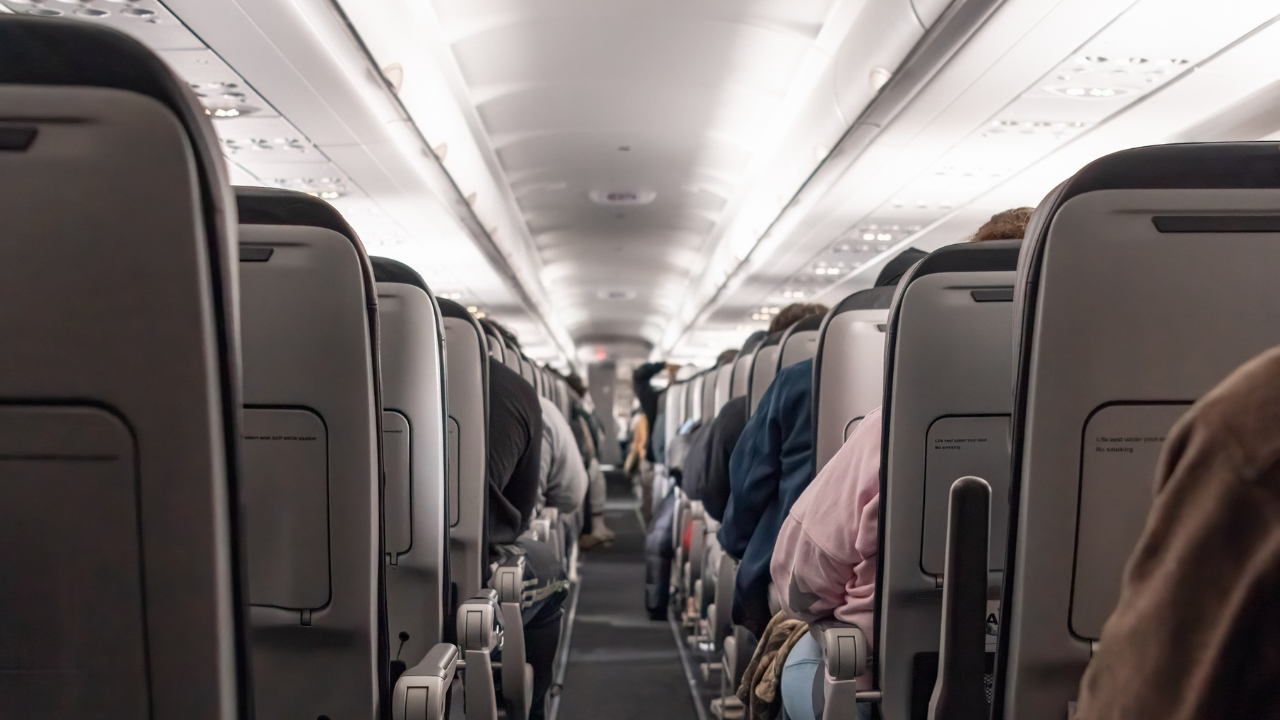
“If someone dies mid-flight, you won’t be told. We discreetly cover them with a blanket, strap them in and act like they’re asleep.”
The flight attendant also urged passengers to “respect” airline staff, saying travellers often have “no idea” what situations crew members face.
“You see calm. Behind the scenes it’s pure chaos…Flying looks glamorous. But for crew, it’s survival. Respect the uniform. You have no idea what we’re dealing with at 40,000 feet,” they wrote.
The post racked up more than 800 comments, with many users expressing appreciation for the professionalism of flight attendants.
“People underestimate how hard being a flight attendant is. Kudos to you all,” one person wrote.
“Not to mention the fact that flight attendants are literally the ones trained to save your life if there’s a crash or emergency landing. They’re not just your in-flight server,” another said.
“That’s why we always respect all flight attendants,” a third commenter added.
“Much respect,” wrote another.
According to IATA guidelines, when a passenger dies during a flight, the recommended protocol is to move the individual to a seat with “few other passengers nearby”.
If the aircraft is full, cabin crew are advised to leave the person in their original seat with the seat belt fastened and the body covered by a blanket or body bag.
Where possible and safe, the person may be moved to another area of the aircraft, provided there is no obstruction to aisles or emergency exits.
In all cases, the captain must be informed as soon as possible so arrangements can be made for local authorities to meet the aircraft upon arrival.
Once the plane lands, other passengers are typically disembarked first, while family members or companions remain with the deceased until authorities remove the body.
In February last year, an Australian couple described the “traumatic” experience of having a deceased passenger placed next to them during a Qatar Airways flight from Melbourne to Doha.
Mitchell Ring and Jennifer Colin told Channel 9 that the woman was seated beside them, covered in blankets, after collapsing in the aisle mid-flight.
Qatar Airways said it apologised for “any inconvenience or distress this incident may have caused”.
In a separate incident in 2011, Jetstar offered passengers $100 travel vouchers after a man died shortly after take-off on an 11-hour flight from Singapore to Auckland.
In that case, crew members moved the man to the curtained crew rest area, where he was accompanied by his girlfriend.
A Jetstar spokesperson said it would have been an “upsetting situation” for other passengers, adding, “They were offered a discount on future travel as a small acknowledgement of this.”
Images: Shutterstock