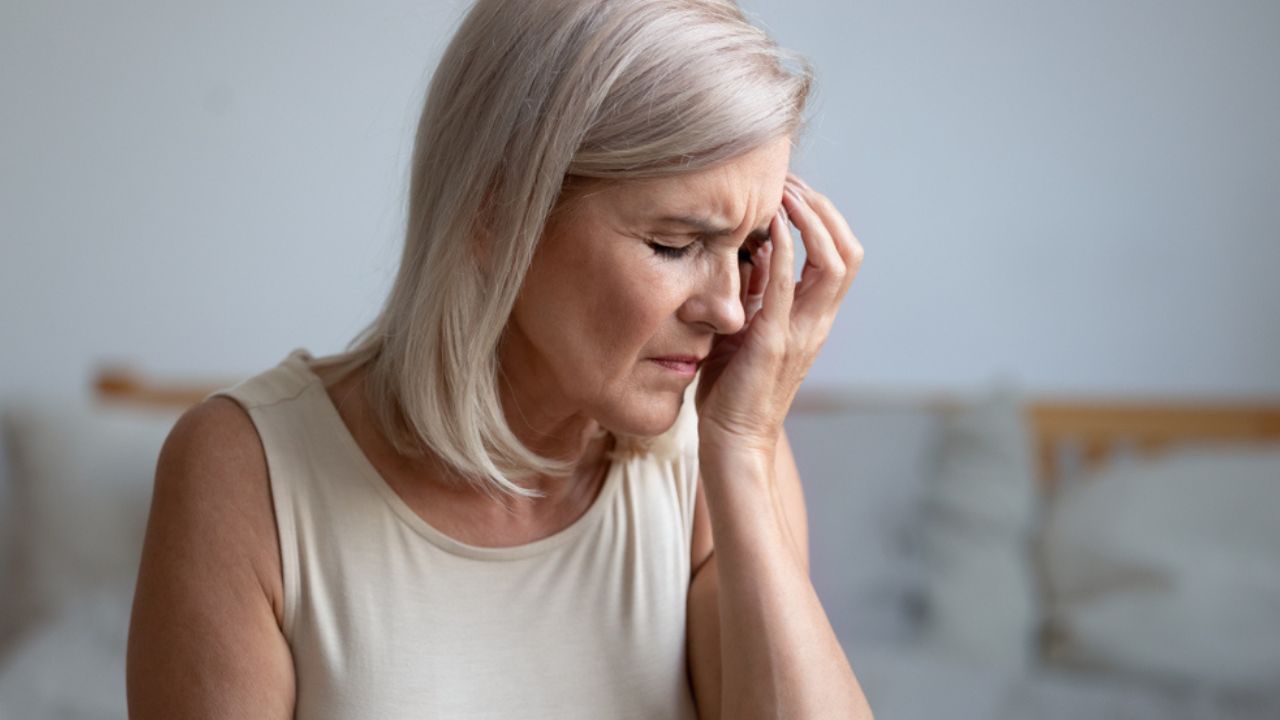
One in three Australian women live with frequent migraines, according to the 2025 National Women’s Health Survey, and experts say more investment is urgently needed to address what many describe as a “significant health blind spot.”
A migraine is not just a bad headache, it’s a complex neurological condition.
Resilience coach and author Justine Martin has lived with hemiplegic migraines for most of her life. Now 54, the condition still majorly impacts her daily routine.
“I’ve been suffering from migraines since I was 15 and it’s not gotten any easier after 40 years,” she said.
“It’s frustrating because when you have a migraine, people can’t see what is happening in your head.”
Martin added that she never leaves home without medication and is still figuring out what triggers her migraines.
“The older I’ve gotten, the more I’ve noticed different things that trigger them, but it’s really been trial and error, eliminating different foods and understanding those triggers.”
Research from Jean Hailes for Women’s Health found that women are at least twice as likely as men to experience migraines.
“It hits hardest in their thirties, right when women are building careers, families and their futures,” Jean Hailes’ spokesperson Sarah White said.
“The cost of days lost to pain is immense for individual women, which has broader consequences on society.”
Olivia, who asked not to share her last name, has had migraines since she was 10. She said the condition disrupted her high school years and still affects her work life, as it often led to a sudden loss of her peripheral vision.
“It was very disruptive in high school and I had to have my parents pick me up early many times,” she said.
“Working in a corporate setting, it can be pretty disruptive and I try to push through a lot of the time.”
While her severe migraines have eased, now aged 30, Olivia said her headaches still impact her everyday routine.
“With frequent headaches, it’s something you always have to be prepared for with water and medication,” she said.
Migraine and Headache Australia spokesman Carl Cincinnato said the condition needs more attention and funding.
“We must do better for the one in three women affected by this disorder, which can be debilitating for so many,” he said.
The 2025 World Economic Forum Insights Report found that better care for migraines could also have a global economic benefit, boosting the economy by $US80 billion ($A121 billion).
There are a few methods to ease a migraine including, applying a cold compress to the head or neck, resting in a quiet, dark room, and taking over-the-counter pain relief medications.
However, anyone with frequent or severe migraines should seek medical advice for a proper diagnosis and treatment.
Image: Shutterstock