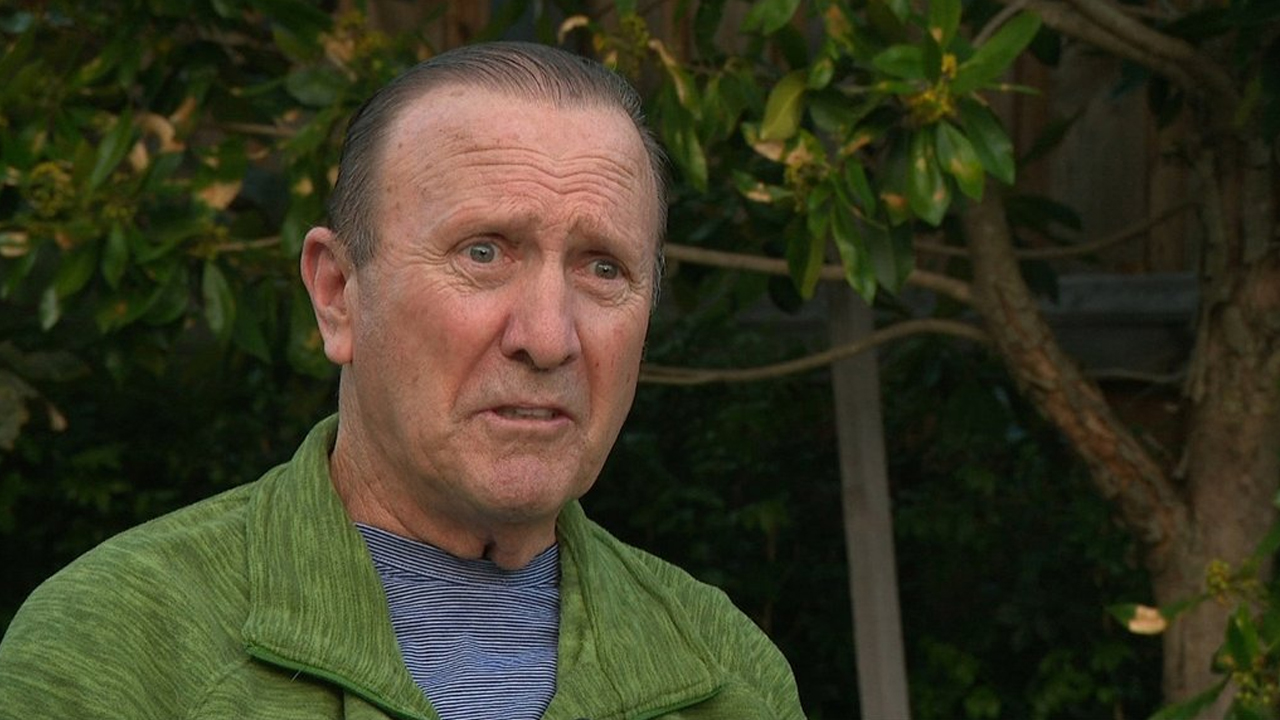
Speaking to the ABC, Peter Wood said he was cleaning windows on the second storey of his home when the extension ladder he was using gave way, causing him to fall more than three metres and land on his back.
The 70-year-old retiree, who has an artificial hip, said his first thought as he lay on the ground was, “Why didn’t I tie the ladder off like I did every other time I’ve used it?”
“That flashed through my mind and then I thought, ‘I’ve got to try to get up,'” he said.
With assistance from his wife Anne, Wood rolled over, pushed himself onto his hands and knees and managed to stand. He then walked up the stairs of his home in Bardon, in north-west Brisbane, and lay down.
Although he had not hit his head and was confident he had not lost consciousness, the couple called Triple Zero (000) to “see if somebody who knows what they’re doing might be able to give me a look over”.
Paramedics transported Wood to the Royal Brisbane and Women’s Hospital (RBWH), where he spent six hours in the emergency department undergoing blood tests and X-rays.
Despite being bruised and sore, he did not sustain serious injuries.
“The strong message that came through was that not many people walk away from that kind of fall,” Wood said.
“I was really fortunate.”
RBWH trauma surgery fellow Rebekah Young said hospital presentations related to ladder and roof falls had increased year on year at Queensland’s largest hospital since 2022.
Between July 2023 and July 2025, the hospital admitted 189 patients following ladder and roof falls, with more than one-third of those patients aged 65 or older.
The hospital admitted 34 patients after ladder and roof falls during the 2023 calendar year, compared with 64 admissions in the first half of 2025 alone.
“We’ve had a lot of patients over the age of 80 … coming in after falling from ladders and they are often people who have been quite fit at home, doing things around the house by themselves their whole life,” Dr Young said.
“We find that often these falls can be really life-altering, and they may never get home again. Sometimes it leads to a patient’s death.
“I think anybody over 60 and progressing onwards is a real risk. People have poorer balance, and are more likely to have other medical problems that can cause them to fall that they might not be aware of.”
Dr Young said she had issued clear advice to members of her own family aged over 50: “No ladders.”
“Call a tradie if you can – or get somebody younger to help you,” she said.
National figures from the Australian Institute of Health and Welfare show that in 2023–24 there were more than 6000 falls on or from ladders across Australia that resulted in hospitalisation.
Some ladder falls are linked to poor ladder safety practices, while others occur after medical episodes such as heart attacks, strokes or dizziness.
Dr Young said hospital staff had been told “concerning stories” about people falling while reaching from ladders to trim tree branches or clear gutters, often while working alone and without anyone stabilising the ladder.
Common injuries sustained in ladder falls include rib fractures, punctured lungs, and damage to the spleen and liver.
Ladder safety tips:
- Use a ladder that meets Australian safety standards
- Ensure the ladder is positioned on a stable surface
- Wear appropriate clothing and footwear
- Have someone supervise ladder use and provide assistance
- If over the age of 60, engage someone younger to climb the ladder on your behalf
Images: Shutterstock