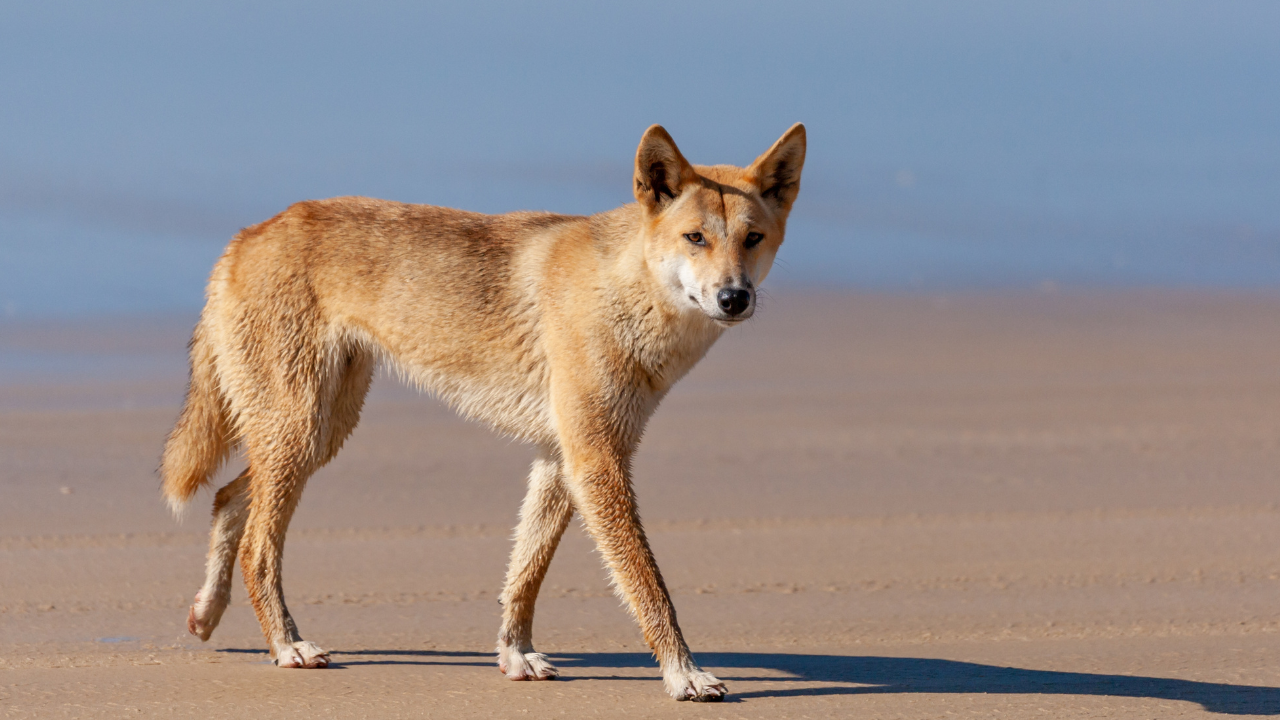
Traditional owners have been left heartbroken over the Queensland government’s decision to cull dingoes following the death of Canadian backpacker Piper James on Fraser Island (K’gari).
Piper, 19, was found dead on January 19 on a beach on the eastern side of the island, surrounded by a pack of about 10 dingoes.
A coroner’s report determined that while James had been bitten by dingoes prior to her death, drowning was the most likely cause.
The Queensland Department of Environment and Tourism has euthanised six dingoes linked to the incident and is expected to cull additional animals in the coming days.
The Butchulla Aboriginal Corporation (BAC) said the decision marked a sad day for both the island and its community.
“The lack of consultation with traditional owners was unexpected and disappointing,” a spokesperson said.
“These decisions are difficult for everyone involved, and I understand there may be complexities behind the scenes.
“However, it is challenging to accept such significant actions without open communication or involvement from those most affected.”
The statement said dingoes – known as wongari in the Butchulla language – are an essential part of the island.
“Once again, it feels as though economic priorities are being placed above the voices of the people and traditional owners, which is frustrating and difficult to accept.”
BAC has long called for limits on visitor numbers to K’gari, citing a rise in human–dingo interactions, including an increase in aggressive incidents.
Dingo expert Bradley Smith from CQ University said culling did not address the root cause of the issue.
“The main problem is people. It’s a people problem on the island, not a dingo problem,” he said.
“People don’t have the respect for dingoes as a predator … They don’t follow all the guidelines and the rules around how to behave around dingoes.”
Dr Smith said social media influence had also been a factor.
“Whether it’s the change in people’s perspective about travelling and wildlife, or whether it’s the Instagram culture type idea where people really want the right photo and the right experience with nature,” he said.
In July 2023, two women were fined $2,300 each for interacting with dingoes, including taking a selfie with sleeping pups.
Piper’s mother, Angela James, said while she was upset that dingoes would be culled, she was also relieved the decision would improve public safety.
“I can’t imagine having somebody else go through the pain that we’ve had,” she said.
“The thoughts that run through your head at night when you go to sleep and imagine what happened to your baby girl and how she spent the last moments of her life, I can’t have anybody go through that.
“Piper made a mistake, 19-year-olds are supposed to be able to make mistakes and it’s not supposed to cost them their lives, but this one did.”
Ms James and Piper’s father, Todd James, are planning to visit Australia in the coming weeks.
Ms James said the support from Australians had been “phenomenal”.
“We’ve had complete strangers who didn’t even know Piper reach out and give their condolences,” she said.
Long-time K’gari resident Russell Postle said the state government’s swift response would “give people comfort that the heightened risk may be mitigated”.
“That’s going to be beneficial to the confidence for people to feel less threatened when they move around the island,” he said.
Postle, a partial owner of Galangoor K’gari Retreat, said any impact on the business would not be immediately apparent.
“What we won’t see is those who have considered making a booking and haven’t yet done so, and who may make other choices,” he said.
“That’s where you see a different impact, but one that we can’t measure necessarily.”
Images: Shutterstock