A leading heart specialist has cautioned against drinking “diet” or “zero sugar” beverages, saying new research suggests they may be more harmful than many people realise.
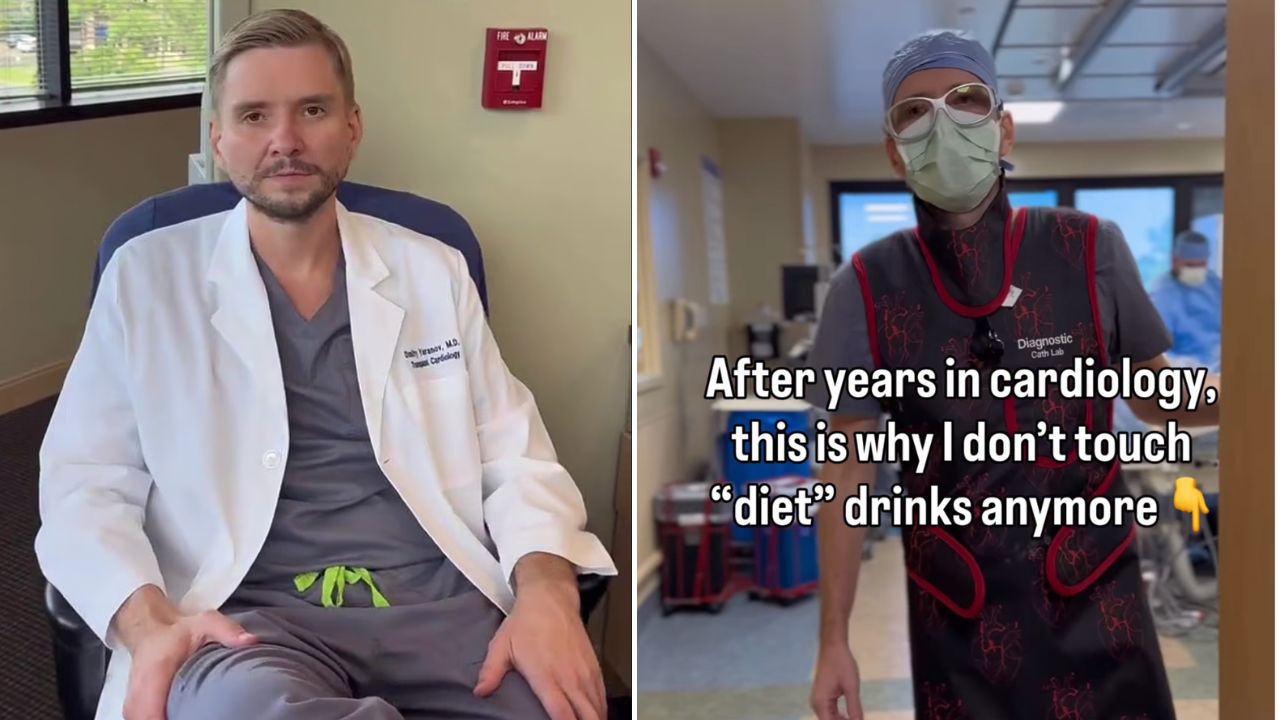
US-based cardiologist Dr Dmitry Yaranov, who has built a large following on social media for sharing health advice, recently went viral after revealing the common drinks he refuses to consume.
“After years in cardiology, this is why I don’t touch ‘diet’ drinks anymore,” he wrote in a video that has now been viewed more than one million times. “The biggest lie in your fridge? ‘Zero sugar.’”
He said many people assume diet sodas are the healthier option, especially for weight management or blood sugar control, but he claims new findings show otherwise.
According to Dr Yaranov, a recent study shows “people who drink diet or zero-sugar beverages daily have a higher risk of liver disease than those drinking sugary ones.”
“Let that sink in – the fake sugar hit harder than the real thing,” he said.
He added that artificial sweeteners “appear to alter gut metabolism and liver fat handling,” leading to an estimated 60 per cent higher risk of metabolic liver disease. Sugary drinks, he said, were linked to a roughly 50 per cent increase.
“Water? Safest by far,” he added. “So next time you reach for that ‘zero guilt’ can – remember: ‘zero sugar’ doesn’t mean zero impact. Your liver can tell the difference.”
The study he referenced was presented at UEG Week 2025 and followed 123,788 UK Biobank participants who did not have liver disease at the start.
Researchers used repeated dietary questionnaires to assess beverage intake and examined links to metabolic liver disease, liver fat accumulation and liver-related mortality.
Dr Yaranov has previously gained attention for highlighting what he sees as common misconceptions about health, particularly among young and fit people.
He said that looking strong or “shredded” on the outside does not necessarily reflect what is happening inside the body.
“[One patient I’m treating] looks like a statue. Shredded. Vascular. Peak performance. But I’ve seen what’s inside those vessels – and it’s not pretty,” he said.
He warned that long-term extreme “high protein” diets, including the carnivore diet, can put strain on the cardiovascular system.
“Sky-high LDL, endothelial dysfunction, chronic inflammation, premature atherosclerosis,” he wrote.
He described cases where very athletic people in their 30s experienced heart attacks with no symptoms or warning signs.
“The body outside looks like a machine. But the inside tells a different story,” he said.
“Athletic does not mean healthy. Low body fat does not mean low risk. And a six-pack doesn’t protect you from a plaque rupture.”
Image: Instagram