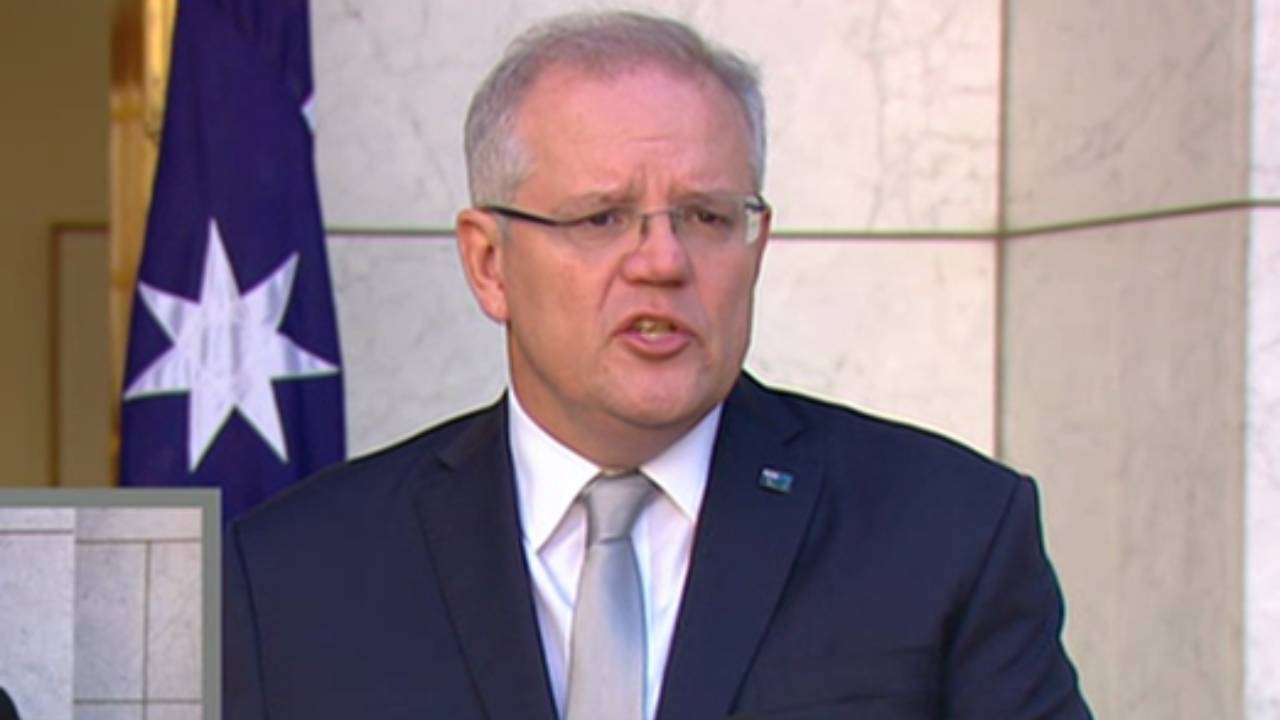
Prime Minister Scott Morrison has placed a ban on non-essential gatherings of 100 people in indoor areas. It remains at 500 for outdoor gatherings.
“That is effective now, as of today and those arrangements, in terms of the legal enforcement of those measures are being put in place by the states and territories,” said Morrison.
Further restrictions on indoor gatherings of fewer than 100 people are being worked on by the states and territories.
How is non-essential defined? “To define what is a non-essential gathering, there is a baseline that has been established amongst the national cabinet which reflected in a lot of the legislation that was put in relation to the outdoor ban and that is an airport, public transportation, which includes public transportation facilities, such as stations, platforms, stops, trains, trams, buses, these are essential,” said Morrison.
“Medical and health service facilities, emergency service facilities, disability or aged care facilities. Correctional facilities, youth justice centres or other places of custody, courts or tribunals. Parliaments, food market, supermarket, grocery store, retail store, shopping centre that is necessary for the normal business of those promises. Office buildings, factories, construction sites, mining sites, necessary for their normal operation.”
Morrison then went on to address the unprecedented international travel ban. “We are upgrading the travel ban on Australians to level four for the entire world. That is the first time that has ever happened in Australia’s history.
“The travel advice to every Australian is ‘Do not travel abroad’. Do not go overseas. That is very clear, that instruction.
“For those who are thinking of going overseas in the school holidays, don’t. Don’t go overseas. The biggest risk we have had and the biggest incidents of cases we have had … has been from Australians returning from overseas.
“That is an indefinite ban but, as you are seeing from other countries around the world, they are putting similar restrictions on entry, just as Australia has on others coming into Australia and you would expect that to be in place now and that is the stage we have reached.”
“As you’ve heard me say many times … for most people, those of us who are blessed with good health and are in good condition, then this is a mild condition. For the more vulnerable, for the elderly and those who have other health challenges, this is a far more serious condition for them.
“So it is important that we, who are healthy, those of us who will contract this and have experienced a mild illness, that we do what we can to limit the spread to ensure that those who are more vulnerable are not affected.
“If we slow the spread, we do save lives and that is very much the strategy the Governments of Australia are following as we move through this crisis.”