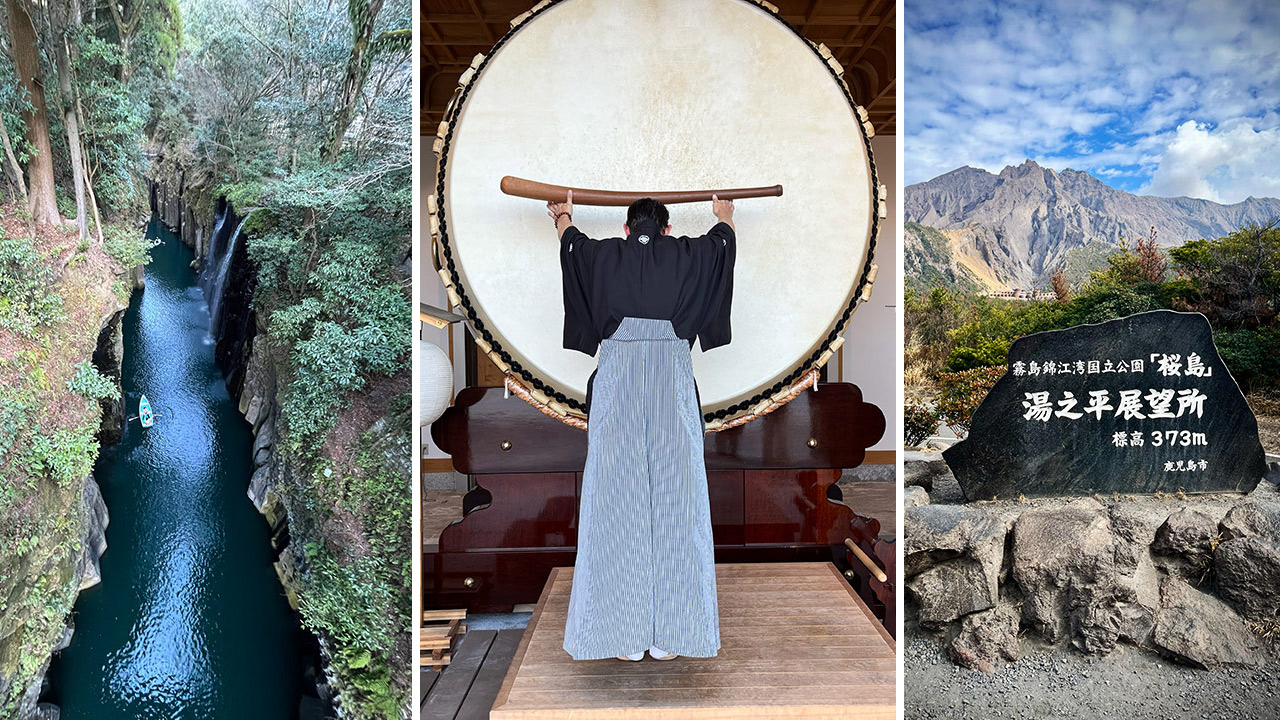
A recent whirlwind tour of the Kumamoto, Miyazaki and Kagoshima prefectures on Kyushu Island proved that Japan isn’t just a holiday destination. It’s a place that reshapes how you see the world.
A visit to Japan is a more than just a holiday. It’s a place that actually changes you. The way you think, the way you behave, even the way you look at the world. At least that was my experience when I recently embarked on a whirlwind tour of Japan’s southern Kyushu Island – taking in the sights, sounds, adventurous gourmet treats and fascinating cultural richness of Kumamoto, Miyazaki and Kagoshima.
Nestled on the very southern tip of mainland Japan, it’s a shamefully overlooked region of the country by tourists (which, if you think about it, could be one of its main positives); most people either hop across to the furthest northern reaches for the deep snow, to Tokyo for the buzz, or to Mt Fuji, the most-photographed mountain in the world. But if ever you were on the fence about exploring a region overflowing with unexpected and hidden gems, let me be the first to say: you won’t regret it.
Japan is such land of contrasts. It exudes such deep and abiding serenity and peace, juxtaposed by some of the most fierce and majestic volcanoes on earth that literally dominate the landscape. Thousands of years of chaos and fear brought on by warring dynasties, married with the near constant threat of geographic upheaval, but ultimately giving birth to a proud, battle-hardened populace that draws strength from a national culture of respect, cooperation and the knowledge that any hardship can be overcome by working together with warmth and good humour – and by seeing the good in even the worst the world can throw at them.
Put another way: You don’t get hot springs, onsens and some of the most fertile lands on the planet without the odd exploding volcano.
My entire visit took place across just five days – and packed as it was with nourishing food, fresh mountain air, the soothing benefits of onsens before bed, even the startling firmness of traditional Japanese futon mattresses, I found myself waking each day feeling stronger and more relaxed than I have in a very long time. Ready to tackle whatever experiences were coming next on this amazing journey. And a good thing too, because the experiences were coming thick and fast. First stop: the enchanting city of Kumamoto.
Kumamoto
The city announces itself quietly at first. There’s no sensory overload, no sense of being performed at. Instead, Kumamoto invites you to lean in and slow your pace to match its own. Melbourne-style trams slide past with metronomic calm, wide streets open into shaded walkways, and history sits comfortably alongside daily life.
At the heart of it all stands Kumamoto Castle, one of Japan’s most impressive and emotionally resonant fortresses. Even partially shrouded in scaffolding following the devastating 2016 earthquake, it remains deeply moving. Perhaps even more so. The vast stone walls rise at carefully constructed angles, each rock placed to frustrate attackers and outlast centuries. Walking around its expansive grounds and exploring the seven levels of its main tower that now serves as a museum of its 400-year history makes you feel the weight of those centuries, not in a dusty, academic sense, but as something real and immediate, a reminder that Japan’s past is never too far from its present.
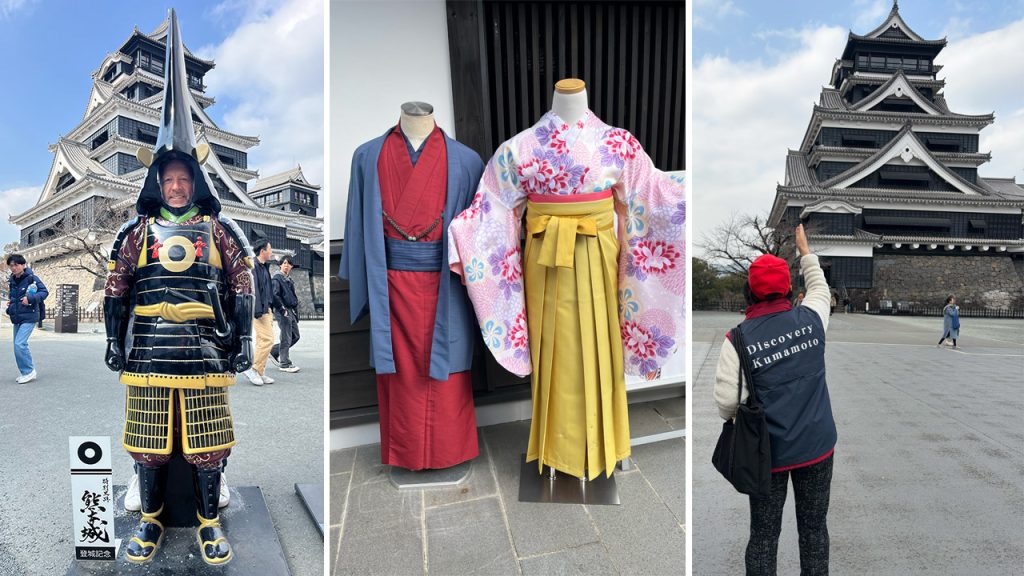
A short stroll away, Josaien offers a more intimate encounter with local culture. Part historical village, part culinary showcase, this is where Kumamoto’s regional specialities are best appreciated. Aka-ushi beef, raised on nearby volcanic plains, is the standout: richly flavoured yet remarkably clean, whether it’s grilled simply or served over rice. Sampling that incredible beef was my first taste of the gourmet treats in store on this visit – and it set a very high standard. Josaien was also where I noticed several stores offering visitors the apparently very popular option to dress in traditional kimonos while dining or exploring the castle grounds. I wish I’d noticed sooner; there’s always next time.
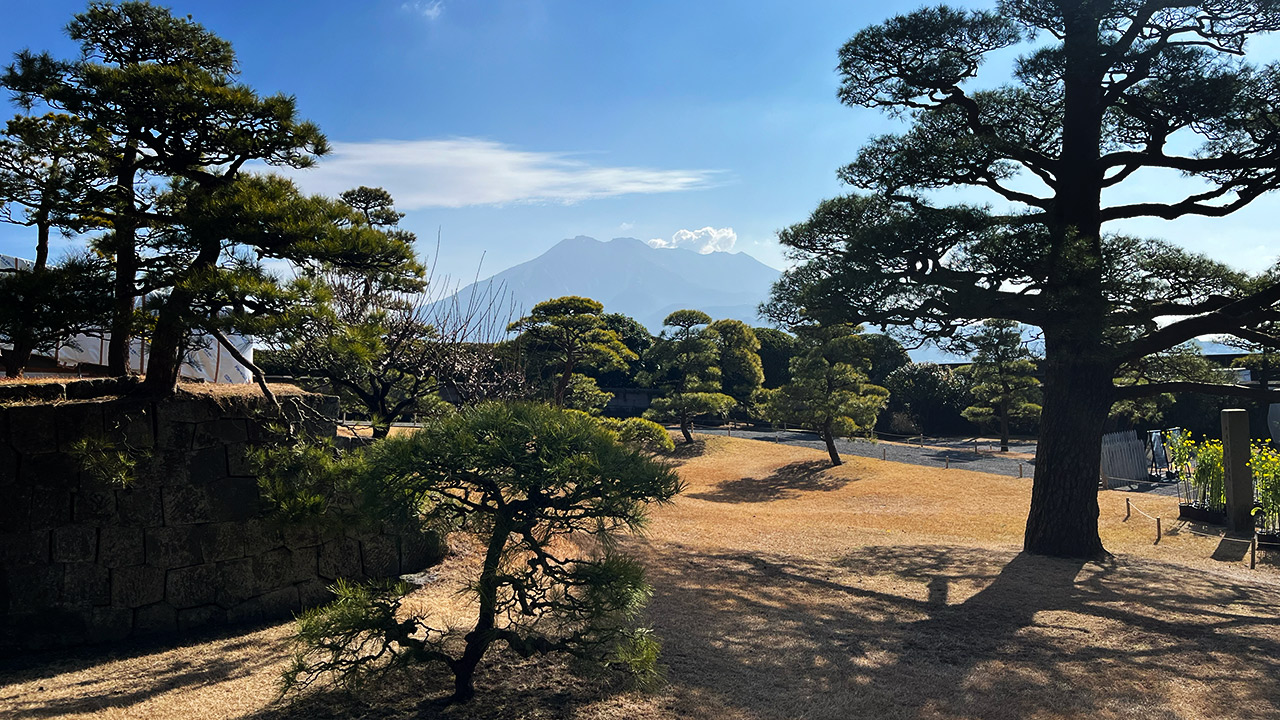
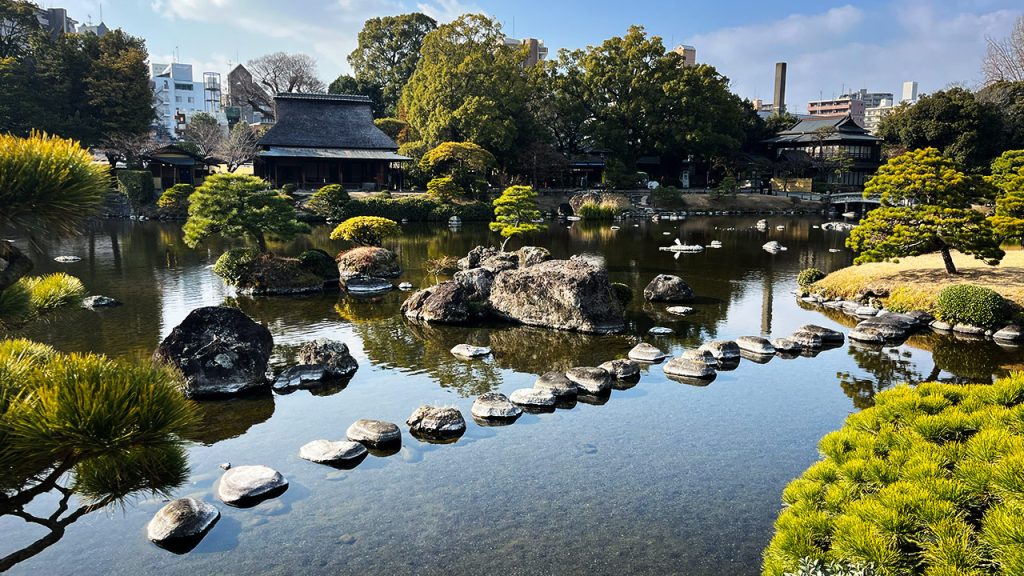
From there, it was straight to Suizenji Jojuen Garden, one of the city’s most quietly impressive spaces, made all the more remarkable by its pure serenity sandwiched right between busy roads, city blocks and parking structures. Designed as a miniature landscape garden, it traces the historic Tokaido road in symbolic form – it even has a tiny Mount Fuji represented by a gentle rise at its centre. Impressive carp abound.
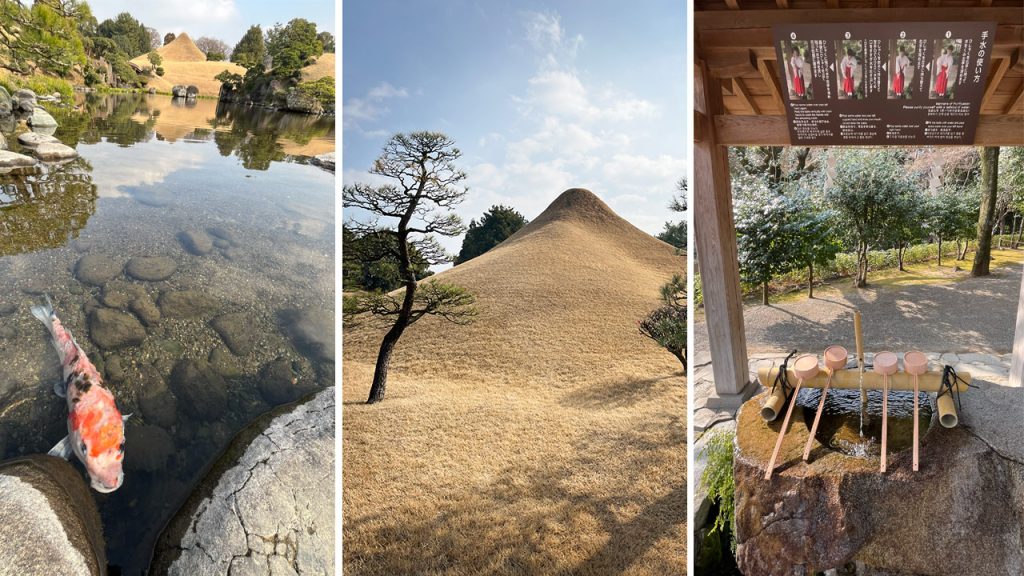
It was in these gardens that I first learnt how to properly make use of the temizuya, a small water pavilion found near the entrance of all Japanese temples and shrines, designed for ritual purification. The process is simple but deliberate: using the provided ladle, you rinse your left hand, then your right, then pour a small amount of water into your left palm to gently rinse your mouth (never swallowing or touching the ladle directly to your lips), and finally tilt the ladle upright to allow the remaining water to cleanse the handle for the next visitor, before returning it to its cradle. It’s less about strict ceremony and more about mindfulness; a quiet moment to slow down, reset, show respect and step from the outside world into a more reflective space.
There’s also no trace of the sorts of DO NOT TOUCH signs that you’d expect in a living, breathing museum this old and precious. I admit, I was expecting them everywhere. But the atmosphere inside the gardens was so peaceful and respectful that inappropriate or boorish behaviour doesn’t for a moment cross your mind – making it possible to openly caress the spiky looking but surprisingly soft needles and rippled trunk of a 400-year-old tree; what was planted as a bonsai centuries ago by the designer of the gardens himself, and now stands taller than a man. Try that in a museum, see what happens.
If the city offers history and flavour, the surrounding countryside provides restoration. My first night was spent at Sozankyo, a tranquil ryokan 90 minutes northwest of Kumamoto famous for its dining, its onsens, and its charming rear wing constructed using wood from a single giant tree via traditional methods in which the entire windowed enclosure is built without the use of a single nail.
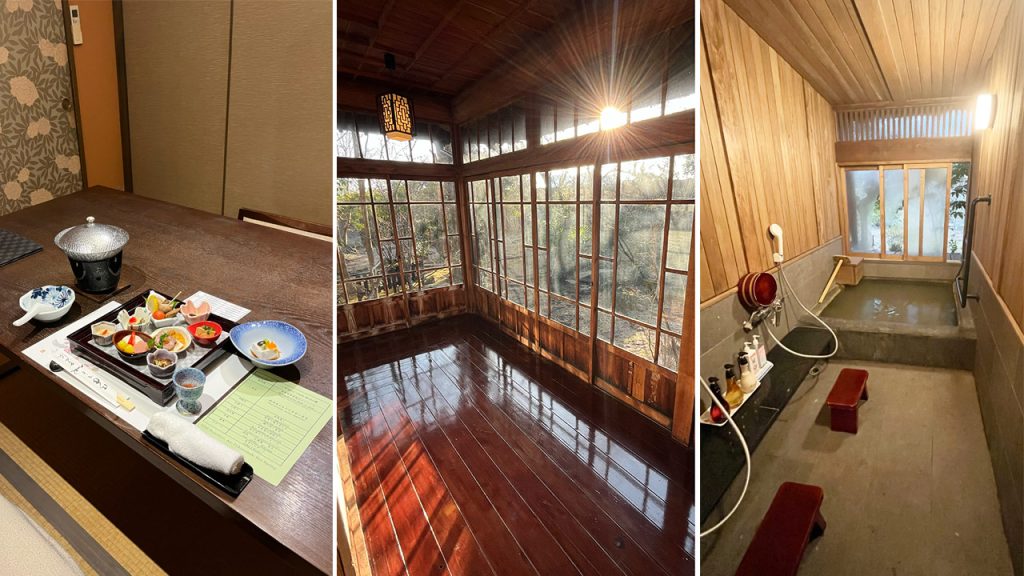
The evening unfolded in the blissful scalding warmth of a private onsen, steam escaping through a tiny open window and rising into the chilly mountain air, followed by an elaborate meal of appetisers sourced from only local ingredients, a main course of incredible horse meat shabu-shabu (Japanese hot pot), assorted sashimi, grilled fish, delightful desserts and too many other delicacies to count.
It was from here, calm, well-fed and quietly grounded, that I set out for what would become the most perspective-shifting experience of the trip so far: my first close encounter with a living, breathing volcano.
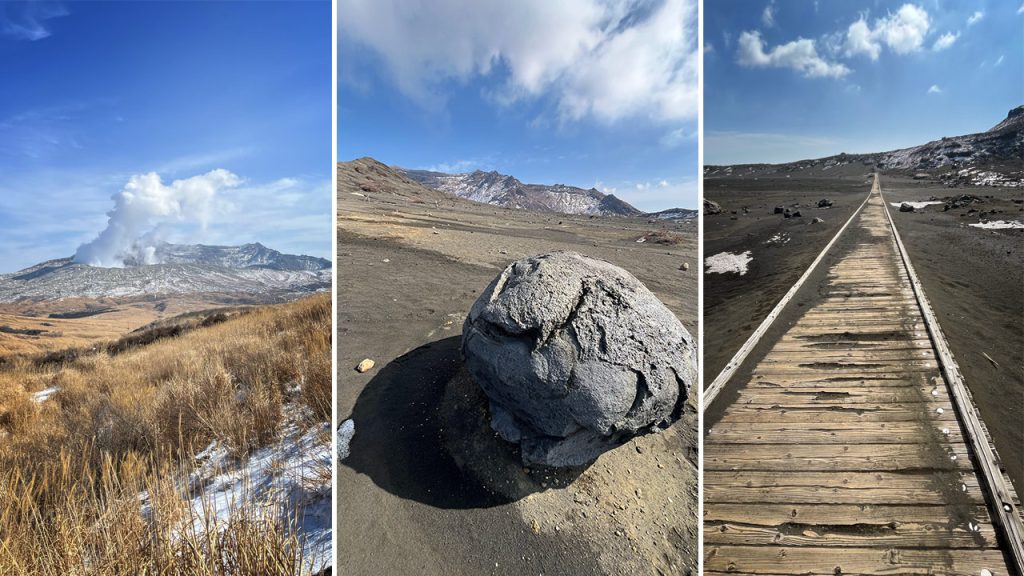
When I said that Japan changes how you look at the world, I truly meant it – something I noticed after my first up-close volcano visit to Mt Aso and its five peaks. I wouldn’t have described myself as a Volcanophile (real word, by the way) before this trip, but I certainly am now. How could you not be? The entire country makes up just one quarter of one percent of the earth’s landmass – yet it’s home to seven percent of all the world’s volcanoes.
This one – Mt Aso – is set right in the centre of an ancient caldera, the massive basin that forms after the magma chamber explodes, collapsing the surrounding land and, in this case, filling with water to form a vast lake with high, rocky rims.
Or at least it was a lake, until around 6,000 years ago when one of the local gods kicked a hole in the western rim (tectonic activity if you want the mundane version), causing the entire caldera to drain and become a vibrant tapestry of rice fields, farms, schools, hot springs (of course) and so much more.
After descending from the moonscape atop the highly active Mt Aso and exploring the various levels of its fascinating Volcano Museum – and of course sampling the famous “Red Hair” Aka-ushi beef hamburger at Douce Nucca – everywhere you look is suddenly viewed through a lens that’s part mythological, part volcano chaser (another real term): How was that distant mountain formed? Why does that hill look as though its entire right side has exploded across to the other side of the valley? Are those deep ridges the result of another god having his way with the landscape, or of streams of lava making their inexorable way across the plateau?
The only thing that can snap you out of it is to head back indoors. On this occasion, I travelled next to a place called Meihodo, an enchanting hideaway in dense forest just northwest of the base of Mt Aso.
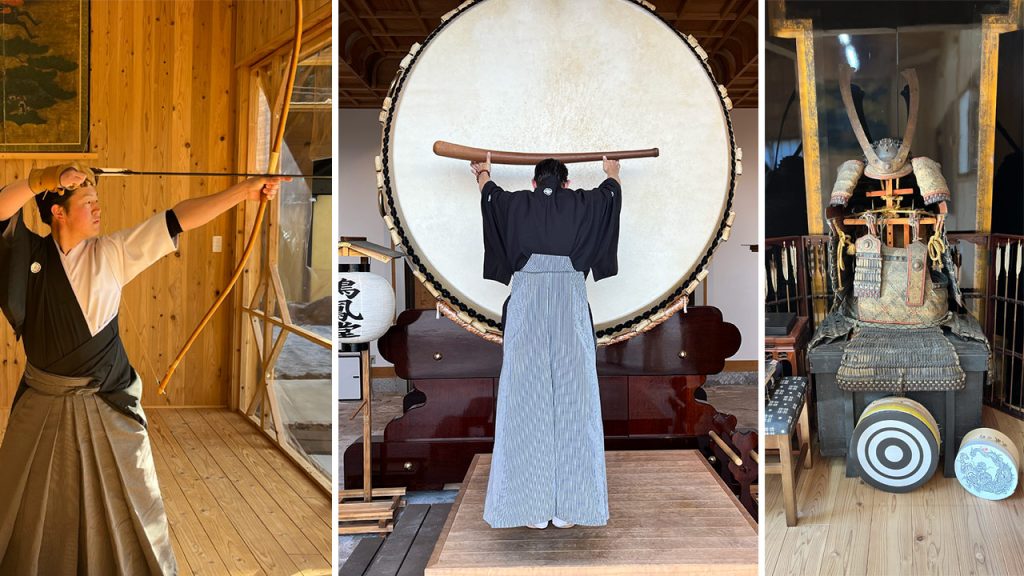
Meihodo is one of the few places in Japan that offers a truly authentic Samurai experience that you can really embrace and interact with – rather than view at one remove in the manner of a gallery or museum. It’s set across beautiful multi-layered grounds and is dotted with graceful buildings that have been crafted to be as loyal as possible to 16th century Japan, where you can watch or take part in all kinds of traditional rituals, martial arts, tea ceremonies – even Kyudo, Japan’s oldest martial art of archery.
Also onsite at Meihodo are a range of unique traditional musical instruments, including one of the largest Taiko drums in the world, crafted from the single trunk of a rare bubinga tree and weighing four tonnes.
Being taught step-by-step how to handle and shoot a Kyudo bow inside a traditional dojo, and watching a trained master powerfully and rhythmically strike that incredible Taiko drum and hearing it echo across the icy, dew-covered grounds in front of its specially constructed hall are two experiences I will never forget.
But there was more to come. My final destination before bidding farewell to Kumamoto was to the Kamishikimi Kumanoza Shrine, whose worship hall sits at the crest of a steep climb of more than 220 wide stone steps, flanked by moss-covered lanterns and towering cedar trees. But the real treasure here lies even higher still, at the top of a twisting stone pathway that was covered with snow, in the form of Ugetoiwa – a huge stone with a ten-metre hole cut through it, pierced by the blazing sun and a whistling wind. Legend says it was split apart by Kihachi Hoshii, a follower of the god Takeiwatatsu-no-Mikoto, and it’s believed to symbolise the power to overcome any challenge, making it a popular place to pray for success in exams or victory in important pursuits.
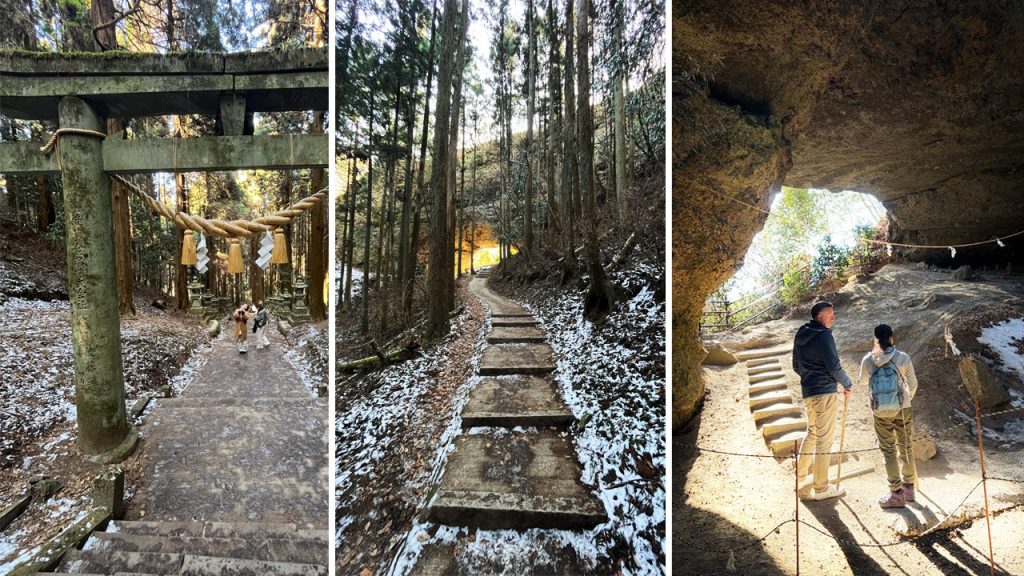
Standing there, breath fogging in the cold air, it’s easy to understand why the story endures. The climb, the cold, the silence… it was the perfect ending to my time in Kumamoto before turning further south towards Miyazaki…
Ready to continue onwards to Miyazaki and beyond to Kagoshima? Click below for Part 2 and Part 3 of our epic journey through southern Japan:
Beyond the guidebook: a journey through southern Japan Part 2 – Miyazaki
Beyond the guidebook: a journey through southern Japan Part 3 – Kagoshima
This is a sponsored article produced in partnership with Visit Kyushu