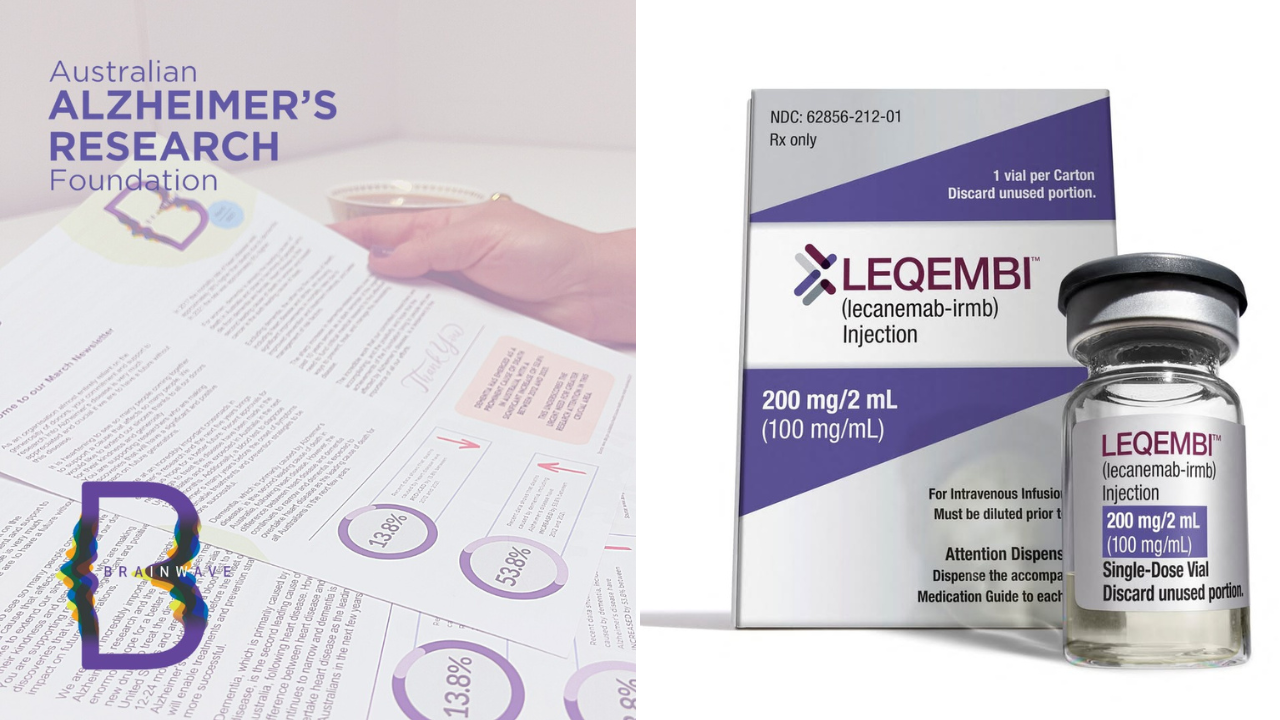
Australia has approved a new treatment for early to mild Alzheimer’s disease, with the Therapeutic Goods Administration (TGA) registering lecanemab (LEQEMBI).
The move makes Australia the 50th country to green-light the drug following clinical trials, marking a major step forward in treatment options for eligible patients.
LEQEMBI is designed for adults with mild cognitive impairment who are non-carriers of the apolipoprotein (APOE4) gene, a genetic risk factor for Alzheimer’s.
It is administered via a one-hour intravenous infusion every two weeks and works as a monoclonal antibody targeting beta amyloid plaques – the abnormal protein clumps that damage brain cells and disrupt function.
More than 400,000 Australians are currently living with dementia, with over 60 per cent of those affected by Alzheimer’s disease. Subtle memory and thinking changes are often the first signs of the condition, which is progressive and irreversible.
Alzheimer’s Global chair Cathy Roth welcomed the development, stressing the impact the disease has on patients, families and carers.
“These Australians experience stigma, fear, and symptoms that affect their quality of life,” she said.
“Early signs and symptoms of mild cognitive impairment, such as often losing things or forgetting important events, may be seen as a normal part of ageing when they are not.
“Increased early detection, research, and new treatment options for early Alzheimer’s disease are all crucial to give Australians living with this disease, as well as those who sadly may face this diagnosis later in life, new opportunities to manage the progression of the disease.”
Professor Michael Woodward, a geriatrician and dementia specialist, said the approval was an important step in broadening treatment access.
“With more than 812,500 Australians projected to be living with a form of dementia by 2054, there is an urgent need for advances in the early diagnosis and treatment of Alzheimer’s disease,” he said.
“The build-up of toxic amyloid plaques can occur up to 20 years before people may experience symptoms, so early diagnosis creates greater opportunity to reduce the rate of cognitive and functional decline with new advances in treatment options.
“The TGA registration of LEQEMBI for early Alzheimer’s disease is an important development in the way we treat this disease.
“It means we now have another amyloid-lowering therapy we can introduce in the right patients to target the underlying cause of Alzheimer’s disease, taking a more proactive approach to slow the cognitive decline associated with the disease.”
Eisai Australia medical director John Bower said the company remained committed to improving care for those affected.
“Australians living with Alzheimer’s disease deserve to live their lives in whatever way is most meaningful and fulfilling to them,” Dr Bower said.
“The TGA registration of this new medicine provides Australians living with early Alzheimer’s disease with a treatment option.”
Images: Instagram