Australians are being urged to check their backyards as feral rabbit activity continues to cause widespread destruction, prompting significant penalties in some states.
In Queensland, where authorities have taken the toughest approach, fines of up to $83,400 can apply for failing to comply with regulations.
Despite their popularity as backyard pets in many parts of the country, rabbits have become what the Invasive Species Council calls the “most destructive invader in Australia’s history” and an “ecological disaster.”
The organisation warns that feral rabbit numbers have now ballooned to around 200 million – far outnumbering the human population of 27 million.
The Queensland Government estimates rabbits cause approximately $200 million in crop and environmental damage each year.
According to the Logan City Council, “under the Biosecurity Act 2014, pet rabbits are banned in Queensland. It is an offence to keep any variety as a pet. The penalty for illegally distributing/selling, moving, keeping or feeding rabbits is $83,400 (up to 500 penalty points).”
Despite these strict laws, authorities say pet owners in other states who keep rabbits may inadvertently be contributing to the problem. With wild rabbits capable of travelling over 100km in a day and reaching speeds of around 56km per hour, escaped or released pets can quickly become part of the feral population.
The impact is already visible in some areas.
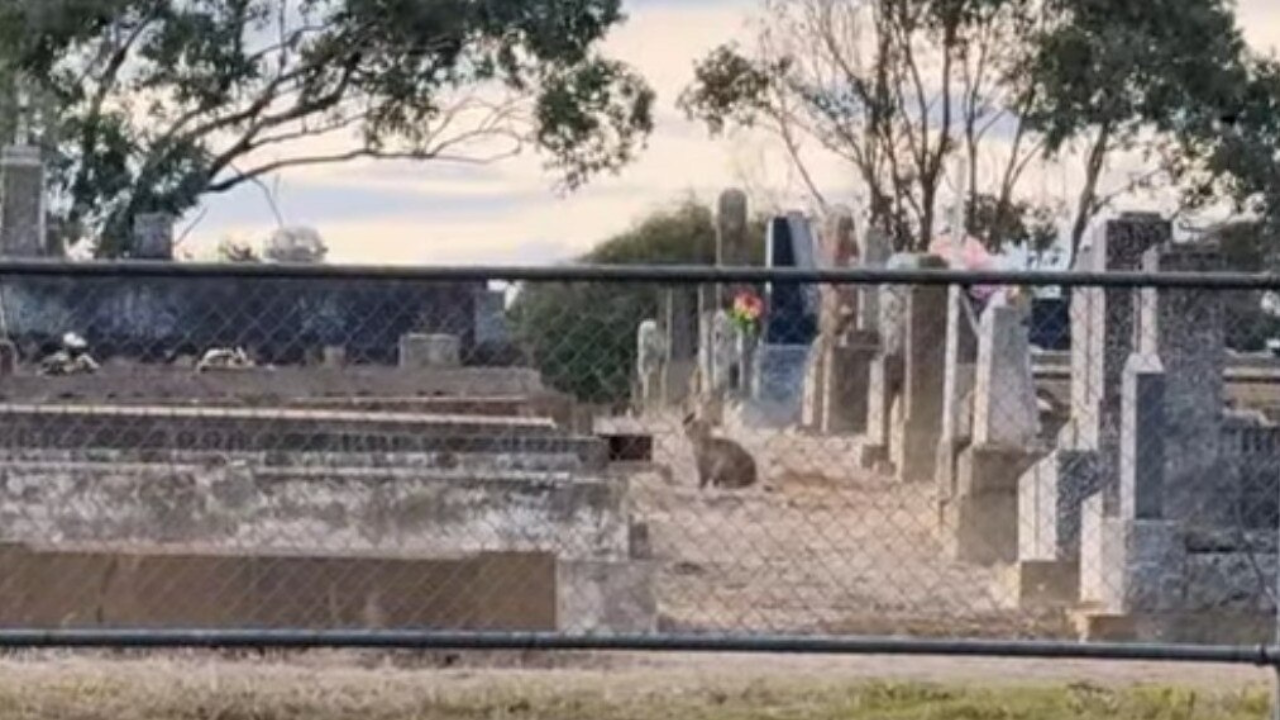
A recent infestation in Junee, NSW, saw feral rabbits burrowing through graves, prompting the distribution of more than 15,000kg of baited carrots to control the outbreak.
“It’s heartbreaking. The burrows are everywhere, not just beside graves, but right into them. It’s so upsetting and honestly just disrespectful,” one resident told the Junee Bulletin.
“If that was your child or your partner or your parent buried there, you would be horrified to see it.”
“These are sacred places. These aren’t 100-year-old forgotten plots, some of them are only a few decades old. This is supposed to be a place of rest and remembrance. Instead, it’s a rabbit warren.”
The Queensland Government has linked feral rabbit populations in NSW to escaped pets, stating that “a significant proportion of feral rabbits in areas around Sydney and Tweed Heads are the result of released or escaped pet rabbits.”
In Melbourne’s southeast, residents in the City of Casey have described rabbit numbers as rampant.
“If you drive down our street in the middle of the night you will see at least 100 rabbits in a 500m stretch,” one homeowner told Yahoo News.
In response to the growing crisis, the federal government is recruiting for a newly created position: Australian chief environmental biosecurity officer.
The role, equal to the chief plant protection officer and chief veterinary officer, aims to improve national coordination in combating invasive species.
Dr Carol Booth of the Invasive Species Council said the move represents “an important structural shift to elevate the importance of environmental biosecurity threats like bird flu, myrtle rust and fire ants within the department.”
“Environmental invaders have already caused massive damage to Australia, degrading land and water and driving extinctions. They have been by far the leading cause of animal extinctions and new threats like murder hornets, predator snails or rock snot will drive further declines if they make it to our shores.”
Applications for the role close on November 23.
How to check your backyard for wild rabbits
- Fresh scats
- Fresh scratching of grass or soil
- Vegetation chewed to 40cm from ground
- Burrowing or worn tracks under structures or debris
- Warrens
(Source: NSW Government)
If you have a pet rabbit:
- Do not release it into the wild
- Surrender it to your local government office or Biosecurity Queensland
- Consider surrendering it to the RSPCA for interstate rehoming
- Dispose of it legally and humanely
(Source: Queensland Government)
Images: Facebook / JuneeBulletin