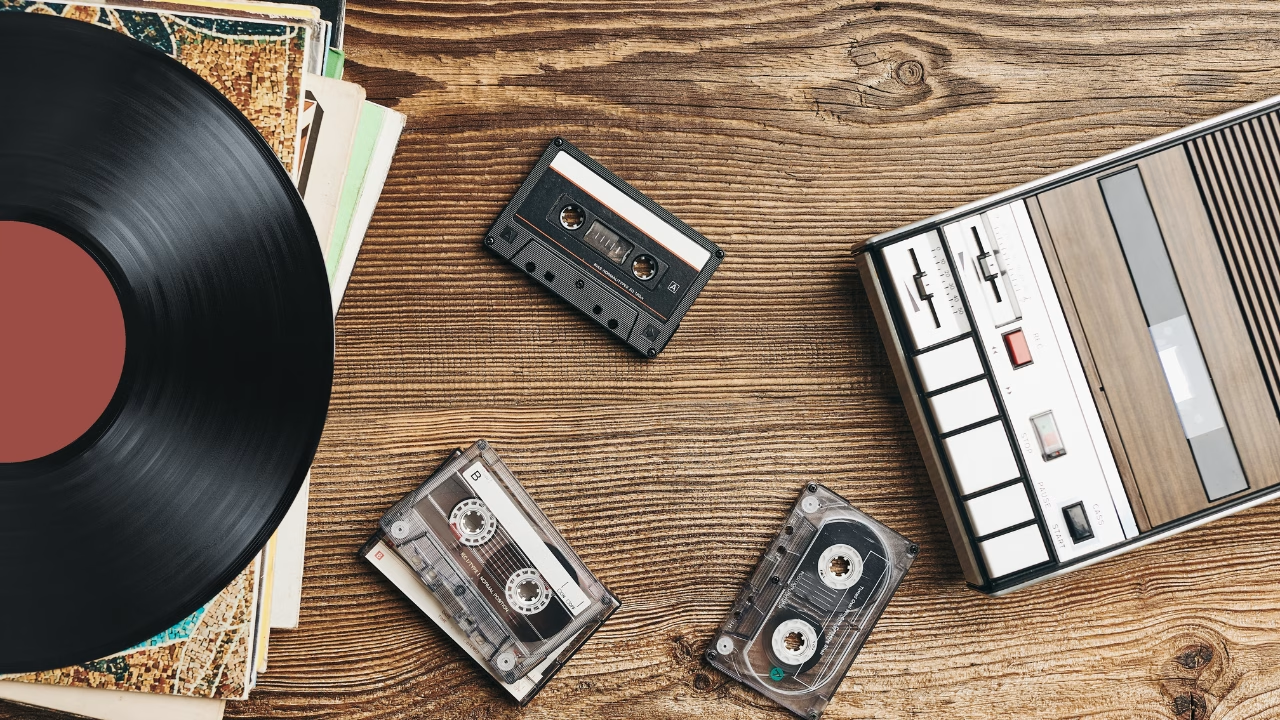
When Taylor Swift drops her upcoming album The Life of a Showgirl in October, fans will be able to listen on streaming services, vinyls, and, surprisingly, cassette tapes.
The cassette, once the dominant music format in the 1980s before CDs took over, had largely been considered a relic of the past. Streaming has long been the default way to access music.
Or at least, that’s what many assumed.
In 2023, 436,400 cassettes were sold in the US, according to the latest data from entertainment analytics firm Luminate.
While that number pales in comparison to the 440 million sold in the 1980s, it marks a massive increase from the 80,720 sold in 2015, a revival few expected.
Though not enjoying the same surge in popularity as vinyls or even CDs, cassettes are quietly making a comeback. Fans are drawn to their nostalgic feel and the more personal connection they offer, said Charlie Kaplan, owner of the online store Tapehead City.
“People just like having something you can hold and keep, especially now when everything’s just a rented file on your phone,” Kaplan told CNN.
“Tapes provide a different type of listening experience, not perfect, but that’s part of it. Flip it over, look at the art and listen all the way through. You connect with the music with more of your senses.”
Fuelling the trend are “super fans,” who make up 18% of US music listeners, according to Luminate. These listeners engage with their favourite artists in at least five ways, streaming, concerts, and buying physical music among them, and spend around $39 per month on those purchases, more than double the average fan.
Gen Z leads cassette buying, with 9% purchasing one in the past year. Top-selling cassette releases in 2025 have come from mainstream artists such as Chappell Roan, Sabrina Carpenter, and Charli XCX.
Still, millennials and Gen Y are also heavily represented in the buyer base. Kori Fuerst, owner of Retrospekt, which sells refurbished retro tech, said the “vast majority” of cassette buyers are younger generations.
“With a cassette tape, it’s not easy to skip around between songs,” she told CNN.
“You have to listen to the album all the way through, stopping to flip the tape halfway through. These tangible experiences are a nice reprieve from the perfect curation of a streamed playlist.”
But physical formats are increasingly viewed as complementary to streaming, not replacements.
“Fans are looking for a deeper connection to artists and their work, much like other forms of collectible artist merchandise,” said Matt Bass, vice president of data and research for the Recording Industry Association of America (RIAA).
Though the RIAA stopped tracking cassette sales separately in 2008, Bass noted that overall sales of physical formats, vinyls, CDs, and cassettes, rose 5% to $2 billion in 2024.
Taylor Swift, meanwhile, isn’t the first to embrace cassettes. In 2023, 1989 (Taylor’s Version) sold 17,500 copies on tape and Speak Now (Taylor’s Version) sold 11,500, Billboard reported.
Kaplan said it makes sense that one of the world’s biggest artists would tap into the cassette revival, something he’s watched build since starting his business a decade ago.
Buyers, he added, include both older listeners rebuying childhood favorites and younger fans discovering the format for the first time.
“Just like Taylor Swift, tons of new music is coming out on cassette too, not just reissues,” he said.
“It’s not just nostalgia anymore, it’s its own little scene.”
Images: Shutterstock