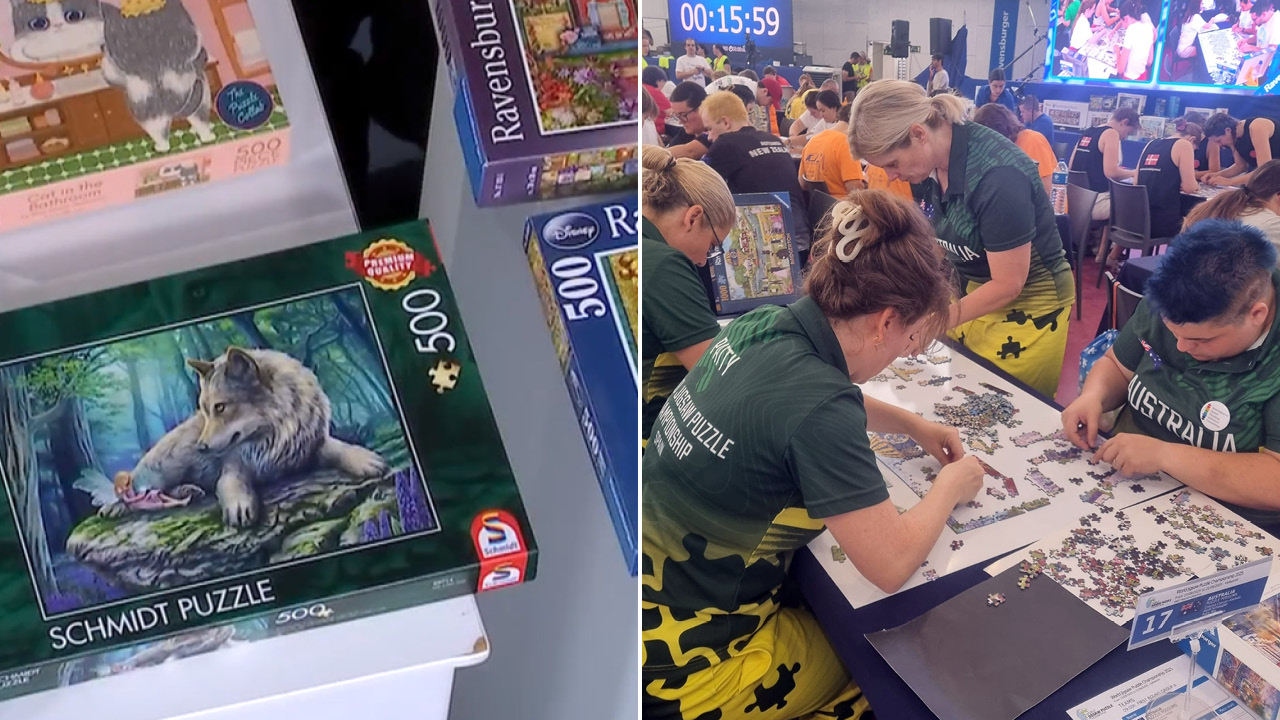
Competitive jigsaw puzzling is surging in popularity across Australia, with thousands of people now taking part in events ranging from community competitions to state, national and international championships.
Dianne Mayne from the Australian Jigsaw Puzzle Association said the rise has been especially strong since the pandemic, as more people turned to offline hobbies and hands-on challenges.
“They’re huge, a lot bigger than people think,” Mayne said.
“Since COVID, obviously, that was when jigsaw puzzling really came about. There are state competitions, national competitions, a lot of local competitions.”
Interest in the association has grown sharply in recent years, reflecting a wider appetite for screen-free pastimes and activities that test both focus and strategy.
The speeds reached by top competitors are extraordinary. At last year’s Australian Championships, the winning puzzler finished a 500-piece puzzle in only 36 minutes. On the world stage, leading competitors can complete the same challenge in around 30 minutes.
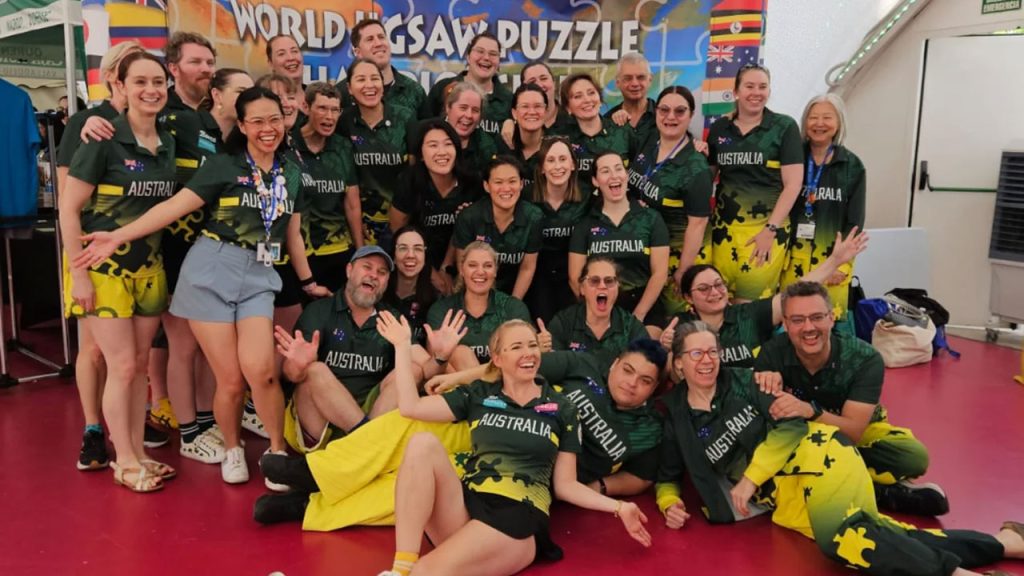
Australia is also making its mark internationally. The national team, the Aussie All-Stars, is ranked fourth in the world and competes in tournaments that can run over several days.
Events include individual, pairs and team categories, with contestants solving puzzles they have never seen before. At the World Championships, organisers usually choose newly released puzzles so every competitor starts on equal footing.
Mayne said success in competition involves far more than the classic method many people learn at home.
“Most people will just tip the puzzle out, flip the pieces over and go straight for the border,” she said.
That approach is not always the fastest. When border pieces look too similar, experienced competitors may begin by assembling clear images in the centre. Round puzzles are generally solved from the middle out, while designs made up of several smaller scenes can be tackled as though they are multiple mini-puzzles being completed at once.
Mayne said many first-timers are now giving competitive puzzling a go, and people do not need to be association members to enter events. Membership does, however, come with perks such as early competition access and discounts on puzzle purchases.