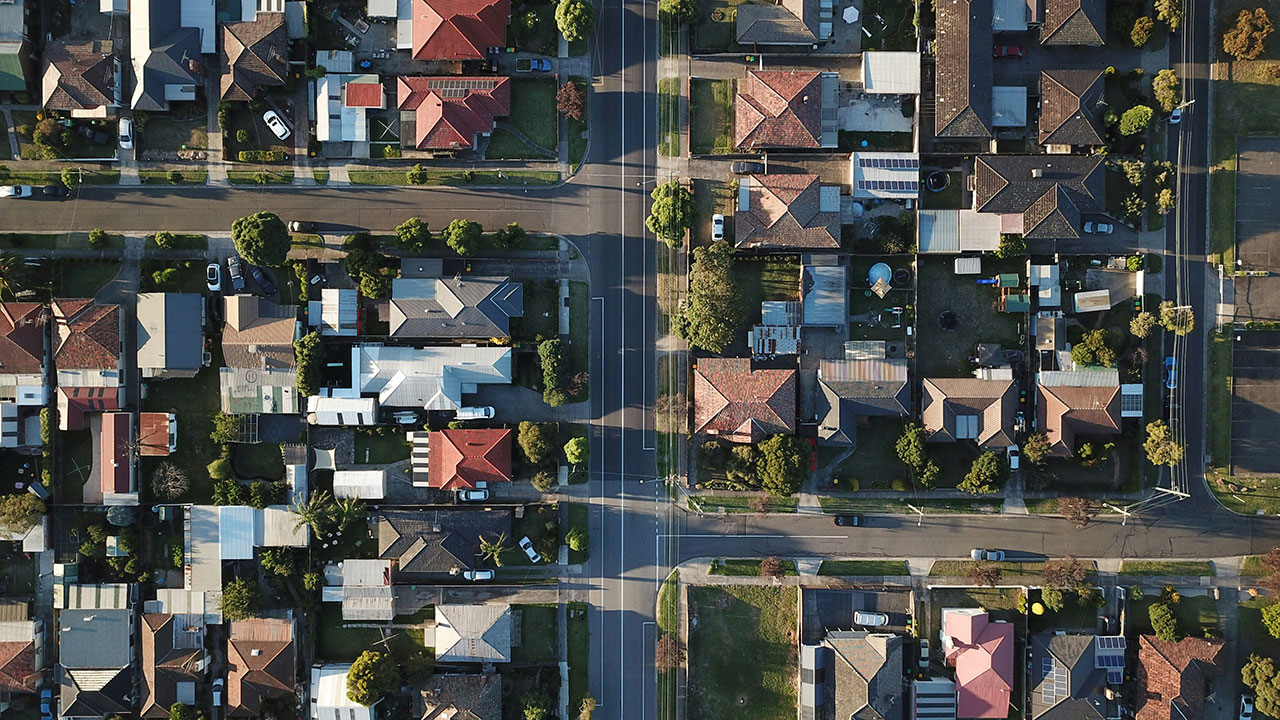
A proposed new housing measure could encourage older Australians to downsize and help release some of the nation’s estimated 13 million spare bedrooms at a time of deepening housing pressure.
Michael Blythe, former chief economist at the Commonwealth Bank, is urging governments to consider a “last homebuyer scheme” aimed at helping older homeowners move out of larger properties and into more suitable homes, freeing up space for younger families.
“We talk about this housing supply crisis but really it’s a bedroom glutton, just these bedrooms aren’t usable in the right kind of places,” he said on SBS Insight.
“There are nearly two million people in Australia who are actively talking about downsizing or at least thinking about it, but there is a distinct lack of follow-through.”
Census data from 2021 shows there are about 13 million spare bedrooms across Australia, including 3.2 million homes with one spare bedroom, 3 million with two spare rooms and 1.2 million with three.
Blythe said many Baby Boomers are reluctant to leave larger homes because they are attached to their communities, do not want to move into “tiny two-bedroom apartments” and are put off by stamp duty and other costs.
He said a “last homebuyer scheme” would be “pretty much identical to a first homebuyer scheme”. Such a plan could mirror support already offered to first-home buyers, including grants and stamp duty concessions.
Blythe pointed to South Australia’s move to abolish stamp duty for people aged over 60 who downsize to a newly built home, saying it was “absolutely the way to go”.
“If you switch to helping last home buyers, these are people who are already in the market, you are freeing up supply when they move from their current house into the new one,” he said.
He also said more could be done to make downsizing financially easier for older Australians who are hesitant to move.
“Governments can do more, developers can do more on that financial side,” he said.
“We need to get the settings right and then I think you’ll see it will happen more freely.”
Blythe also argued that more Australians should be taking advantage of the downsizer superannuation contribution scheme, which allows eligible homeowners to boost their retirement savings after selling.
“If you’re over 55 and have lived in your current house for over 10 years, when you sell you can put $300,000 as an individual or $600,000 as a couple into superannuation,” he said.
“It’s very tax effective of course, and a great way to boost your income, but it’s a bit of a secret.
“This scheme has been around since 2018 but according to the tax office only 98,000 people take that up, there’s nearly two million downsizers”.
The debate comes as new research highlights the scale of wealth held by older Australians. A study by the Bankwest Curtin Economics Centre found Australians aged over 65 now hold $6 trillion in wealth, up from $640 billion in 2002. That group makes up 17 per cent of the population but holds nearly a third of the nation’s $18.4 trillion in total wealth.
Of that, $2.8 trillion is tied up in property.
“The policy challenge isn’t that Australia lacks wealth, rather that much of it is tied up in housing and concentrated later in life,” centre director Alan Duncan told The Sydney Morning Herald.
“The next phase of reform needs to focus on unlocking that wealth safely while ensuring younger generations have access to fair, equitable and non-distortionary wealth accumulation pathways.”
At the same time, economists warn the broader housing shortage will take years to fix. Westpac senior economist Matthew Hassan said lifting supply would be a long-term task.
“It took 25 years to get to where we are now and it won’t get fixed overnight,” he said.
“The proposition of lifting supply is a five- to 10-year task.”
Westpac research found low listings and too few newly built homes are major barriers for first-home buyers. While Australia aims to build 1.2 million homes by 2029, Hassan said that target is likely out of reach.
“The problems that we have had over the last couple of years already means it is unachievable,” he said.
“We will be lucky to get one million. To start delivering that volume of dwelling completions, you’re asking the sector to scale up by 20 to 30 per cent over the next five years.”
Westpac said rising construction costs, the risk of further rate hikes and ongoing business pressures are making it difficult for builders to rapidly increase supply. Demand, however, remains strong, with many buyers also facing fierce competition.
Carolyn McCann, Westpac’s chief executive of consumer, said the supply issue should be treated urgently.
“We have a responsibility to the next generation of Australians – housing is a fundamental right,” Ms McCann said.
“Young Australians are eager to get into the property market, but the reality is limited supply is creating significant challenges.
“The most critical focus has to be on supply.
“We need to build more homes at the right price point so that every Australian feels they have a chance to own their own home.”
For Blythe, one practical answer may be to make it easier for older Australians to move when they are ready, helping better match homes to the people who need them.