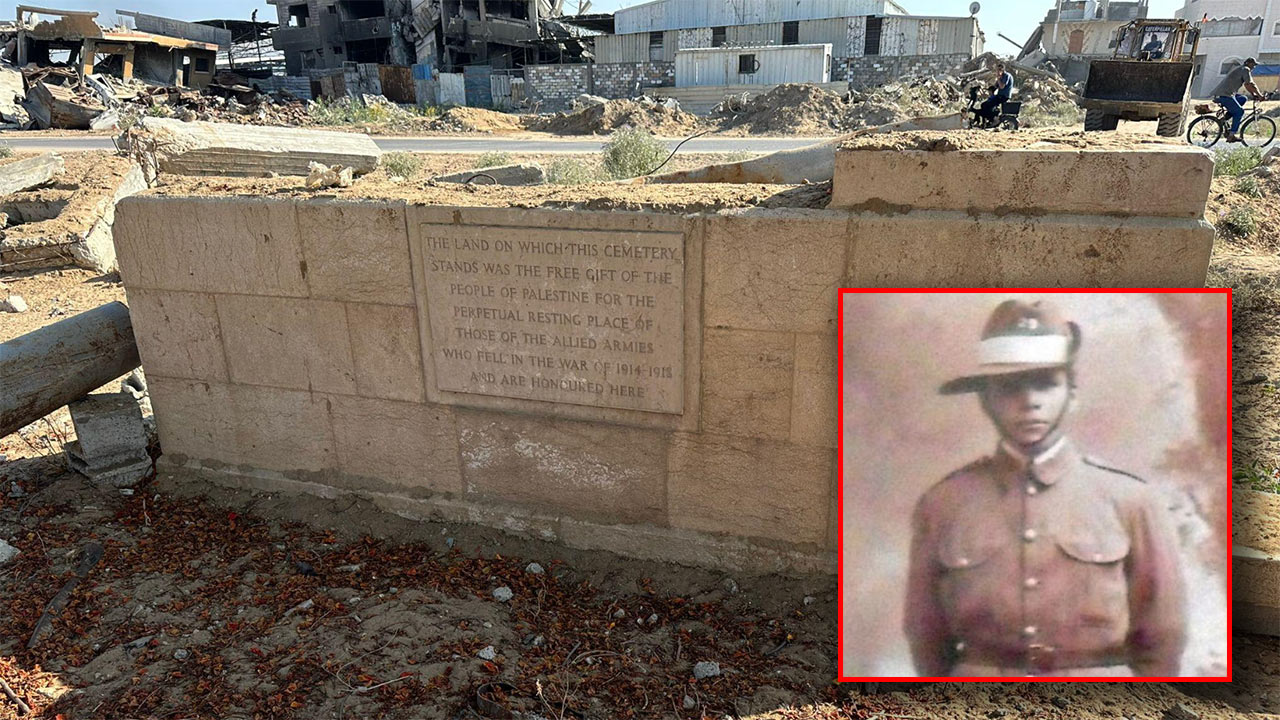
The family of a fallen Australian soldier has spoken of their heartbreak after the graves of almost 150 World War I diggers were destroyed in Gaza, prompting calls for an apology from Israel Defense Forces.
Among them was Alfred Cork, a 22-year-old who served with the 9th Australian Light Horse Regiment in Palestine before his death in 1917. His epitaph reads: “Bravely he answered his country’s call. He gave his best, his life, his all.” More than a century later, his great-niece fears that final resting place has been reduced to rubble.
Gwen Robins said she was devastated to learn the cemetery where her relative was buried was allegedly destroyed during military operations. “I find that incredibly sad that these young men who travelled to the other side of the world and all of a sudden they’re just obliterated,” she told 7NEWS.
New footage captured by an Australian nurse in Gaza shows widespread damage to the Deir El Belah Cemetery, where dozens of Commonwealth war graves once stood.
The Israel Defense Forces said the site was targeted as part of operations to dismantle “underground terrorist infrastructure”, claiming militant groups had taken cover in structures near the cemetery.
For more than a century, the Jaradah family had cared for the Gaza War Cemetery, preserving the graves of foreign soldiers far from home. That legacy has now been shattered.
Essam Jaradah, who remains in Gaza, described the moment he witnessed the destruction.
“It was the worst day of my life when I watched the graves break. I felt my soul was snatched from me,” he said.
His son Ibrahim has since relocated to another Commonwealth war cemetery in Egypt, but Essam is now unable to visit the site due to an IDF-enforced exclusion zone known as the “yellow line”.
In Australia, the loss has resonated deeply. Matt Keogh, the Minister for Veterans’ Affairs, said the destruction had “caused a great deal of anguish for relatives and the broader Australian community”.
The governments of Australia, Britain and Canada are facing growing pressure to clarify if – and when – the graves might be restored. For now, Keogh says, that prospect remains out of reach.
For families like the Corks, the uncertainty compounds an already profound grief – the sense that those who died so far from home may now be lost once more.
Images: 7News