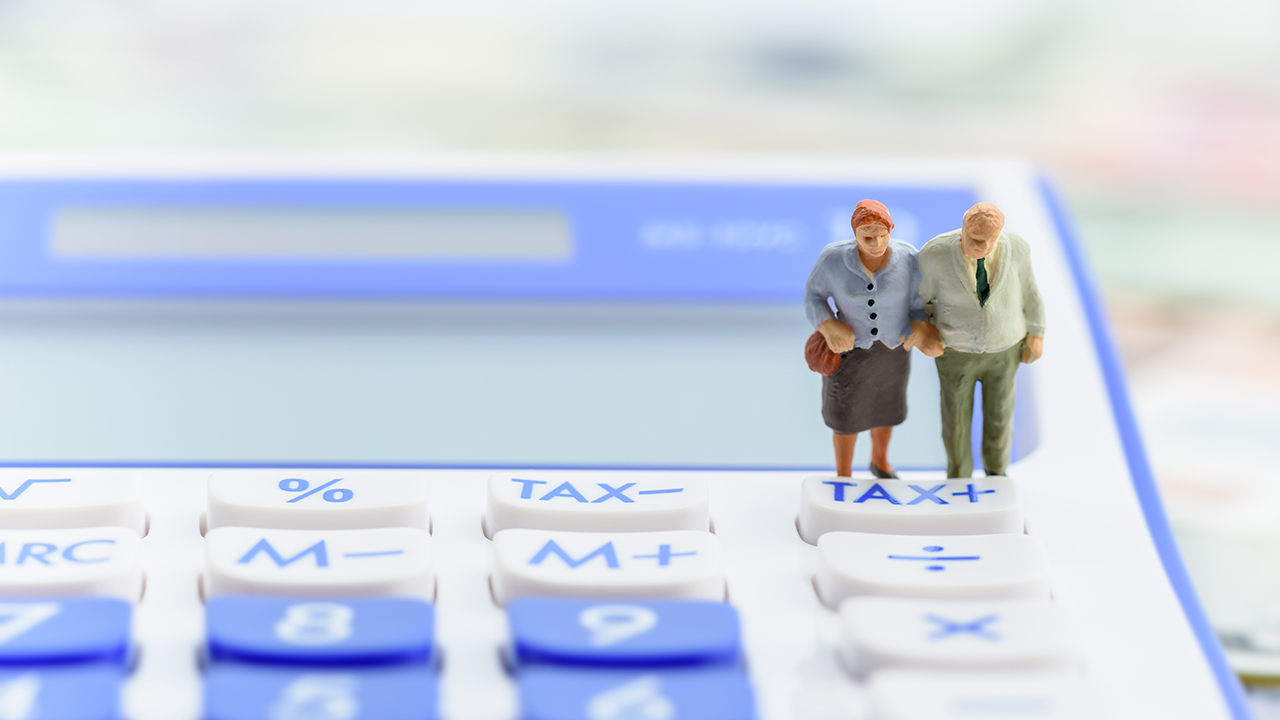
Thousands of Age Pension and other Centrelink recipients will see their payments reduced from March 20, after the federal government confirmed another increase to deeming rates.
Deeming rates are the rates Centrelink uses to estimate how much income a person earns from their financial assets, such as savings and account-based pensions.
The higher the deeming rate, the more income Centrelink assumes you earn – which can reduce payments under the income test.
From March 20, the lower deeming rate will rise from 0.75 per cent to 1.25 per cent. The higher rate will increase from 2.75 per cent to 3.25 per cent.
The lower rate applies to financial assets up to $64,200 for singles and $106,200 for couples. Any amount above those thresholds is assessed at the higher rate.
Financial adviser Nick Bruining said the 0.5 percentage point rise would be a “double whack” for many pensioners.
“A single age pensioner this time last year could have about $308,000 in financial assets without losing any pension. From March, even with the expected pension increase, that figure drops to about $215,000,” he wrote in a column for The West Australian.
“Above this limit and the pension would be reduced by the effects of the income means test because deemed income would exceed the allowed $218 a fortnight.”
Bruining said thousands of part pensioners could lose eligibility altogether, while some full pensioners would see their payments reduced.
Commonwealth Seniors Health Card holders will also be affected, as deeming rates are used to assess eligibility for the concession card.
Centrelink calculates adjusted taxable income from all sources and adds deemed income from income stream investments, such as account-based pensions. The actual payments from those pensions are not counted.
“A single, self-funded retiree with $1 million in an ABP would see the deemed income rise from the current level of $26,216 to $31,216 a year, and a couple with $1 million each from $52,876 to a combined amount of $62,876 a year,” Bruining explained.
This is the second increase in six months. Deeming rates had been frozen at low levels during the pandemic.
Last year, the government confirmed they would gradually rise to better reflect current interest rates.
“The change is consistent with the Government’s commitment that any deeming rate movements will be gradual,” a statement released by Social Services Minister Tanya Plibersek said.
It is also the first time the government has relied on advice from the Australian Government Actuary to recommend deeming rates. Previously, they were set at the Minister’s discretion.
“The new rates are still well below historical averages and the AGA advises they are achievable through investments like readily available savings accounts at a major bank,” the government said.
The new upper deeming rate of 3.25 per cent remains below the official cash rate of 3.85 per cent. By comparison, when the cash rate was 3.75 per cent in May 2012, deeming rates were 3 per cent and 4.5 per cent.
National Seniors Australia described the increase as “measured” and “modest”.
“While the increase will have some impact on pensioners, it could have been worse given interest rates remain stubbornly high,” National Seniors Australia CEO Chris Grice said.
“We have said consistently and still maintain – any upward change to deeming rates needs to be measured, incremental, and transparent to protect older people.
“If interest rates continue to rise and government reverts quickly to the old method to set deeming rates, there could be significant financial impacts, with lower pensions and higher aged care co-contributions.”
COTA chief executive Patricia Sparrow said the gradual approach was sensible.
“A measured ‘step up’ reduces the risk of sudden impacts on pension payments and provides greater certainty for older Australians managing tight budgets,” she said.
However, she noted the actuary assumes people can access higher-interest products, such as online savings accounts, while research shows around one in seven pensioners are not confident using online services like internet banking.
The changes will take effect at the same time as the government’s twice-yearly indexation increase.
The government expects people receiving the full single rate of the Age Pension, Disability Support Pension and Carer Payment will receive an extra $22.20 a fortnight.
JobSeeker, Commonwealth Rent Assistance, ABSTUDY and Parenting Payment will also increase under indexation.
Image: Rose Marinelli / Shutterstock.com