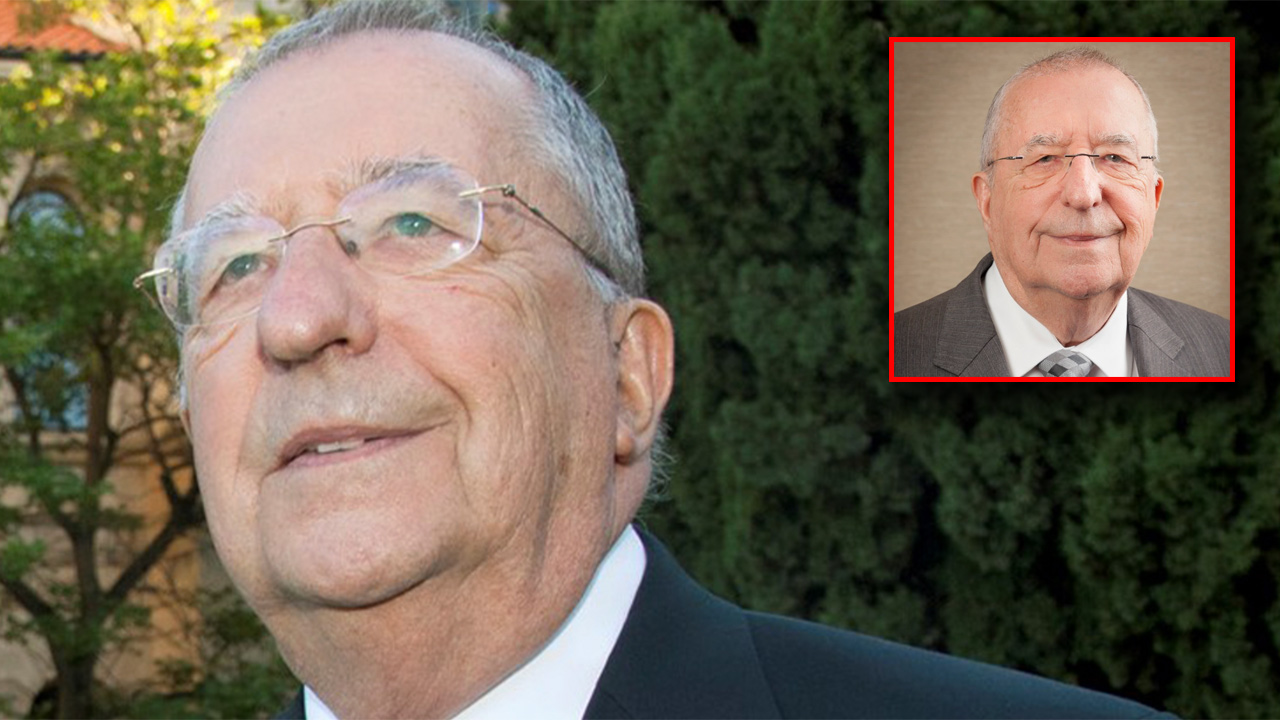
Distinguished Australian medical leader Professor Bryant Stokes AO is being remembered not only for a career that helped shape modern healthcare in Western Australia, but for the quiet compassion that defined his life’s work.
Professor Stokes, one of the nation’s most respected neurosurgeons before going on to become an admired public servant, has passes away aged 89. Tributes have flowed from colleagues, former patients and institutions across the country, each reflecting the breadth of his impact and the humanity behind it.
Affectionately known as “Bars”, a nod to his full name Bryant Allan Rigbye Stokes, he was widely regarded as a giant of Australian medicine. WA Premier Roger Cook said Professor Stokes made an “unparalleled contribution to health” in the state and beyond.
“His passion for the best care for his patients and the broader WA community was integral to every role he held through his illustrious career,” Mr Cook said. “His legacy is unmatched and his loss will be felt right across the health family.”
Born in 1937, Professor Stokes was educated at Perth’s Wesley College before becoming one of the first graduates of the University of Western Australia’s newly established Medical School in 1959. It was the beginning of a lifelong relationship with UWA and a career marked by curiosity, rigour and service.
He was admitted to the Fellowship of the Royal Australasian College of Surgeons in 1965 and began his medical career at Royal Perth Hospital as a resident medical officer, later lecturing in anatomy at UWA. Further study and specialist training in Perth and Canada honed his skills, and by 1971 he had returned to RPH as a consultant neurosurgeon, quickly earning recognition for his pioneering work in treating brain aneurysms.
Yet for many, it was not just his technical brilliance that stood out, but his kindness.
One former patient, who credited Professor Stokes with saving his life, recalled being a teenager and facing a long, uncertain recovery. “Mr Stokes saved my life in 1972 after a bad car accident in a country town where one of my school friends was killed and another one was knocked unconscious with me for 21 days,” the former patient wrote in an online tribute. “I was only 16. He saved my life. I had pressure on the brain. I was in hospital for a very long time and had to learn how to live all over again.
“He had the most beautiful bedside manner,” the tribute read. “So gentle and spoke so softly.”
Those words were echoed again and again by patients and colleagues alike.
Professor Stokes went on to serve as a consultant neurosurgeon at Sir Charles Gairdner, Princess Margaret and Fremantle hospitals, while also contributing his expertise to numerous medical panels and committees. His influence extended well beyond the operating theatre, shaping health policy and governance at the highest levels.
He was elected president of the Australian Medical Association (WA) in 1982 and later chaired the WA Council on Safety and Quality in Health Care from 2002 to 2009. His leadership was further called upon in senior public service roles, including WA chief medical officer, acting commissioner of health and acting director general of health.
UWA described him as far more than a medical leader, praising him as a mentor and inspiration to generations of clinicians and researchers.
“His dedication to patient care, intellectual rigour, and commitment to public service have left an indelible mark on the health and wellbeing of the community,” Vice-Chancellor Amit Chakma said.
Recognition of Professor Stokes’ service came formally in 2001, when he was appointed a Member of the Order of Australia, and again in 2020, when he was made an Officer of the Order of Australia (AO).
But those who knew him say his greatest legacy lies not in titles or honours, but in lives changed — and lives saved.
“Professor Stokes was a man of principle and compassion,” AMA WA said in a statement. “He treated all patients as if they were his own family – and he was a man who made things happen.”
As Western Australia’s health community reflects on his passing, Professor Bryant Stokes is being remembered as a doctor who combined excellence with empathy, leadership with humility, and a life of achievement with a deep and enduring kindness.
Images: University of Western Australia