A friend of the Perth family found dead in a suspected murder-suicide has spoken of the hidden struggles they faced, saying they were “in the trenches trying to survive”.
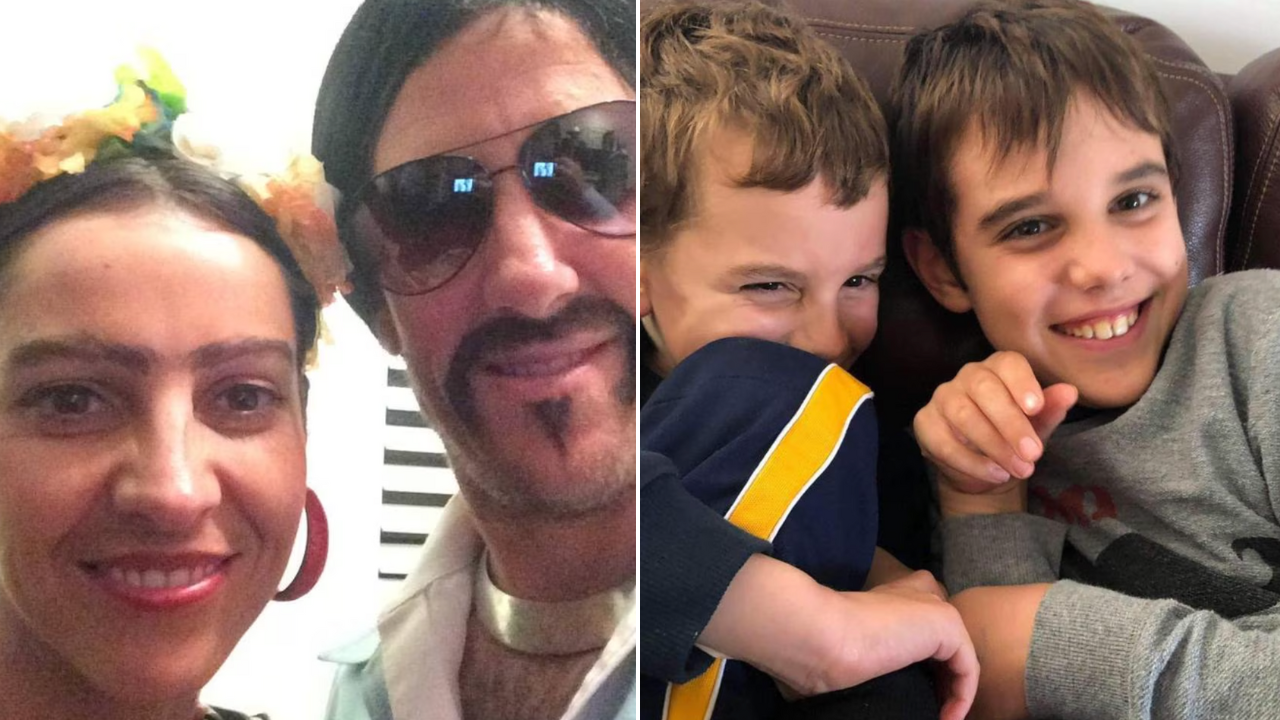
Maiwenna ‘Mai’ Goasdoue, 49, her husband Jarrod Clune, 50, and their two teenage sons, Leon, 16, and Otis, 14, were found dead inside their Mosman Park home on Friday.
Both boys had severe autism – with Otis non-verbal – and were previously enrolled at the Peter Moyes Centre, a specialist education facility at Christ Church Grammar School, but had stopped attending in recent years, reportedly after one of the boys was asked to leave.
Police were alerted early on Friday morning by a carer for Leon and Otis, who found a note on the front door instructing them to contact authorities.
It is understood a second note found inside the home indicated the parents had jointly decided to end their lives, leading police to classify the incident as a murder-suicide.
In the days following the deaths, friends and support workers have said the family was “failed” by the National Disability Insurance Scheme (NDIS), suggesting the parents may have felt they had “no other choice”.
One family friend, who met Goasdoue through Perth’s autism community and asked not to be named, said they bonded over the shared experience of caring full-time for children with “extreme behaviours”.
“You reach out to other people who are in similar situations … But the people who understand you best are in the least position to give you support,” the friend told The Age.
“We’re all in the trenches trying to survive. And that tends to lead to increasing isolation.”
Detectives confirmed the family had engaged with care workers but declined to provide further details.
The friend said there was “no doubt” the boys’ behaviour would have placed immense strain on the family.
“You’re talking about violence, meltdowns, vicious behaviour that could leave you with injuries,” they said.
“And these kids with these extreme behaviours are let down the most. There really isn’t support for families like ours. There’s nothing meaningful.”
Federal Health Minister Mark Butler declined to comment on the specifics of the care provided to the family, citing the ongoing police investigation.
“It’s an awful tragedy at so many different levels but particularly the loss of two children’s lives who obviously did not choose to die is an unspeakable tragedy,” Butler told reporters.
“I know there’s been a bit of commentary over in Western Australia about the NDIS packages that these children were on. I want to be really clear. First of all, I don’t want to say anything that would impact the police investigation.
“I want to give people the confidence that the NDIA, the agency, is cooperating fully with the police to the extent that they have any useful inputs to the police investigation.
“I also want to be clear that there are very clear legal restrictions on our ability, my ability, the ability of the NDIA, to say anything about the packages that the children were on, so I’m not in a position to respond to some of the speculation that I’ve seen in Western Australian media.
“All I want to say is that this is just an awful tragedy, just an unspeakable tragedy for this family, but for the broader community, and I know the NDIA will do everything it can to assist the police in its inquiries.”
An NDIA spokesperson said the agency would cooperate fully with authorities.
“We extend our deepest sympathies to the Clune Goasdoue’s family, their loved ones and all those affected by this tragic loss,” the spokesperson said.
“This matter is currently under investigation by Western Australian authorities.
“The NDIA will work closely with the Western Australian authorities to support their inquiries or investigations.”
Former support worker Maddie Page said that despite the “love and resilience” shown by Mai and Jarrod, the pressures they faced may have left them feeling trapped.
“The consistent dedication and deep love Mai and Jarrod showed for their boys, and the ways they never stopped fighting for them to feel seen and heard in this world will never be forgotten,” Page said.
“May they rest in peace together as a family, NDIS – do better.”
Developmental Disability WA chief executive Mary Butterworth said the tragedy showed it was “fairly obvious” the family were not receiving enough support.
She said increased investment in training and support services could reduce pressure on families who often feel they must cope alone.
“The reality is, in Western Australia we do not have enough trained support workers who can provide support to families,” Butterworth told the ABC.
“I feel sorry for the support providers; they do not have enough funding in their plans that allows for them to provide deep and thorough training and mentoring to their staff.”
Images: ABC / Facebook