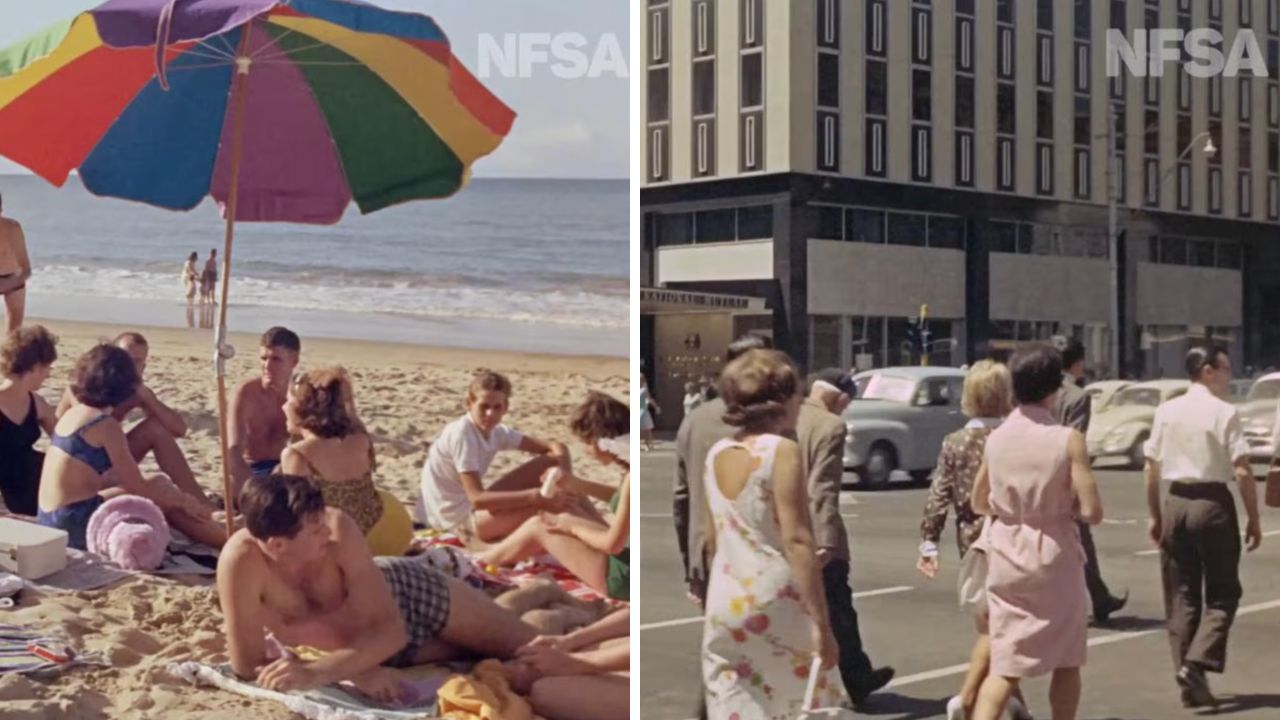
A series of films created by the Department of Immigration in the 1960s, showing life in 12 capital cities and regional centres in Australia has been restored in 4K by the National Film and Sound Archive (NFSA).
The films, intended to attract European migrants to Australia, shows an “idyllic vision of the 1960s” and was published online from 2019-2025 by the NFSA, but has only recently been restored in higher quality.
The Australian government commissioned the Commonwealth Film Unit, later known as Film Australia, to create the short films between 1964 and 1966, as part of a “marketing tool to sell potential ‘New Australians’ from Europe the idea of a prosperous, happy life Down Under”.
The films mostly showcase Australia’s employment and industry, education, sport, health care, shopping, religion, night life and art across the 12 cities.
NFSA stresses “it is important to understand the context in which the films were made”.
“It was the last years of the ‘White Australia’ policy, and the government wanted to attract (mostly British) migrants,” they wrote on the website.
“Inclusiveness was not the goal, and anything that didn’t fit into the perfect postcard image was left out of these films. It’s the TV sitcom version of a complex country going through a transformative period.
“The 1960s was a time of change around the world, and Australia was no exception.
“The Vietnam War sparked social unrest and protests challenging Australia’s participation in the conflict.
“There are no First Nations people in any of these films, at the time when Charles Perkins embarked on the Freedom Ride, and only a couple of years before the landmark 1967 referendum.
“Women’s rights movements were also transforming Australian society, yet in these films women only play traditional roles: employed in ‘women’s jobs’ until they ‘graduated’ from working life through marriage, to become devoted housewives.
“These films are fascinating examples of the 1950s-60s government filmmaking style, and capture different aspects of the Australian experience 50 years ago.
“They may not represent 100 per cent of what life in Australia was, but they do capture the spirit of a nation aspiring to fulfil its potential.”
According to Professor Kate Darian-Smith from the School of Historical and Philosophical Studies at the University of Melbourne, the campaign was created to boost post World War II migration, which was lower than expected during this time.
“Those coming from Britain were always seen as the most desired cohort and the group of people that Australia really wanted to attract,” she said in an interview with the ABC.
“The key message is there are jobs there for migrants — both skilled and unskilled — and that the economy itself is modernising.”
While the campaign itself was effective, most of the migrants only stayed for a few years, because “the reality was somewhat different.”
“Up to about 25 per cent of all migrants coming in the ‘50s and ‘60s returned back to Britain or other countries of origin because the hype didn’t quite live up to their own experience.”
NFSA senior manager Bronwyn Dowdal told the broadcaster that the films were “really interesting time capsules.”
“Definitely a portrayal of an idealised Australia — the Australia that the government at the time wanted the world to see,” she said.
“We’re really hoping that people are able to engage with the material to look back and reflect on what their town was like at that time.
“It’s always fun to see places that you’re very familiar with … decades ago.”
Images: NFSA/YouTube