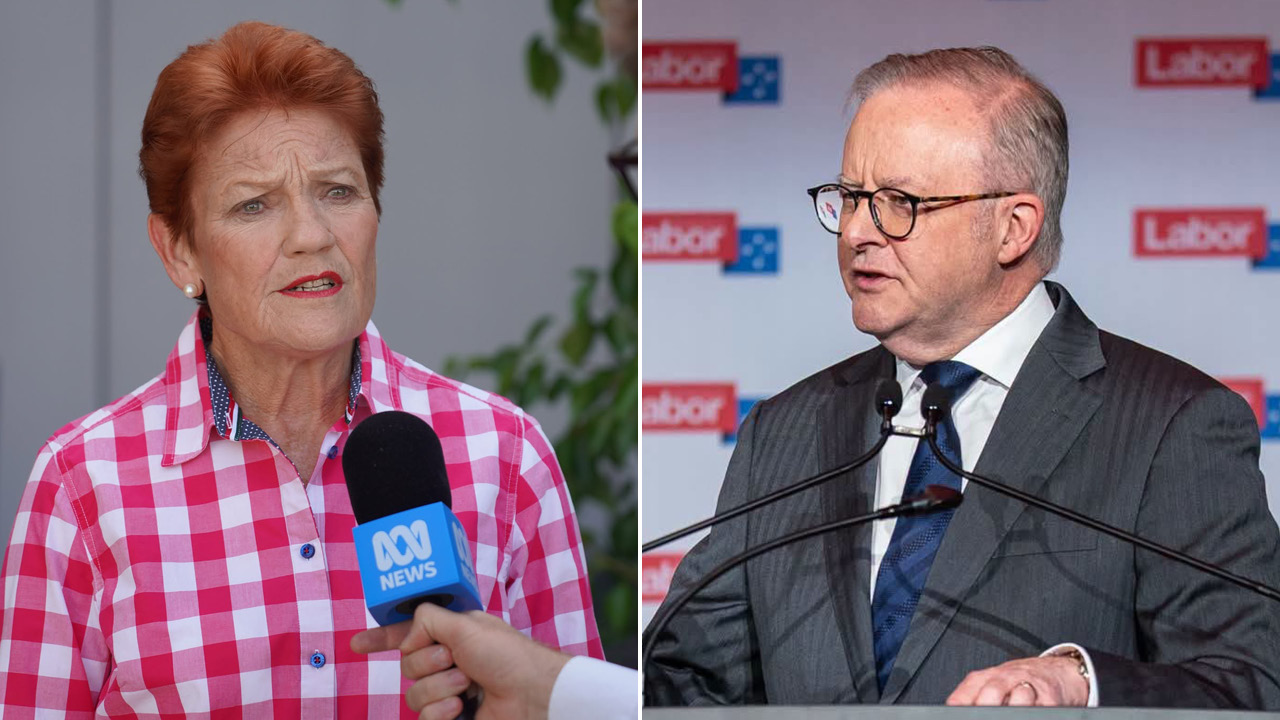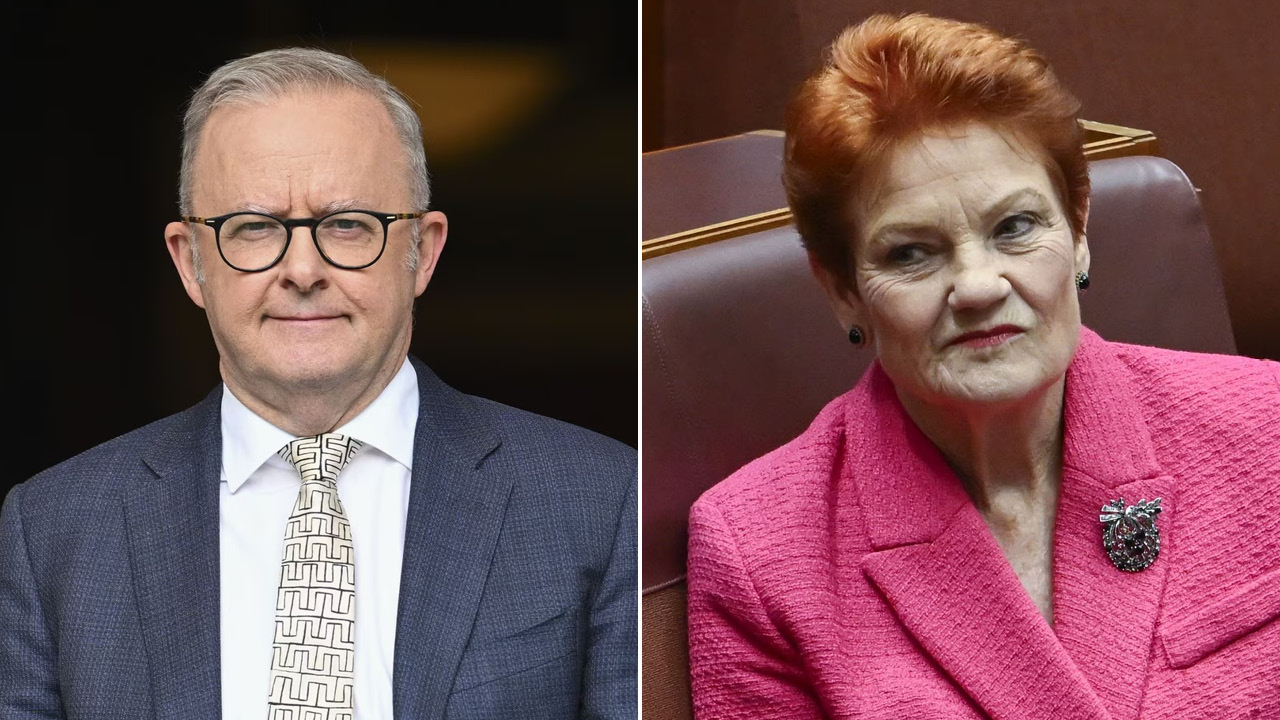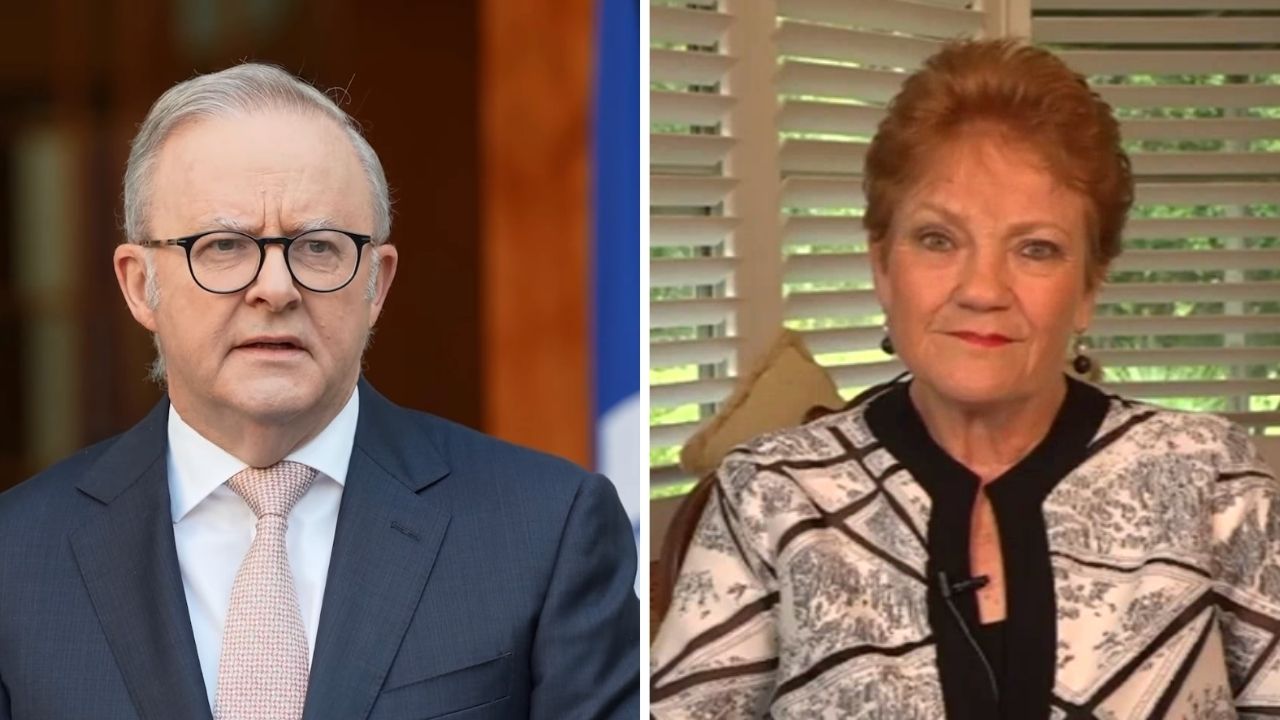
Pauline Hanson has demanded a “please explain” from the Albanese Government over proposed hate-speech laws, warning the changes could strip Australians of their freedom of expression.
The One Nation leader said the legislation could be used to punish ordinary people for voicing opinions about culture, immigration or national identity, and argued the consultation process had been rushed.
“This is no doubt another one of those bills, but worse. Australians will be stripped of their freedom of speech, opinion and ability to express the pride they have in their culture and nationality,” she said.
“I want to explain to the people my grave concerns about this manipulative, controlling, politically driven piece of legislation. It needs to be called out, and people have a right to be informed.
“The PM wants to appear that he has Australians’ concerns at heart but when the public have less than two days to make a submission to a snap inquiry on the legislation, it’s obvious he is not interested in what you have to say.”
Hanson claimed the laws were being pushed through without proper scrutiny and could criminalise everyday political debate.
“Talking about banning the burqa certainly will be an offence,” she said.
“Criticising the immigration program would probably be an offence because that may cause migrants to feel intimidated because of their national origin.
“These powers are huge and could be weaponised against everyday Australians. Do you trust politicians with this power? I don’t.”
She also argued the wording of the bill was so broad it could even penalise expressions of national pride.
“Someone saying ‘Australia is the best country in the world’ a criminal subject to 5 years in prison,” she said.
“Will flying the Australian flag be an offence as well? That’s disseminating ideas of superiority (the best) over a group of people based on their national origin (not being Australian).”
Her comments come as the federal government faces growing political resistance to the draft laws. The Coalition, which had earlier called for tougher action on hate preachers, is now signalling it may not support the bill, arguing it has been rushed.
Opposition Leader Sussan Ley described the proposal as “unsalvageable”, while Liberal MP Andrew Hastie said he was worried about the impact on religious freedom.
“I have concerns about what this bill will do to freedom of conscience and religion, and I’m unlikely to support it,” he said.
Prime Minister Anthony Albanese rejected claims the process had been hurried, saying the government had acted in response to repeated calls from the opposition to recall parliament.
“This is somewhat stunning, frankly,” he said.
“The Coalition, day after day, very clearly, called for parliament to recall, be recalled, not on Monday, January 19, but during Christmas week.
“Now they’re saying that this is somehow rushed, even though my government has moved in a considered orderly way, which is the way that we function.”
Home Affairs Minister Tony Burke said he still hoped the opposition would back the laws.
“I have concerns about what this bill will do to freedom of conscience and religion, and I’m unlikely to support it,” Liberal MP Andrew Hastie said in a statement.
Burke pointed to recent moves by extremist groups to shut down as evidence the legislation was needed.
“Any day the Nazis take a step backwards is a good day,” he told ABC radio.
“And if there was ever evidence that this legislation is urgent and that we’ve got the balance right in what we’ve put forward, it’s that immediately on seeing it, the Nazis announced that they’re going to disband.”
“We’re getting immediate action from some of these groups. A notorious prayer hall has said now that it’s permanently closed, the Nazis are taking a significant step backwards. None of this means that the hate in these individuals goes away, but it is making it more and more difficult for them to organise.
“And that’s why I can’t for the life of me see how the Liberal Party have got themselves to the point where they’re now effectively opposing the legislation.”
Hanson, however, maintained the bill went too far and said Australians needed to oppose it before it became law.
“Look at what’s happened to a councillor in Britain for saying she was ‘born and bred’ there. It is up to you to fight back and send in a submission opposing this legislation, or accept it and live with the consequences,” she said.
Albanese said he had met with Ley on a weekly basis, informing them in advance that the government would prepare the legislation.
“We’ve said we’re open to amendments in order to make sure that we get this right. And we haven’t heard any proposed amendments,” he said.
“What we’ve had is people who haven’t even looked at the legislation declaring that it should be opposed. I saw Michael McCormack on 7.30 last night speaking about hundreds of pages of legislation.
“Well, that’s not true. It’s just over 100 pages the legislation. This is complex, but that is what we’re working through.
“You can’t have it both ways. They’re still playing politics.
“I’m just stunned that they are saying they will vote against legislation, without even looking at it.”
Prime Minister Albanese said he still hoped the debate could become a moment of national unity similar to the response after Port Arthur.
“Well, I’ve called consistently for national unity. I’ve consulted extensively,” he told ABC radio, noting he had returned to Bondi to meet with the community about the national day of mourning and other local concerns.
He urged all sides of politics to work together, adding: “This should be a moment of national unity. I say that to the coalition, to the cross benches and the Greens as well.”
Albanese said he had held constructive discussions with independent MP Allegra Spender and remained committed to finding common ground as the legislation moves through parliament.
Images: Instagram