The alleged gunman in the horror Bondi Beach terror attack that claimed 15 lives and injured dozens more has emerged from a coma, giving counter-terrorism police their first opportunity to question him.
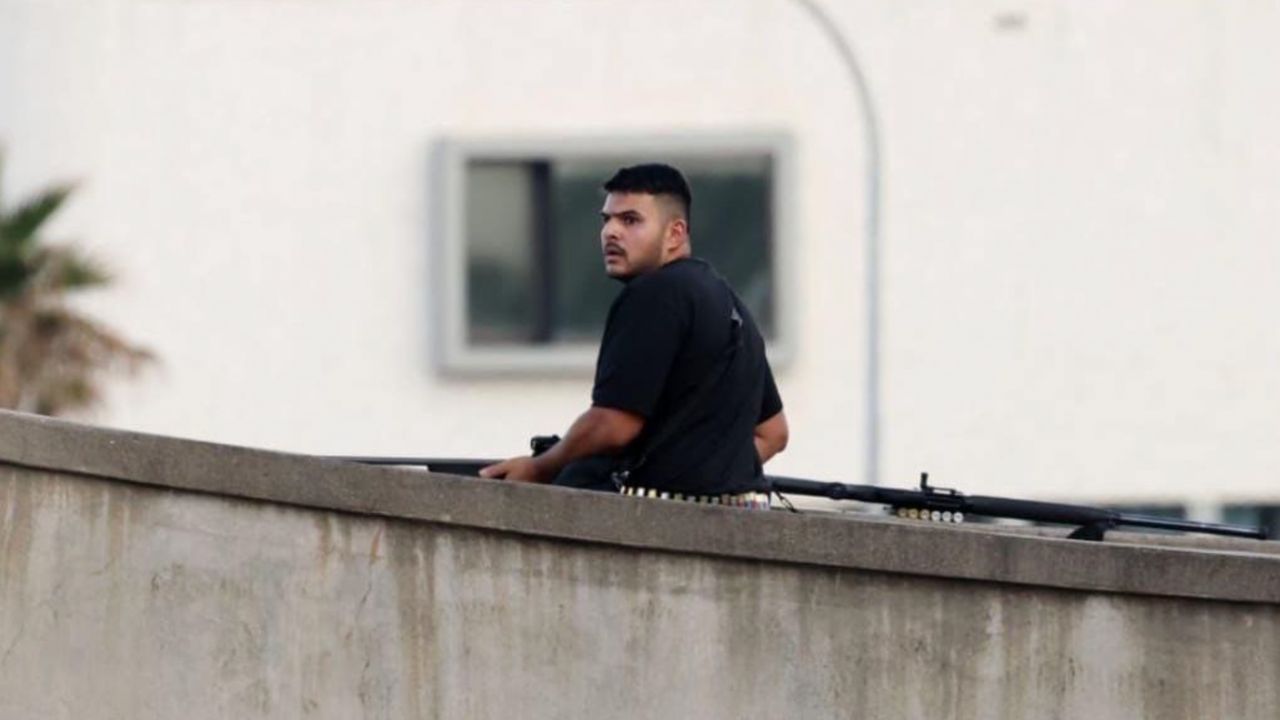
Naveed Akram, 24, is accused of opening fire alongside his father, Sajid Akram, 50, at the Chanukah by the Sea event at Bondi about 6.40pm on Sunday, as crowds gathered to mark the first night of Hanukkah. Fifteen people, aged between 10 and 87, were killed in the attack, with at least 40 others injured.
Sajid Akram was shot dead following a confrontation with police at the scene. Naveed Akram was also wounded and taken to hospital in a critical condition, where he was placed in a coma. Police confirmed he regained consciousness on Tuesday, more than 48 hours after the attack.
Counter-terrorism detectives are now expected to attempt to question Akram, even if only briefly, as investigations intensify into the planning, motive and circumstances behind the mass shooting. Under special powers contained in the Terrorism Act, police may detain Akram for longer than usual – up to 14 days once he is formally arrested – while they build a case and consider charges.
As the investigation continues, further details about Sajid Akram’s background have emerged. Indian police confirmed on Tuesday that he was originally from Hyderabad, the capital of Telangana state in southern India, but had limited contact with family members there.
In a statement, Telangana state police said family members had expressed no knowledge of Sajid Akram’s alleged radical mindset or activities. “The family members have expressed no knowledge of his radical mindset or activities, nor of the circumstances that led to his radicalisation,” police said.
Authorities also confirmed Sajid Akram had visited India on six occasions since migrating to Australia in 1998, primarily for family-related reasons, and that there was no “adverse record” against him prior to his departure from India.
Investigators are placing particular focus on a recent overseas trip taken by father and son to the Philippines, where Islamic State-linked extremists operate in the southern region of Mindanao. Police say the pair arrived in Manila in early November and left several weeks ago, with detectives probing the purpose and nature of the visit.
The attack has prompted renewed calls for tighter gun laws, marking the first significant push for reform since Australia’s worst mass shooting at Port Arthur in 1996, when 35 people were killed.
Prime Minister Anthony Albanese said the tragedy underscored the need to strengthen existing legislation. “The very nature of our gun laws means that they are only as strong as the weakest link, which is why we want to make sure that they follow Prime Minister Howard’s lead in committing to strengthening the gun laws that were, of course, created in the wake of the Arthur tragedy some 30 years ago,” he said on Tuesday.
Sunday’s shooting has been described as the deadliest anti-Semitic act in Australia’s history, as the nation continues to mourn the victims and grapple with the scale of the violence.
Image: X (Formerly Twitter)