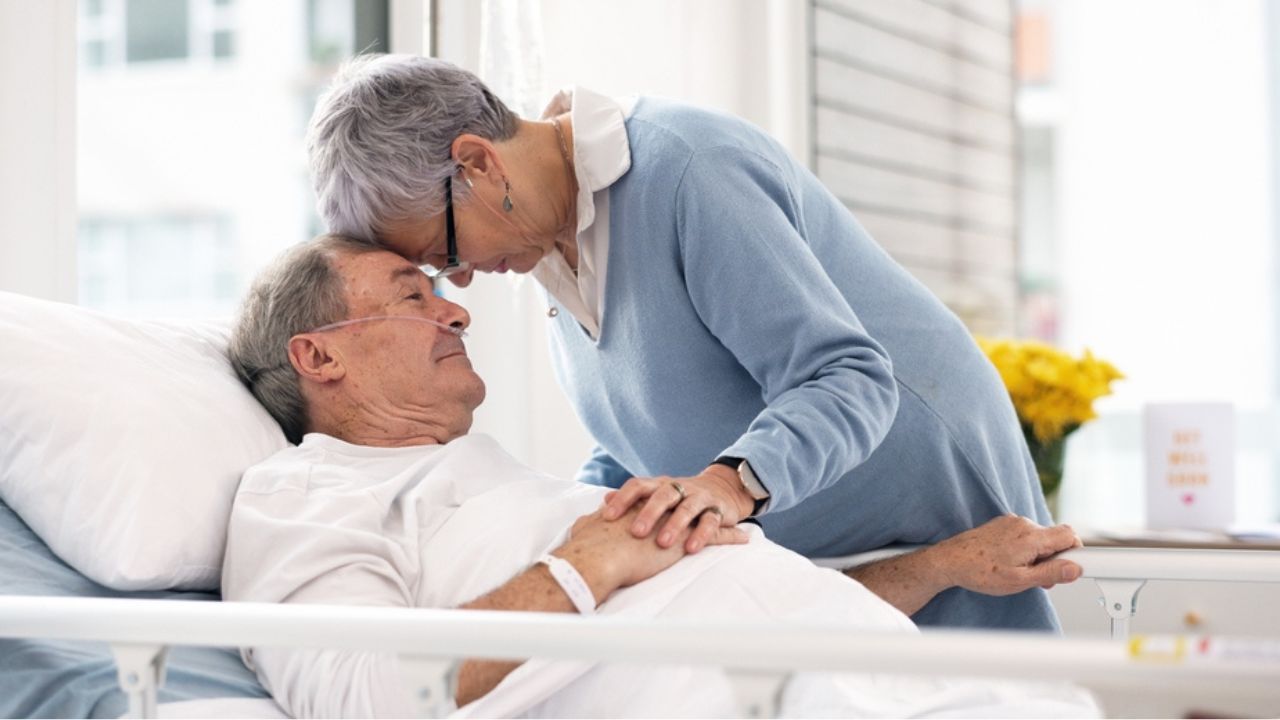
A hospice doctor who cares for terminally ill patients has explained what happens to the body in the final stages of life.
Dr Sarah Holmes, chief medical officer at Marie Curie UK, a British charity that provides care and support for people living with terminal illnesses and their families, said there are often signs that indicate death is near.
“As the body slows down, people become more tired and sleep more. They eat and drink less as the digestive system begins to shut down,” she said in an interview with British publication Ladbible.
During this phase, patients may need more help with daily tasks and might struggle to keep up with conversation. They may also enter a state of ketosis, where the body burns fat for energy instead of glucose, therefore losing weight.
These symptoms will gradually worsen until a patient’s final moments, where their breathing will become irregular and their circulation slows.
“Eventually, the breathing and heartbeat stop, followed by the brain. It’s usually a very peaceful process. In most cases, people simply slip away,” Dr Holmes said.
For around a third of patients, they may experience a sudden burst of mental clarity, minutes, hours or sometimes days before they die.
Patients experiencing this will return to their “normal” selves and may even start showing signs of recovery, although it it not yet fully understood why this happens.
A common question that people have is “how quickly does death happen?” the hospice doctor said that once breathing patterns change, it’s a matter of hours or days, before a person passes away.
“I often remind families that palliative care is about living, not dying. Dying itself is short. Just like birth, the act of leaving the world is as brief as coming into it,” she said.
She added: “Everyone is different in their journey to death. While some will have accepted their fate by the time they reach hospice care (typically older patients who have had a ‘good innings’), others still struggle to come to terms with their reality.”
The hospice doctor added that it is important to talk about it with your loved ones, and she added that the role of palliative care is so that patients can manage their symptoms and make plans “this way, when these things are taken care of, people can focus on living right until the very end—saying what they want to say, doing what matters to them.”
“It’s often harder when there are unresolved emotions or unfinished business. Some people are at peace; others still struggle to let it go.”
Image: Shutterstock