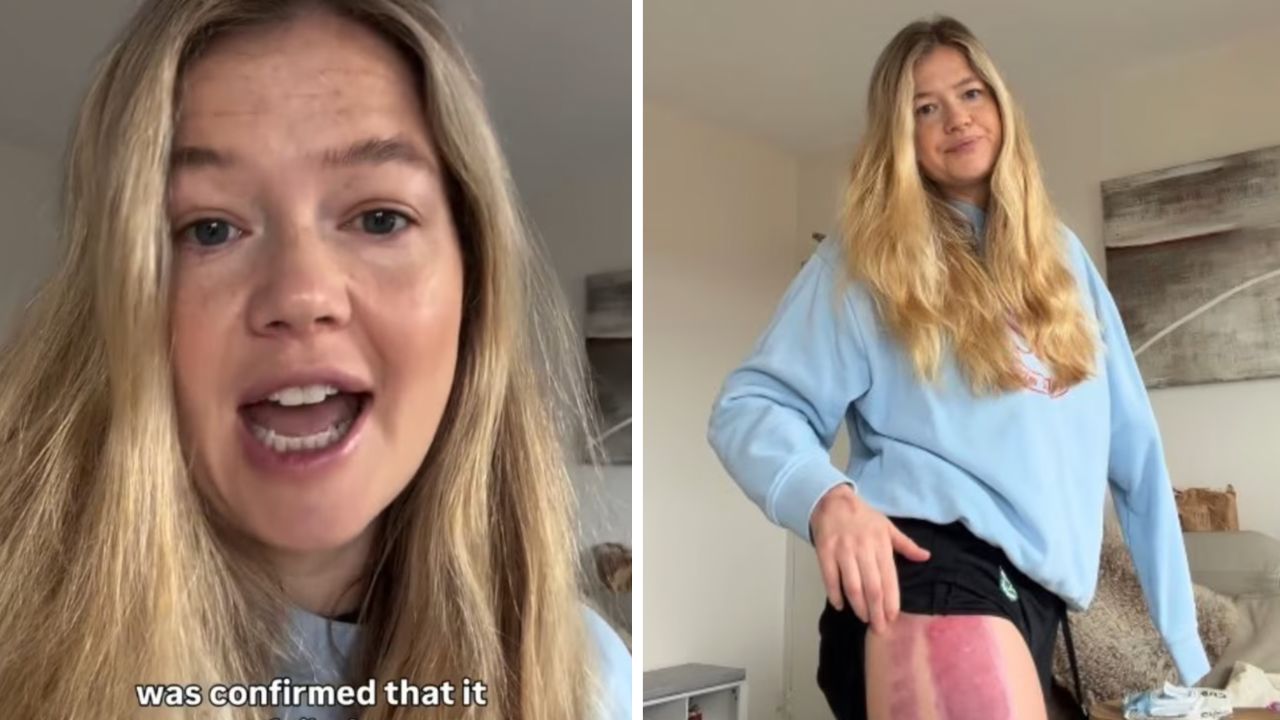
At 37, I was diagnosed with grade three brain cancer. I have a wonderful husband, and at the time, our daughter was 18 months old. What started as a strange delayed response in my left hand resulted in an MRI showing a golf ball-sized tumour in my brain. Immediately after that, I underwent brain surgery. Once the biopsy showed that it was cancer, I began radiotherapy and chemotherapy. I was given a prognosis of two to five years.
Unfortunately, brain cancer currently has no cure. I say “currently” because living with hope has become crucial to my ability to live life to the fullest even with something like this hovering over us.
The statistics around brain cancer can be really surprising, especially for people who have had no contact with it. Every five hours, somebody is diagnosed with brain cancer. It is the biggest disease killer of children in Australia, and the biggest cancer killer of people under 40 in Australia. It devastatingly affects young families.
Unfortunately, there has been no progress in survival outcomes or research breakthroughs in over 30 years. When I was diagnosed, I couldn’t find anybody else who was alive with my form of brain cancer. It was a very dark time for me and my family.
One thing I found particularly hard was receiving treatment while being too sick to partake in any form of parenting. This was during my daughter’s second and third year of life, such a crucial time of development, and I felt like I just wasn’t present for that whole year.
I’m very grateful for my husband. He was so supportive and, overnight, stepped into a single parenting role. Once I started to recover, I had to re-establish my place in the family and as a mum. During lockdown, I had never spent a night away from my daughter, so I felt extremely close to her. This made the transition particularly difficult.
Thankfully, my results continue to be stable, and ass I’ve continued to recover, I’ve also become very passionate about spreading the word about the desperate need for brain cancer awareness, particularly around research and funding.
This has taken many forms for me. I have shared my story every day for a year now on social media platforms and have really enjoyed connecting with other patients. I can now say to them, “I am living with brain cancer,” which I believe would’ve made a big difference to me when I was first diagnosed. I’ve also undertaken many public speaking opportunities, appeared on podcasts and in promotional videos, and participated in lots of fun fundraising events. It’s been a wild but rewarding ride and one I feel uniquely privileged to be on.
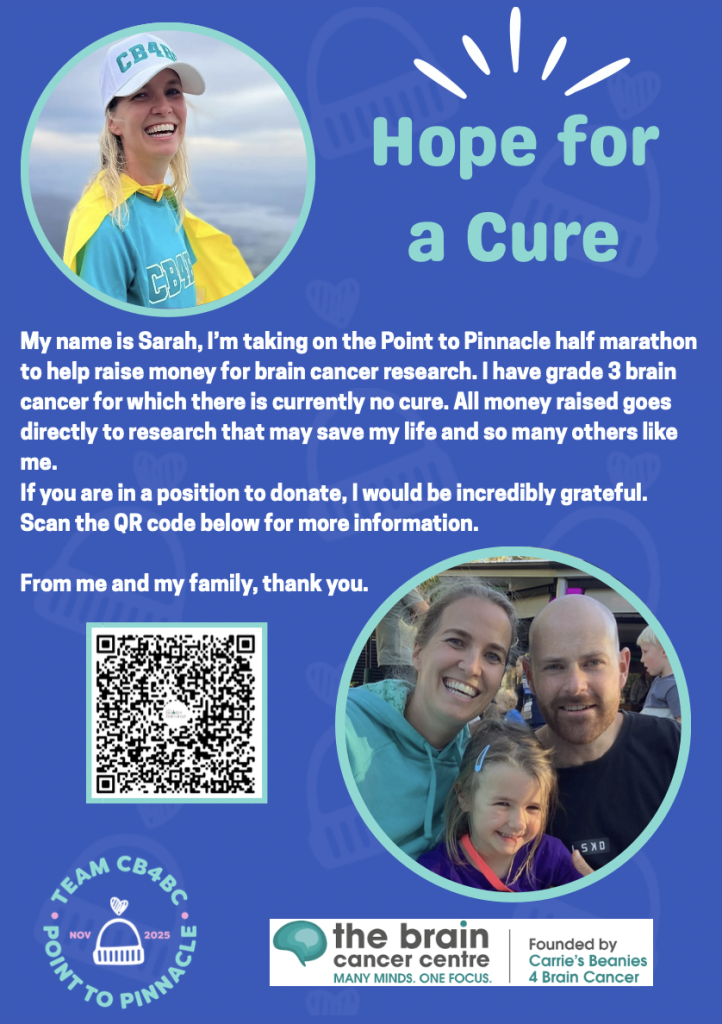
Hope comes in many forms. I hope to see a future. I hope to see my daughter finish primary school (she starts school next year). I have found hope in the community that’s supporting us. I’ve found hope in my faith. I hope to continue seeing progress in my health and disability following brain surgery. I hope to be a voice for change in brain cancer research. I hope to see a breakthrough in brain cancer research in my lifetime.
There is, however, good news! Carrie’s Beanies 4 Brain Cancer (CB4BC), Carrie Bickmore’s foundation, has raised over $20 million, which enabled the creation of the Brain Cancer Centre based in Melbourne. In the three years since being established, they’ve already seen their first major breakthrough – with many more projects underway. There is real hope, even if it’s not in my lifetime… I hope that young families like ours won’t have to face the same story.
So far, I’m four years into my diagnosis, and very proudly so. I plan to continue working in the public speaking and advocacy space for as long as I can.
In November, for the second time, my friends, family, and I will be taking part in a brain cancer fundraising half marathon walk up Mount Wellington in Hobart. It’s a wonderful challenge to undertake, and training with weakness on my left-hand side has been a really good goal and aim for me personally.
You can follow my story on Instagram, Facebook, The Brain Cancer website, or Our Point to Pinnacle fundraising link here (all donations go towards Brain Cancer research).
Images: Supplied