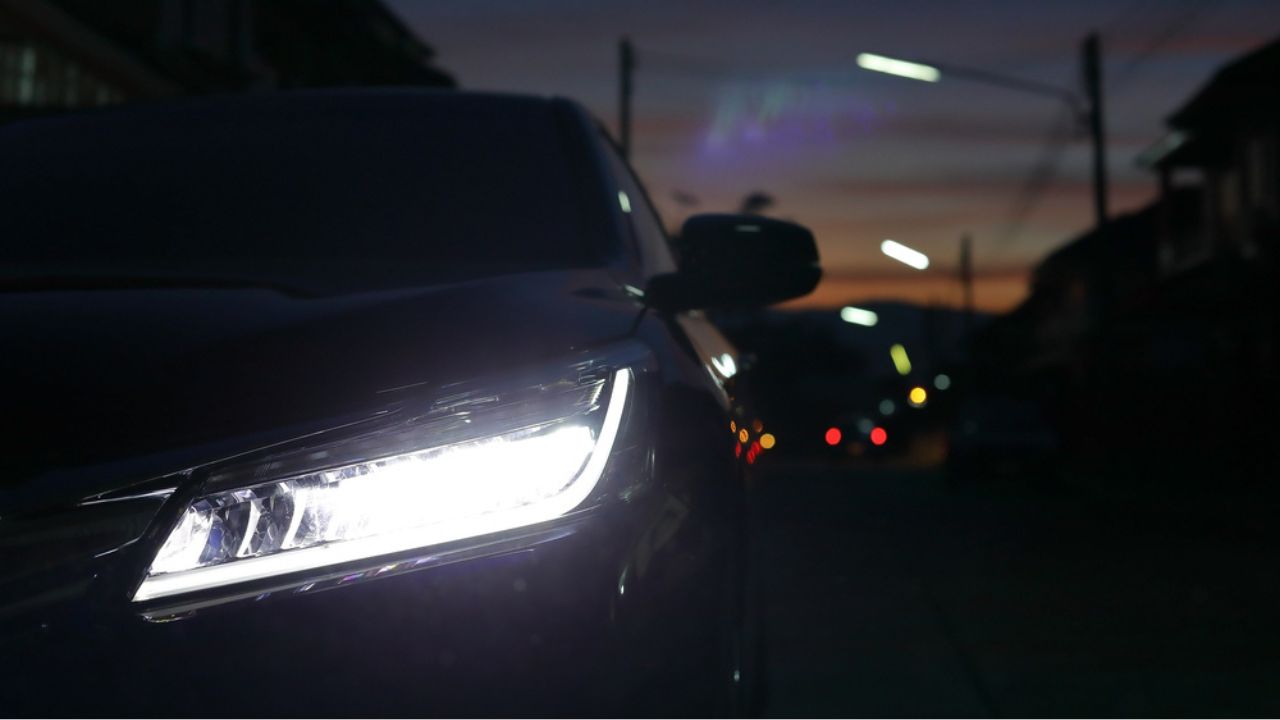
Millions of Australians are at risk of copping hefty fines in 2025 for misusing their car’s high beams – a common mistake many drivers may not even realise they’re making.
Despite popular belief, high beams aren’t just for remote, unlit roads, and the rules around when and how to use them are stricter than many assume.
Some people assume high beams need to be switched off only once an oncoming car is clearly visible – or leave them on until the last second before passing.
However, under Australian Road Rules, drivers must switch their high beams to low beam when they are within 200 metres of an oncoming vehicle, or less than 200 metres behind a vehicle travelling in the same direction.
It is also illegal to use any lights, including high beams, in a way that dazzles other people on the road.
Flashing high beams is permitted only briefly, like when overtaking someone, but even that can lead to a fine if it affects other drivers.
The penalties for breaking the high-beam rules vary across states. In New South Wales, drivers face a fine of $140.
In Victoria, the fine starts at $305 but can climb to over $1000 if the matter ends up in court. Tasmania hands out fines of $202, the ACT issues $224, while Western Australia and Queensland fine drivers $100 and $66 respectively.
South Australian drivers could face up to $300, and the Northern Territory has the lowest fine at $50.
Across all states and territories, the offence will also cost drivers one demerit point.
Using high beams to warn others of police presence isn’t a specific offence, but authorities say it could still land drivers in hot water.
“While flashing headlights to warn others of police presence is not a specific offence in NSW, it can result in charges for related offences such as dazzling a driver or illegal use of high beams,” a Transport for NSW spokesperson said.
In some cases, drivers could also face charges for hindering a police officer, which comes with additional penalties.
Image: Shutterstock