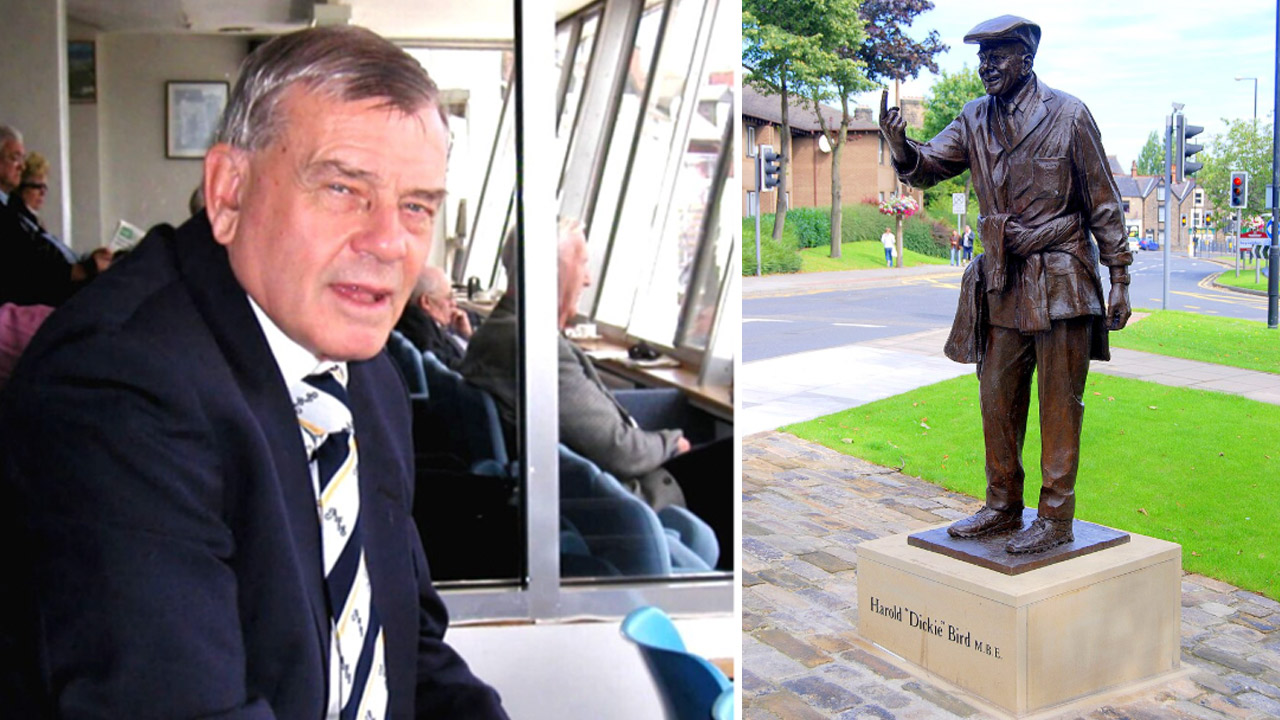
Former Test umpire and legend of the game Harold ‘Dickie’ Bird, one of the most beloved and recognisable figures in world cricket, has died at the age of 92, Yorkshire County Cricket Club has confirmed.
Bird, who became synonymous with integrity, humour and humanity on the cricket field, passed away leaving behind a towering legacy that stretched far beyond the boundary ropes. Yorkshire, his home county, described him as “one of the greatest characters in Yorkshire’s history” and paid tribute to his decades of service to the club and the game.
“The thoughts of everyone at the Yorkshire County Cricket Club are with Dickie’s family and friends during this time,” the club said in a statement. “He will be truly missed by all at the club having spent an incredible amount of time in support of everyone here and will be remembered as one of the greatest characters in Yorkshire’s history.”
Born Harold Dennis Bird in Barnsley on April 19, 1933, the man who would later be known simply as “Dickie” first made his mark as a county cricketer. A stylish opening batsman with Yorkshire and later Leicestershire, Bird once made a sparkling 181 not out for his native county, but a lack of consistency – and opportunity – saw his playing career end at 32 with modest returns.
It was as an umpire that Bird truly found his calling. Standing in his first county match in 1970 and his first Test three years later, he went on to officiate in 66 Tests and 69 One Day Internationals, sharing the field with some of cricket’s greatest players. His presence in the middle brought authority and calm, but also warmth. At stumps, it was not uncommon for the longest line of autograph-seekers to form not for the star batsmen or fiery fast bowlers, but for the man in the white coat, and Bird never failed to oblige.
Over time, he redefined what it meant to be an umpire: not just an official but a figure woven into the spectacle of the game. His popularity even crossed into mainstream culture, with his autobiography – simply titled Dickie Bird: My Autobiography – selling more than a million copies to become Britain’s best-selling sports book. He charmed audiences further as a TV personality and raconteur, regaling the public with stories from a life spent in the company of cricket’s greatest names.
In 2014, Bird was made president of Yorkshire, an honour that capped his enduring devotion to the county of his birth. Though he never married or had children, the cricket family became his surrogate, embracing him with affection that was reciprocated in kind.
His death leaves a void in the game that cannot be filled. Known for his honesty, humour, and unmistakable character, Dickie Bird was more than just an umpire – he was a guardian of cricket’s spirit, and an enduring reminder of why the game matters.
Yorkshire summed up the grief of many in their final tribute: “Dickie Bird enjoyed an illustrious career as an international umpire, writing his name into history as the most famous and popular official in the game’s history.”
For players, fans and colleagues alike, the world of cricket will be quieter without Dickie Bird at its heart.
Images: Wikimedia Commons