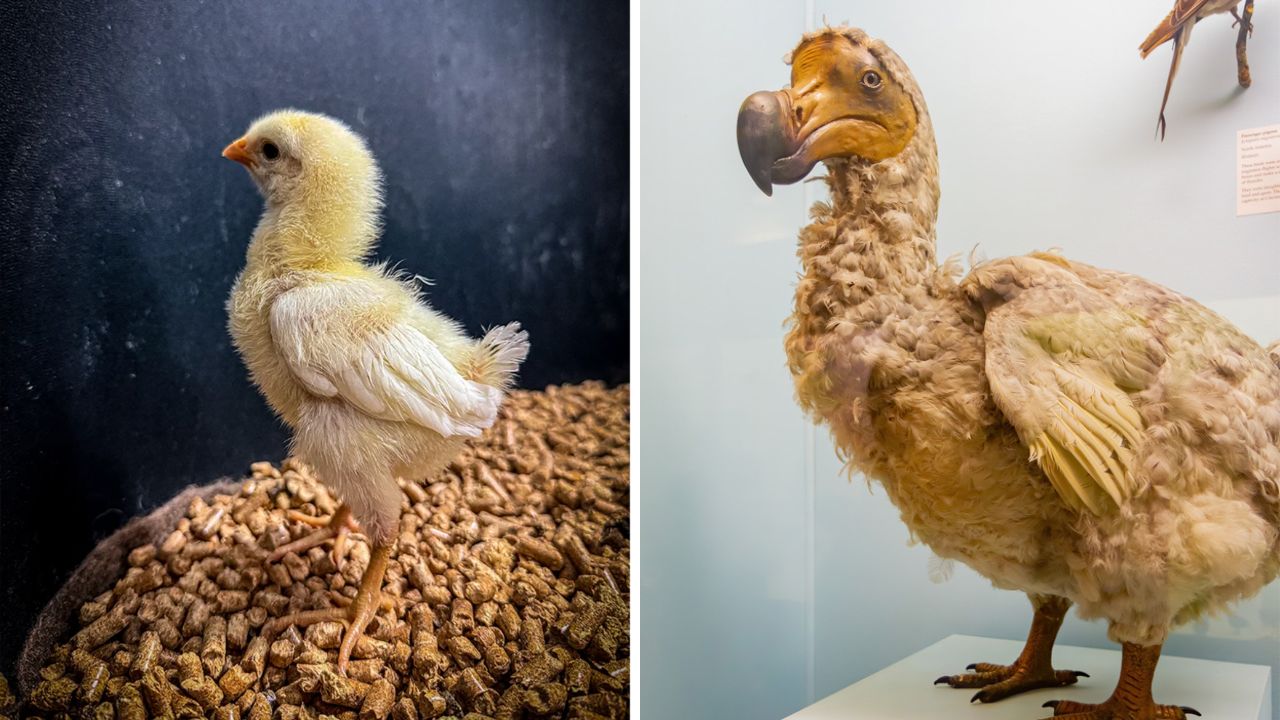
A US tech company says it’s one step closer to bringing the extinct dodo back to life – by hatching it from a chicken egg.
Colossal Biosciences, a biotech firm valued at more than AU$15 billion, has announced major progress in its bold plan to resurrect the flightless bird, which has been extinct since the 1690s.
Birds like the dodo can’t currently be cloned like mammals, so the company is taking a different path, by growing stem cells from the dodo’s closest living relative, the Nicobar pigeon, and modifying them to resemble dodo DNA.
These lab-grown cells, called primordial germ cells (PGCs), are healthy and have been doubling every 35 hours. They will be edited to look more like dodo cells, injected into chicken embryos, and hatched from the chicken eggs.
Colossal says these new birds will be released into protected reserves in Mauritius, the same island where dodos once lived.
To make this possible, the team created a detailed map of the dodo’s genes by comparing it to similar species. This will help scientists identify which genes they need to change to give the new birds the dodo’s signature body, face and beak.
When asked when the first dodo chick might hatch, Colossal’s chief science officer Beth Shapiro said there had been a major challenge in creating the PGCs. “Now completed, we are moving into editing and can have a better understanding of timing since the gating function is past,” she told Yahoo News.
Colossal’s CEO, Ben Lamm, has also promised to produce a mammoth calf by 2028. The company has already created animals resembling dire wolves and long-haired mice.
Since launching in 2021, the company has raised over A$830 million, including A$180 million after announcing its moa resurrection project. The moa was a large, flightless bird that lived in New Zealand.
“Colossal and its investors, who are funding the work, share an equal interest in seeing how our de-extinction technology is significantly accelerating progress towards the dodo project,” Lamm told Yahoo News.
Technology developed for the dodo project will also support other scientific goals. The same tools are being used in moa research at Melbourne University, and to help restore genetic diversity in the endangered Mauritian pink pigeon.
Shapiro added that the advances may also benefit poultry farming and agricultural research.
“Other technologies developed on the path to dodo, however, will have application to poultry, including mapping genotypes to traits of interest and multiplex genome editing in PGCs,” she said.
Images: Colossal/ Kit Leong / Shutterstock.com