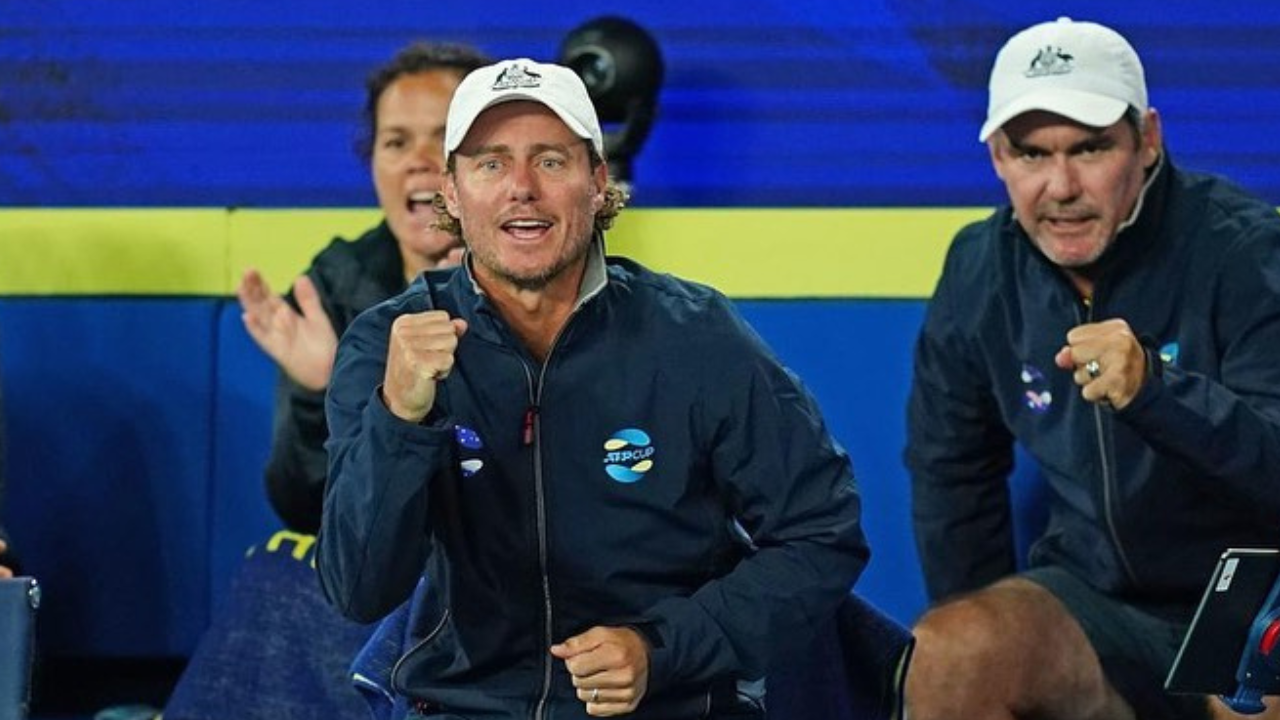
Lleyton Hewitt has been given the green light to captain Australia in the upcoming Davis Cup match in Sydney despite being hit with a fine and a ban for “offensive conduct” at a previous tie, after he pushed an anti-doping official against a wall.
The 44-year-old tennis great was handed a two-week suspension and AU$30,000 fine on September 10 after being found guilty by an independent tribunal of pushing the 60-year-old anti-doping chaperone following Australia’s semi-final defeat by Italy in Malaga in 2024.
The tribunal recommended that one-third of the fine (AU$10,000) paid to the ITIA be passed on to the chaperone, “in compensation for the stress, discomfort and embarrassment of the incident.”
The anti-doping official has since stated that he will no longer volunteer at any future ties, with the International Tennis Integrity Agency (ITIA) warning that this would “represent a tangible loss to the anti-doping programme.”
The ITIA had pushed for a heavier sanction, asking for a four-week suspension and a US$25,000 (AU$37,500) fine, with the tribunal agreeing “there was no apology or check on the well-being of the chaperone” and noting “a lack of remorse from Mr Hewitt”.
The agency also asked for Hewitt’s “poor disciplinary record, including five prior incidents of offensive conduct toward tennis officials and non compliance with tennis rules” to be considered as well as his conduct during the hearing, which it said had been “obstructive and inappropriate”.
Hewitt rejected the allegation, claiming self-defence, yet the tribunal ruled against him, finding that his behaviour was “not reasonable and proportionate.”
However, the tribunal rejected the ITIA’s primary case that “the push was unprovoked and born out of anger or irritation from the loss against Italy”.
With Hewitt’s side hosting Belgium on September 13 and 14 in the second round of qualifiers, tribunal chair Michael Heron said they did not want to be “unduly punitive” on Hewitt by impacting his Davis Cup schedule.
The tribunal also allowed Hewitt time to appeal the verdict if he wished, though the ITIA reported that so far he and his team had not done so.
His suspension will start in two weeks, lasting from September 24 until October 7. Hewitt will be barred from participating “in all tennis-related activities, including coaching, mentoring, playing, captaincy and other associated roles” during that fortnight.
“Anti-doping personnel play a fundamental role behind the scenes in upholding the integrity of tennis, and they should be able to go about their roles without fear of physical contact,” ITIA CEO Karen Moorhouse said in a statement.
“In this case, that line was clearly crossed, and we had no other option but to take action.”
The incident occurred when Hewitt and the anti-doping chaperone came into contact in a crowded tribunal corridor.
The tribunal acknowledged that Hewitt had been recovering from a medical condition, which he said led him to push the official, unaware that the person was a chaperone, when they came into contact.
However, the tribunal deemed the push “too strong or forceful and was excessive or disproportionate” and noted that “there were other options available”.
In Hewitt’s defence, it was noted that “his distinguished 25-year career is marked by exemplary professionalism and commitment to tennis, and he’s expressed genuine regret for the incident and bears no animosity towards the chaperone.”
“At the time he was recovering from a health ailment and ongoing tenderness contributed to his reaction,” it added.
The tribunal, ruling on his previous disciplinary record, said “it did not consider that historic or unrelated blemishes on an otherwise exemplary career should increase the penalty for this isolated incident”.
The South Australian is one of Australia’s most decorated players, inducted into the International Tennis Hall of Fame and remembered as the youngest men’s world No.1 in history at just 20, a record later overtaken by Carlos Alcaraz.
A two-time Grand Slam champion at Wimbledon and the US Open, Hewitt built his reputation on grit and competitiveness, though his career was not without controversy.
At the 2001 French Open he infamously called a chair umpire and a net judge ‘spastics’, while later that year he was accused of racial bias at the US Open, an allegation he was ultimately cleared of.
Images: Instagram