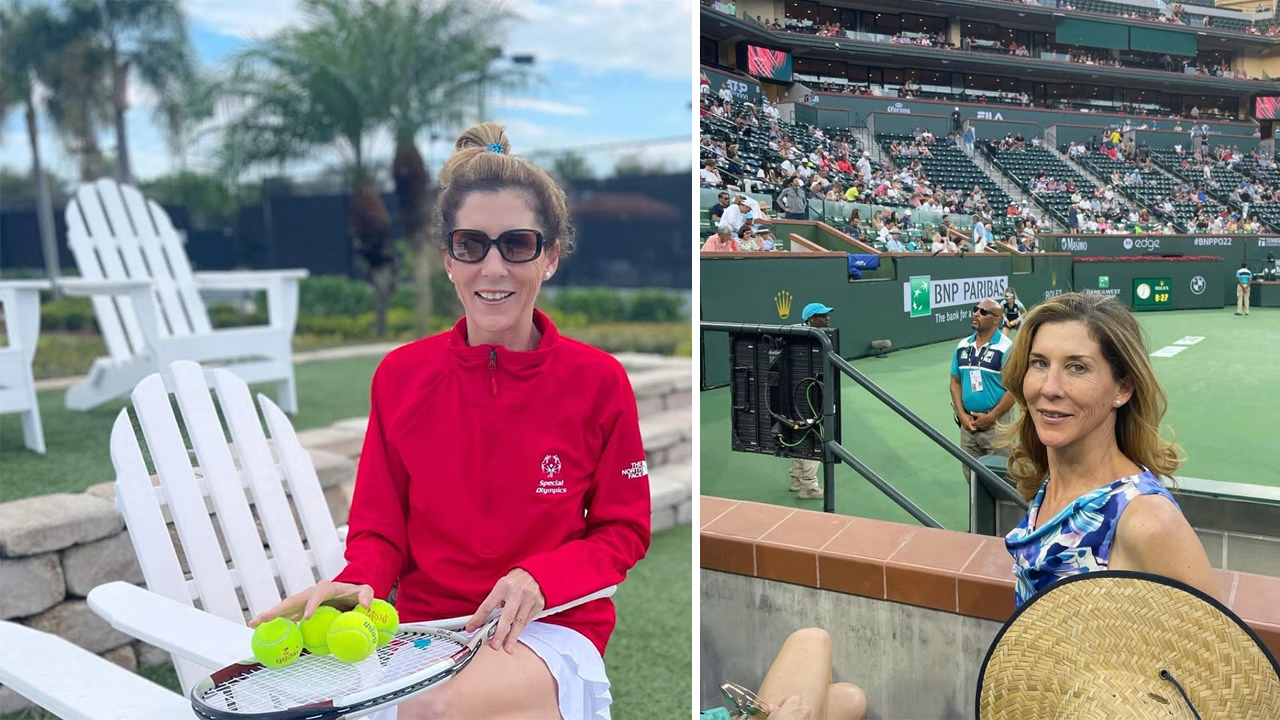
Former tennis great Monica Seles has revealed she has been living with the rare autoimmune disease myasthenia gravis for the past three years, speaking publicly about her diagnosis for the first time in the lead-up to the US Open.
The nine-time grand slam champion and former world No.1 said she first noticed something was wrong while casually hitting balls with friends and family.
“I would be playing with some kids or family members, and I would miss a ball. I was like, ‘Yeah, I see two balls’. These are obviously symptoms that you can’t ignore,” Seles told reporters.
The 51-year-old, who captured her first major title at just 16 at the 1990 French Open, initially experienced double vision and weakness in her arms and legs. Even simple tasks, such as blow-drying her hair, became a challenge.
After seeing a doctor and being referred to a neurologist, she received the diagnosis, a condition she had never heard of before. The National Institute of Neurological Disorders and Stroke describes myasthenia gravis as a chronic neuromuscular disease that causes weakness in the voluntary muscles, most often affecting young adult women and older men, but possible at any age.
Seles is now partnering with Dutch immunology company argenx on its Go for Greater campaign to raise awareness about the disease, saying she wishes she’d had someone to share their experience when she was first diagnosed.
The Tennis Hall of Famer is no stranger to overcoming adversity. She famously returned to competition at the 1995 US Open, reaching the final just over two years after being stabbed during a match in Hamburg, Germany.
“The way they welcomed me … after my stabbing, I will never forget,” she said of the New York fans. “Those are the moments that stay with you.”
Reflecting on her life, Seles described her diagnosis as just another “hard reset”, something she’s had to do repeatedly, from emigrating from Yugoslavia to the US as a teenager, to adjusting to sudden fame, to recovering from her on-court attack.
“And then, really, being diagnosed with myasthenia gravis: another reset,” she said. “But one thing, as I tell kids that I mentor: ‘You’ve got to always adjust. That ball is bouncing, and you’ve just got to adjust’. And that’s what I’m doing now.”
Images: Instagram