Australia is mourning the loss of one of its true music pioneers, with the passing of Col Joye at the age of 89.
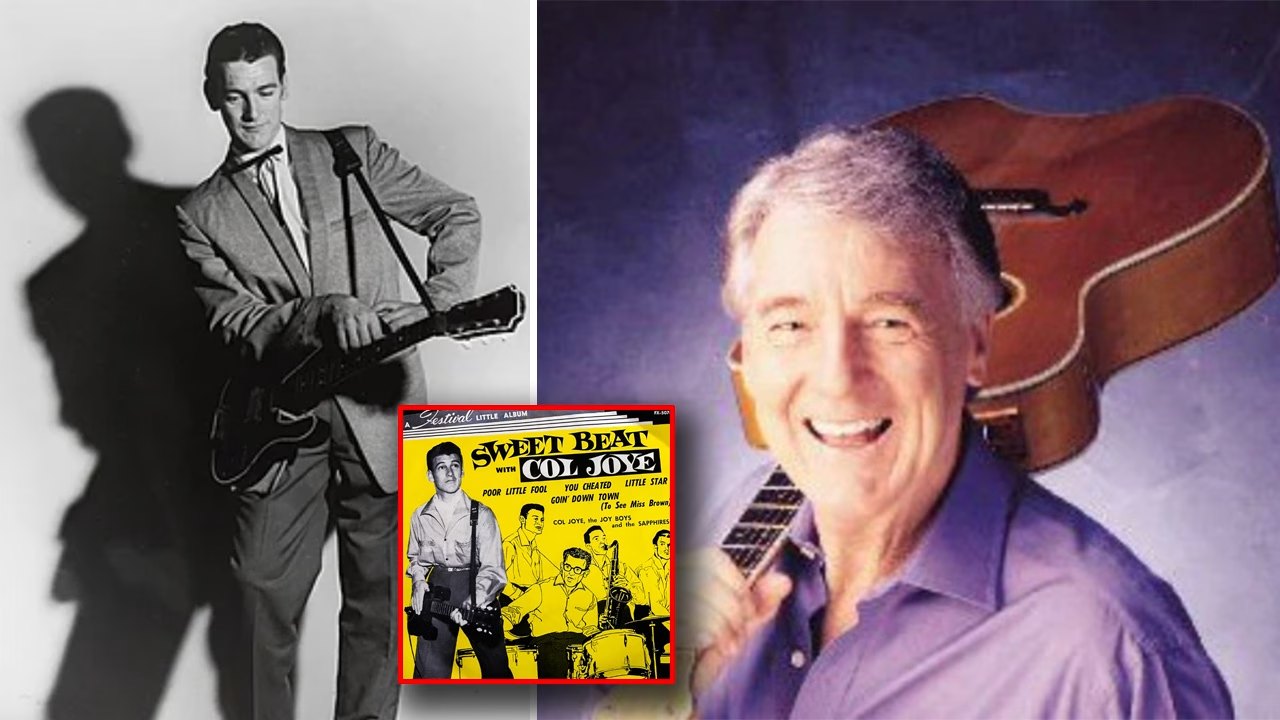
Born Colin Frederick Jacobsen, Joye was a trailblazer of Australia’s early pop scene, rising to fame in the 1950s as the charismatic frontman of Col Joye and the Joy Boys. He made history in 1959 when his hit single Bye Bye Baby became the first number one by an Australian pop artist on the local charts – featuring backing vocals from The Sapphires, the first all-female, all-First Nations singing group in Australian music history.
His music career began modestly in 1957, playing in his brother Kevin’s band, the KJ Quintet. A spontaneous decision to rename themselves “Col Joye and the Joy Boys” before a set at Sydney’s Manly Jazzerama would change the course of their lives – and Australian music – forever.
Through the rock ’n’ roll boom of the early 1960s, Joye and the Joy Boys racked up several more top 10 hits, cementing their place in the country’s cultural fabric.
But Joye’s influence stretched far beyond his own music. In 1963, while operating his recording label and ATA Studios in Glebe, he famously discovered a fledgling group of young performers from Redcliffe, Queensland – a trio of brothers known then as the Bee Gees. Joye gave them a crucial early leg-up before the group went on to become one of the most successful bands in the world.
Joye’s long career also took him far from the stage lights. In 1966, he performed for Australian troops in Vietnam alongside Little Pattie at the base in Nui Dat, during what would become known as the Battle of Long Tan, which was unfolding less than 10 kilometres away.
His last chart success came in 1973 with the country-tinged single Heaven is My Woman’s Love, but Joye never stopped contributing to the industry. Even after suffering serious injuries in 1990 from a fall while pruning a neighbour’s tree, he returned to the stage and toured again in 1998.
In retirement, Joye donated more than 1,200 priceless items from his career to the National Film and Sound Archive, a gesture that reflected his deep love for the history of Australian music.
He was appointed a Member of the Order of Australia in 1981, recognised for his services to the entertainment industry.
Col Joye’s legacy is woven into the very roots of Australian popular music. As fans and fellow artists reflect on his extraordinary life, he is remembered not just as a star, but as a pioneer, mentor and true gentleman of rock ’n’ roll.
Images: Supplied