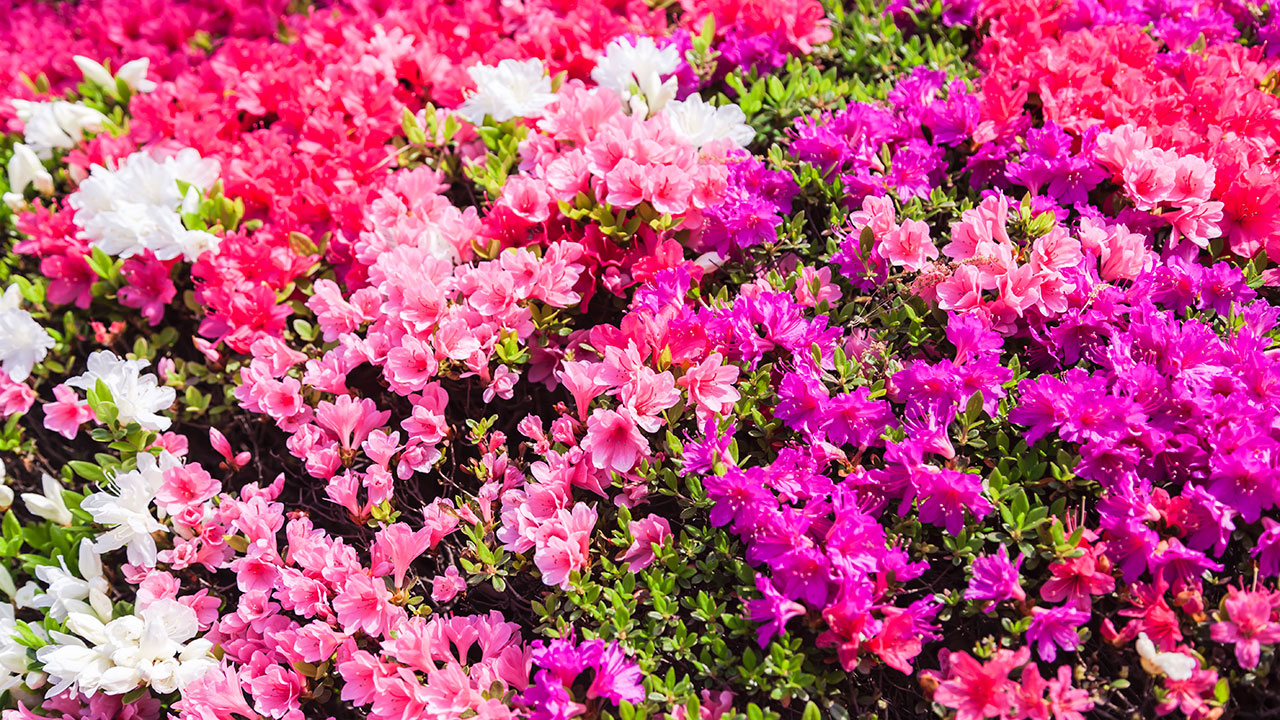
Stealing the show in spring, rhododendrons are covered with large clusters of flowers, and many keep their foliage year-round.
Autumn is the best time to plant them, so the roots develop before winter sets in. Avoid planting in midsummer.
Most varieties prefer lightly shaded areas sheltered from the wind.
The soil should be well-drained, so if it is heavy, loosen it and dig in organic matter like leaf mould or pine needles and a generous amount of potting mix.
Plant the rootball just below the surface, taking care not to stamp on it when firming up the soil.
If the plant is looking unhappy after a year or so, it can be moved to another spot. Ensure the rootball is moist, dig it out and replant, then water in and add mulch.
1. Test the soil
Rhododendrons like an acidic soil with a pH level of 4.5-5.5. If it’s too alkaline, growth will be stunted, and the leaves will turn yellowish.
2. Plant in pots
If the soil in your garden is high in lime, don’t plant rhododendrons in the ground, grow them in large pots.
USE a potting mix with a high acidity to provide the correct soil conditions.
MAKE a hole twice the size of the rootball and tease out the roots.
WATER the shrub in well to remove air pockets and keep the roots moist.
3. Keep them flourishing
Rhododendrons are shallow-rooted and don’t like the ground beneath them to be overly raked or dug over.
In prolonged dry periods, water regularly and mulch with pine needles.
To prepare them for the cooler weather, water well in late autumn if there hasn’t been much rain.
They generally don’t freeze in winter, but they will dry out if the leaves lose water through evaporation and the roots are in frozen ground.
For healthy growth, cut off dead flowers in late spring and spread a thick layer of bark mulch.
They don’t need regular pruning, but tip pruning while the plant is still small encourages bushy growth.
GROW TIP: Apply an acidifying fertiliser in spring or add a 50mm layer of half-rotted compost, taking care not to disturb the roots of the rhododendrons.
Written by Lee Dashiell. Republished with permission from Handyman Australia.