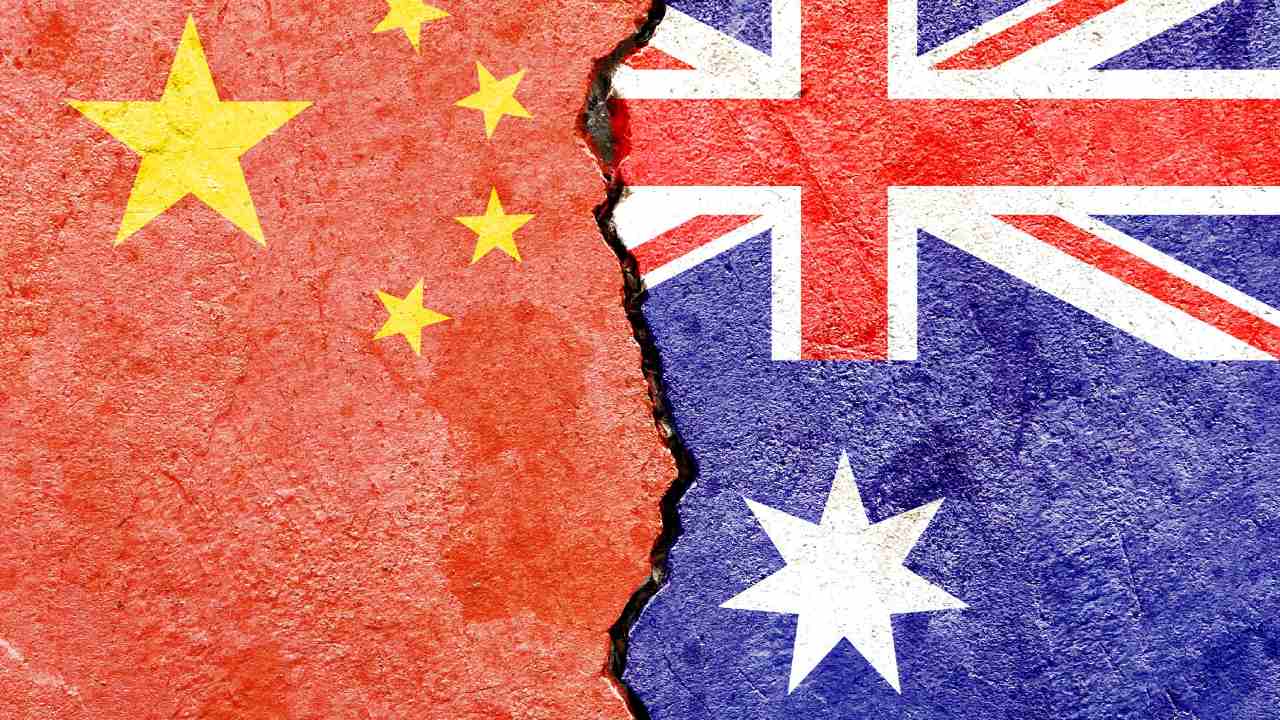
China’s 6.8 per cent increase in military spending next year confirms how important China is to shaping Australia’s defence strategy.
As tensions continue to rise with China in an ongoing trade war started by Beijing almost a year ago, Prime Minister Scott Morrison is taking action.
Analysts believe that Australia will boost its military budget by more than $11 billion a year by 2025 to defend itself against a possible war with the superpower.
Australian security expert Sam Roggeveen explained to nine.com.au that China’s military expansion is the major factor shaping Federal Government Policy.
“China is absolutely critical to shaping our defence policy in the years ahead,” Dr Roggeveen, Lowy Institute director of international security, said.
Dr Roggeveen said that the modernisation and aggressive expansion of Chinese maritime forces is a concern.
“China now has the largest navy in the world in terms of ships, even thought some are of variable quality,” Dr Roggeveen said.
However, he is also worried about the South China Sea, as that’s where China is asserting itself.
“Expanded maritime air power has also been increased over recent years,” Dr Roggeveen said.
“China has built land-based medium-range bombers that can reach targets thousands of kilometres away.”
This is backed up by defence analyst Vera Lin.
“China’s military assertiveness in the South China Sea and expansion of spheres of influence in the surrounding region through commercial avenues such as pipelines and ports is supposedly creating a threat for Australia,” defence analyst Vera Lin said to The Daily Mail.
“Australia is preparing itself for the possibility of conflict with a greater military power, which requires a focus in long-distance deterrence such as ballistic missile defence and investment in hypersonics research.”
Australia has been punished by China over a series of diplomatic issues, as Australian officials were vocal about Beijing’s crackdown on democracy advocates in Hong Kong as well as the treatment of Uyghur Muslims in Xinjiang Province.
In response to these criticisms, the Chinese government imposed soaring tariffs on a number of Australian exports, including wine, barley, coal and beef.